E-commerce has quickly developed into one of today's leading industries, with the speed of its growth leading to increased consumer expectations for simplicity and personalization in their e-commerce transactions; thus, providing greater opportunities for companies to serve individuals as they look to buy online. Today's customers expect to be able to create a personalized shopping path through their experience on multiple devices, sites, and platforms to help them get what they want. Headless ecommerce platforms are one of the ways that ecommerce has been able to change to accommodate this growing demand. It allows companies to create a more flexible and scalable ecommerce system, which means that the front-end of the e-commerce application is not dependent on the back-end e-commerce application. Companies can build more innovative and exciting products and create a much better experience for their customers and their employees.
In this comprehensive guide, you will learn what is Headless ecommerce is and how it has been developed. We will also see the benefits of a headless ecommerce architecture, how it works, the challenges that companies face when they are trying to implement a headless e-commerce infrastructure, and finally, some potential future trends for the e-commerce industry.
What Is Headless Ecommerce?
Headless ecommerce is a type of ecommerce architecture where the frontend is distinct from the backend ecommerce logic via API connections. Rather than having one system that governs every aspect of ecommerce in a uniform fashion, headless ecommerce allows companies to use APIs to seamlessly connect any frontend experience they wish to create.
With a headless architecture, the backend component of headless ecommerce manages product-related items, such as product management, pricing, payment or checkout processes, inventory management, and customer data collected during the purchasing process. Meanwhile, the frontend portion of headless ecommerce can be created using a range of modern technologies, including popular frameworks like React or Vue, as well as mobile technology.
The advantages of a headless architecture ecommerce strategy go beyond the flexibility offered. Headless ecommerce platforms also enable companies to future-proof themselves, which means they can develop additional sales channels, redesign (or refresh) their user interfaces, or adopt and/or integrate new technologies without starting from scratch on an entire ecommerce platform.
Many brands have begun using an independent headless ecommerce CMS to host their content while also enabling marketers and developers to work independently and simultaneously, thereby eliminating bottlenecking issues typically associated with having multiple teams working together.
How Headless Ecommerce Platforms Work?
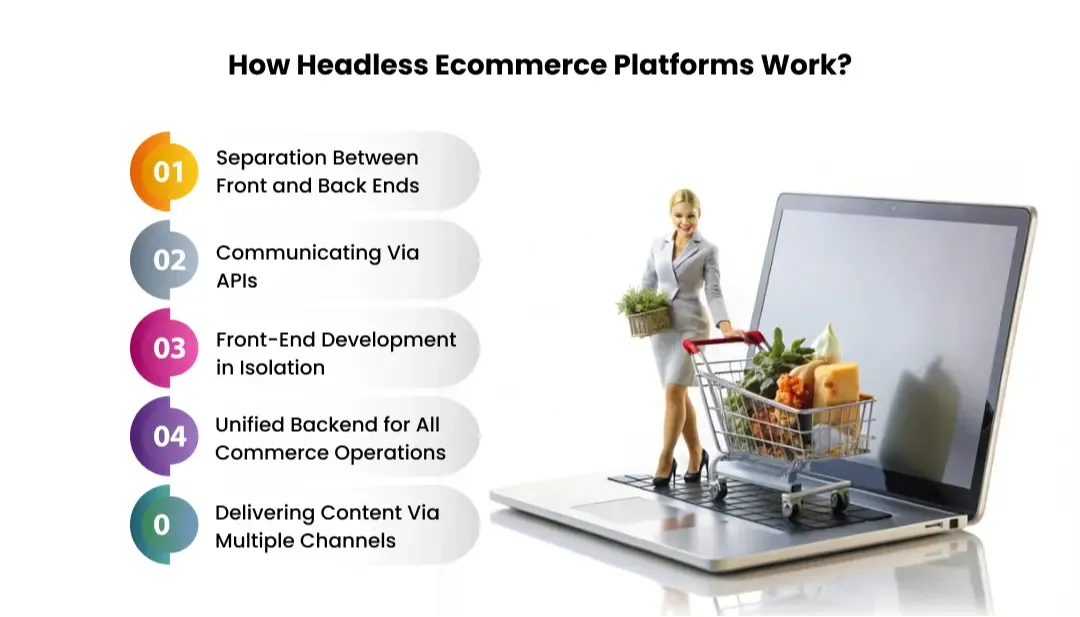
To understand how headless ecommerce platforms work, think of the system as a collection of specialized services communicating through APIs.
1. Separation Between Front and Back Ends
In headless eCommerce software, the front end is a completely different system from the back end of the eCommerce solution. While the front end is responsible for presenting products to the user, the back end of a headless eCommerce solution is solely responsible for managing the actual operations of the eCommerce system.
2. Communicating Via APIs
The front end communicates with the back end through REST or GraphQL APIs, which allow it to access up-to-date product details such as price or availability at the time of request.
3. Front-End Development in Isolation
Developers can design a custom homepage, website, mobile application, and omnichannel experience using modern frameworks while still having access to an eCommerce system's core functionality on the back end.
4. Unified Backend for All Commerce Operations
The back end of an eCommerce solution is a single engine responsible for all operational aspects of the eCommerce system, including product management, order fulfillment, payment processing, promotion management, and checkout.
5. Delivering Content Via Multiple Channels
A single eCommerce back end can power several different touchpoints, including retail websites, mobile applications, POS systems, and the Internet of Things (IoT) devices.
The headless ecommerce app features also ensure flexibility with third-party tools, faster updates, and scalability. In headless ecommerce, each layer focuses on doing one job exceptionally well.
Traditional Ecommerce vs Headless Ecommerce
Traditional e-commerce solutions combine backend functionality with frontend design. Because of this combination, they are easy to implement but may not allow for extensive changes in either the backend or frontend of the site. When changes are made to the frontend portion of the site, it often requires making corresponding changes to the backend.
On the other hand, headless e-commerce solutions provide complete separation of the front end and back of the business. That’s why the company has complete freedom over the way the site looks and functions. With this approach, companies can achieve faster page loading speed, allow for the ability to sell in multiple channels at once, and allow for better integration with third-party applications.
When evaluating ecommerce solutions, the trend for many businesses is now towards adopting the leading headless e-commerce solutions for long-term growth potential. This is particularly true for companies that plan to expand globally and establish additional stores. Ecommerce solutions emphasize ease of use, while headless e-commerce provides flexibility, speed, and opportunities for innovation.
Benefits of Headless Ecommerce for Modern Businesses
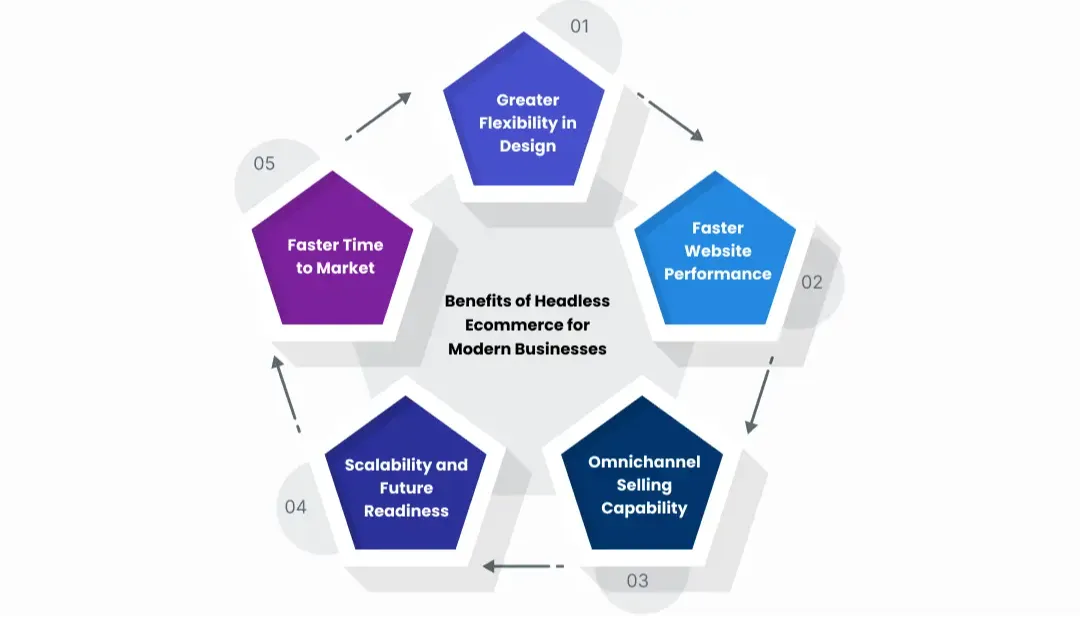
There are several benefits of headless ecommerce. Using the best ecommerce tech stack is important to avail these benefits. Here are some of the benefits given below.
1. Greater Flexibility in Design
The Marketplace development company uses Headless Ecommerce that enables companies to build a customized interface without being limited by a template or theme created by the provider.
2. Faster Website Performance
The frontend and backend are separated, and with a headless system, webpages will load faster. The impact is an improved user experience, as well as improved SEO and better conversion rates.
3. Omnichannel Selling Capability
A single backend can run an online shop, mobile app, marketplace, and any new digital outlet at the same time without interruption for the end-user.
4. Scalability and Future Readiness
Businesses can independently scale up the number of features and amount of traffic or easily adopt new technologies by switching to a new technology without changing their platform.
5. Faster Time to Market
With headless technologies, development teams can work collaboratively on both the frontend and backend simultaneously, which allows for quicker updates, launch of new services, and development of new features.
Headless Ecommerce Use Cases Across Industries
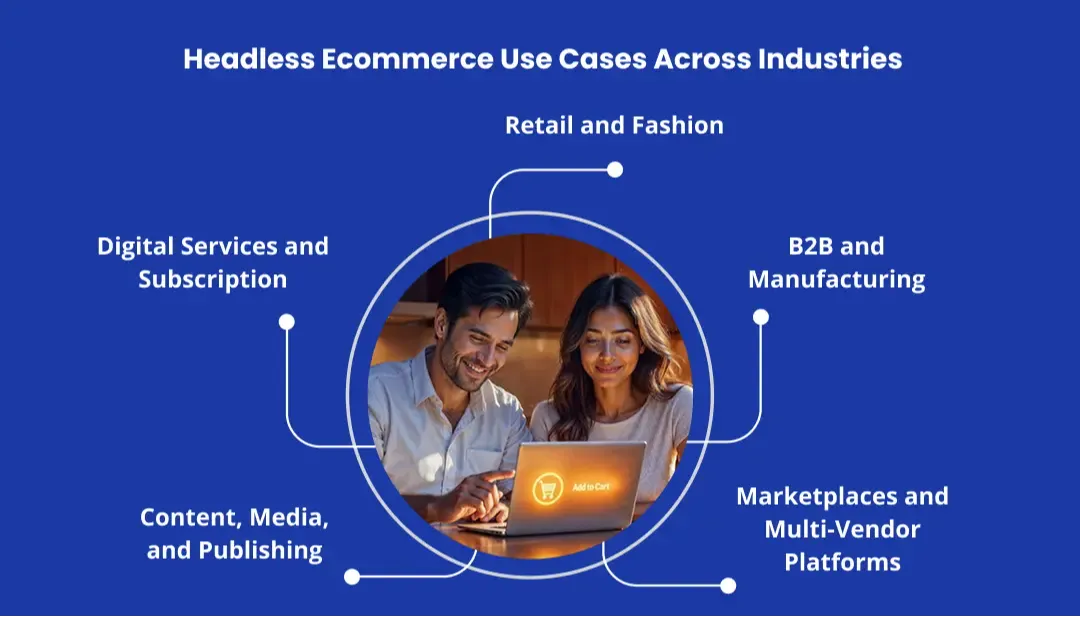
Headless commerce is not limited to retail. Many industries leverage headless ecommerce examples to create unique digital experiences. Here are some of the use cases across industries, given below.
1. Retail and Fashion
Custom storefronts that provide fast-loading product pages along with seamless shopping experiences for customers across the website, mobile application, and social media channels.
2. B2B and Manufacturing
Through headless commerce solutions, B2B and manufacturing businesses can develop unique ordering portals that allow for more dynamic pricing structures, purchase in bulk, and provide an account-based access level, as well as integrate into CMS solutions.
3. Marketplaces and Multi-Vendor Platforms
With a scalable headless architecture, you can build a scalable marketplace that supports multiple vendors, provides a custom dashboard for vendors to manage their products and users. Without being restricted by backend technology, it provides flexibility to customers regarding the frontend experience.
4. Content, Media, and Publishing
The ecommerce app development company integrates headless ecommerce directly into the content platform itself, like blogs, videos, and digital experiences, allowing brands to provide eCommerce products directly within content.
5. Digital Services and Subscription
Digital services or subscription services, including recurring payments, user dashboards, and personalized content delivery across various devices powered by headless commerce solutions.
Challenges and Limitations of Headless Ecommerce
Every coin has two sides. Headless ecommerce is no different. It has many advantages, but comes with a few limitations that challenge businesses.
1. Higher Initial Development Effort
Headless ecommerce systems require developing a custom frontend and using an API to connect it to other platforms. This is more complicated than using one platform like Magento or Shopify.
2. Need for Skilled Technical Expertise
Headless architectures typically require skilled developers to work on performance optimization, integration projects, maintenance, etc.
3. Increased Upfront Costs
Since headless eCommerce systems need to be assembled using custom-developed websites with various tools and services from multiple vendors. They have a significantly higher Ecommerce app development cost.
4. Complex Maintenance and Updates
With a headless ecommerce solution, it will be much more difficult and time-consuming to maintain and update the various components of the site. The platform also requires regular updating, testing, and monitoring for issues.
5. Longer Implementation Timeline
Implementing a headless eCommerce system is likely to require more time to plan, design, and integrate the components of the system, especially if implementing a large-scale project.
Future Trends in Headless Ecommerce
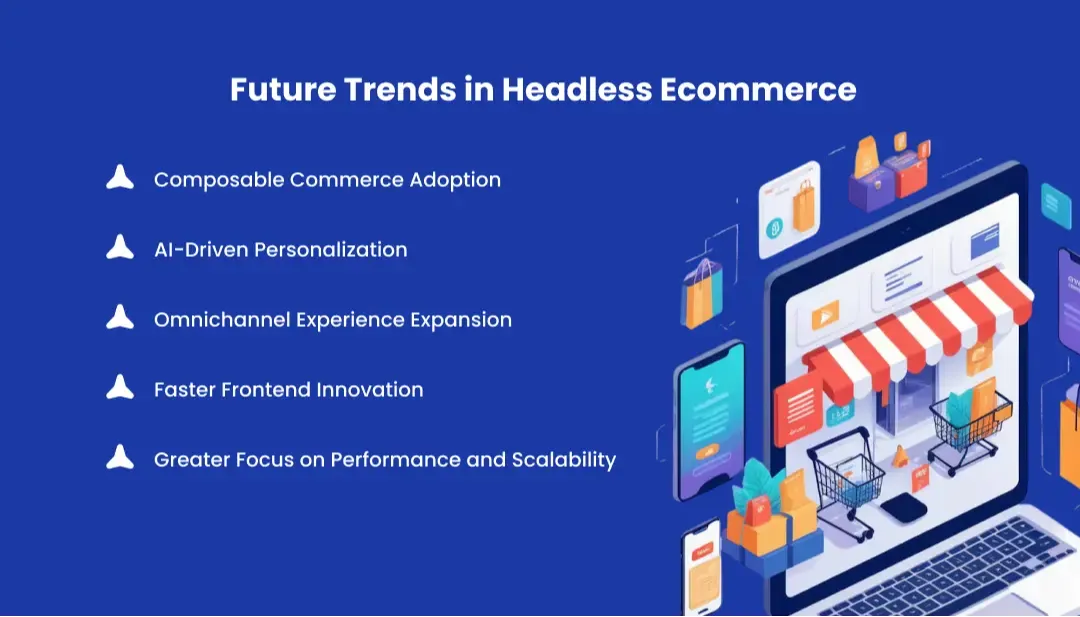
The future of headless ecommerce platforms is closely tied to composable commerce. Here are some of the trends given below.
1. Composable Commerce Adoption
Businesses are looking to create modular ecosystems of best-of-breed systems whereby Headless ECommerce can be easily integrated with CMS, Payments, Search, and Analytics.
2. AI-Driven Personalization
With the increased availability of headless setups, businesses will find it much easier to utilize AI in the development of personalized product recommendations, dynamic pricing models, and tailored shopping experiences.
3. Omnichannel Experience Expansion
Brands will increasingly offer a consistent shopping experience across a range of platforms, including websites, mobile applications, social media, voice assistants, and smart devices.
4. Faster Frontend Innovation
Modern frontend frameworks, such as React.js, will continue to enable faster frontend innovation and design with a focus on improving the performance and user experience of customers without requiring backend changes.
5. Greater Focus on Performance and Scalability
Businesses will be focused on headless ecommerce systems to provide them with the ability to scale to meet a global audience while efficiently managing future digital touchpoints. The Marketplace development company takes care of performance and scalability for businesses.
How IMG Global Infotech Can Help with Headless Ecommerce Development?
IMG Global Infotech has expert headless ecommerce developers, providing solutions that are both scalable and future-proof with our headless ecommerce development services that meet your specific needs. Our team utilizes its experience in Strategic Planning, UI/UX Design, and Backend Engineering to create high-performing solutions. As a leading headless ecommerce agency specializing in Ecommerce Applications, we assist brands by developing visually compelling front-end designs that work in conjunction with enterprise-level Ecommerce Engines.
If you're interested in establishing a new ecommerce business or updating an old store, IMG Global Infotech can deliver high-performance headless ecommerce solutions that produce results. What you will get at the IMG Global Infotech are:-
-
Custom headless ecommerce solutions
-
Experienced best headless ecommerce platforms developers
-
Scalable and future-ready architecture
-
API-driven ecommerce development
-
Modern UI/UX design for web and mobile
-
Seamless third-party integrations
-
Secure and high-performance platforms
-
Transparent pricing and project timelines
-
Dedicated support and maintenance
-
On-time delivery with quality assurance
CONCLUSION
By using the best headless ecommerce solution, businesses can create innovative and scalable solutions that allow them to provide their customers with an exceptional omnichannel shopping experience. This ecosystem enables brands to maintain their competitiveness in the constantly changing digital marketplace. With headless commerce, brands will have the ability to quickly deploy new features and products, as well as expand to new channels.
There are significant challenges associated with implementing headless commerce. However, the long-term benefits will far exceed the initial challenges associated with implementation. If you're searching for a way to create a modern, scalable ecommerce ecosystem for your business's future success, headless commerce may be the best option for you. Start an ecommerce business and partner with a trusted headless ecommerce marketplace development company like IMG Global Infotech.