Year after year, web design evolves as companies adjust to shifting demands along with advancing tools. By 2026, visual appeal alone fails to define site quality; instead, interaction ease matters just as much. Performance stands alongside access fairness and smooth function across devices. Through time, what users expect reshapes how pages are built. One truth remains: balance among these traits defines success.
Understanding key web design developments expected in 2026 matters greatly for large companies planning new or updated sites in ecommerce website design trends 2026. Awareness of meaningful shifts helps clarify which changes affect functionality, user engagement, or pricing structures.
With clearer insight into these factors, choosing a suitable design partner grows more straightforward. Because impact varies, evaluating trends through practical outcomes makes decisions less speculative. Where results align with business needs, investment tends to justify itself over time.
Why is Ecommerce Website Design Changing in 2026?
The major reason for changing ecommerce website design in 2026 is all about trends. The trends can represent the web design patterns of user interaction with diverse online platforms in mobile-first ecommerce website design. In current times, the design of websites is guided by devices, search engines, and user behavior to reduce these hurdles in e-commerce website operations.
- Lower Engagement Rates
- Poor UI/UX Design
- Reduced Mobile Usability
- Slower Website Performance
You can hire ecommerce website developers that can align the design strategy for both users and search engines in the businesses.
Top Ecommerce Website Design Trends for 2026
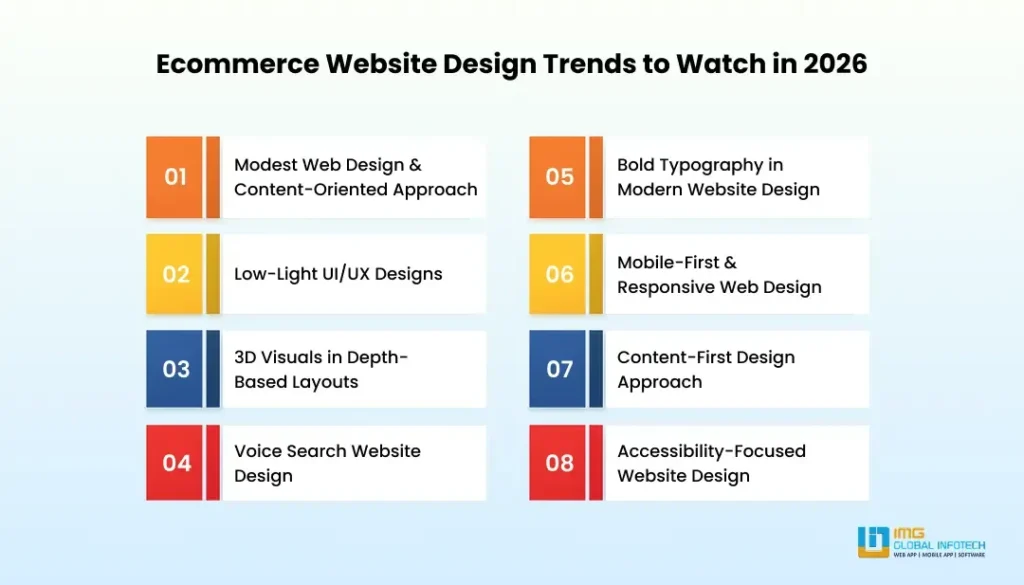
One thing stands clear before examining what lies ahead. The path forward in web design does not demand adopting each passing novelty in ecommerce website development services. Instead, focus lands on building sites that load quickly, communicate plainly, respond wisely, and gain confidence gradually. What follows reflects directions expected to influence how pages appear by 2026.
Modest Web Design & Content-Oriented Approach
Minimalist web design will maintain the dominance in 2026. There is a need for removing unnecessary elements that can maintain focus on the clarity of the content.
A minimalist design will also increase
- Content Readability
- Conversion Paths
- Page Speed
Clean layouts will also help to control website design components, like fewer visual elements, to reduce design complexity without losing quality and control.
Low-Light UI/UX Designs
Dark mode is just more than a trend in the latest web design idea in 2026. Most of the websites will provide you both light & dark interface options according to the user’s preference.
Dark mode supports:
- A Premium Feel
- Reduce Eye Strain
- Better Accessibility
It’s now becoming a standard feature in the professional ecommerce website design services for businesses.
3D Visuals in Depth-Based Layouts
Advanced web browsers have the ability to use lightweight 3D elements. These practices can also enhance UI/UX design trends to use in selective spots:
Common uses:
- Landing Page Highlights
- Interactive Storytelling
- Products Previews
Performance always plays a prominent role so it can also ensure visuals that do not affect website performance in business operations.
Voice Search Website Design
With the usability of voice search, it can increase. They are being structured to support natural language queries:
Voice-optimized design improves:
- Search Visibility
- User Convenience
- Accessibility
This trend can align closely with modern website design to evolve SEO practices.
Bold Typography in Modern Website Design
Typography is now a main design tool. In the modern website design, there are large headings and expressive fonts to help guide users through the content.
Benefits include:
- Faster Content Scanning
- Strong Brand Presence
- Clear Visual Hierarchy
This approach reduces dependency on large images while maintaining strong visual elements.
Mobile-First & Responsive Web Design
Responsive web design is no longer optional. In 2026, the designers can adopt a mobile-first website design to approach it from the beginning.
Mobile-first design ensures the following:
- Faster Mobile Load Times
- Improved Usuability
- Seamless Experience Across Devices
A top website design agency will make sure that mobile responsiveness is a key feature of all website builds.
Content-First Design Approach
Content, not visuals, is the starting point for design in 2026. Messaging is the backbone of layouts, enhancing clarity and engagement.
Content-first design supports the following:
- Stronger communication
- Improved UI/UX Design
- Better SEO
It’s standard practice among the best website design agencies.
Accessibility-Focused Website Design
Accessibility is a key focus in web design trends for 2026. Websites are created to support all users, including those with disabilities.
Accessibility Features Include:
- Keyboard Navigation
- Proper Color Contrast
- Screen Reader Compatibility
Accessibility is also kind of sort of improving SEO, and it is more and more being included as part of standard, professional website design services these days.
AI-Powered Design Trends Transforming Online Stores
With the advent of AI-driven design, stores have evolved to be smarter, more personalized, and visually appealing. Such advancements will enable firms to maximize consumer satisfaction and conversion and stay ahead of other competitors in the e-commerce space.
Personalized Shopper Experiences
AI evaluates the actions, browsing history, and preferences of the customer to generate personalized storefronts in fashion ecommerce website development. It will generate a unique shopping experience that will improve the level of consumer engagement and retention.
AI-Driven Visual Search Feature
Consumers will use images rather than keywords to look for certain products. With the advent of visual search technology, it has become easier for consumers to search for products.
UI and UX Intelligent Optimization
AI constantly analyzes users’ actions on the site to optimize the layout of the pages, navigation route, and other design components. Such optimization is designed to improve usability and to minimize bounce rates.
Content and Design Automation
AI is used for the automatic creation of product descriptions, banners, images, and other promotional materials. It increases the speed of updating the store and minimizes manual labor.
Why Are Mobile-First Ecommerce Websites Dominating Online Retail?
Mobile-first ecommerce websites development are turning into the go-to option for businesses; It means mobile shopping just keeps expanding worldwide. They tend to feel quicker, smoother, and more comfortable, which matches what modern customers are doing day to day.
Enhanced User Experience
Mobile-first sites are built with smaller screens in mind, so the navigation feels more natural. interactions happen fast, and browsing stays effortless in Shopping app development solutions, all of which helps keep people around longer and nudges them toward buying.
Faster Loading Performance
A well-optimized mobile storefront loads quickly on different devices and even across weaker networks. That usually lowers drop-offs, boosts customer comfort, supports search presence, and also improves conversion potential overall.
Higher Mobile Conversion Rates
When checkout is simplified, screens adjust cleanly, and payments are truly mobile-friendly, the whole buying process feels less effort. Result: businesses can raise sales and also seize more revenue chances in the future of ecommerce website design.
Better Search Engine Rankings
Search engines favor pages that work well on mobile, so mobile-first ecommerce stores are more likely to earn stronger rankings. That means more organic traffic, better discoverability, and generally more visibility in the results.
Key Ecommerce Design Mistakes Businesses Should Avoid in 2026
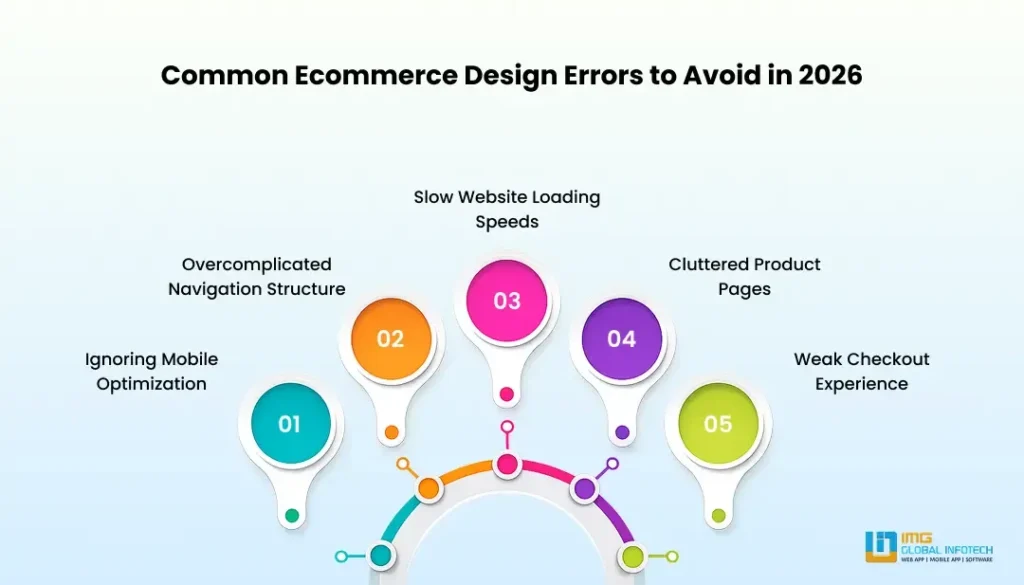
As ecommerce competition gets more intense in 2026 website design kind of becomes the real deal for customer acquisition and keeping them around. If you skip the usual design missteps, businesses can boost usability, build trust, and end up with better sales performance overall.
Ignoring Mobile Optimization
When you don’t optimize for mobile users, you get frustrating little experiences, which usually lowers engagement, bumps up bounce rates, and hurts conversions too.
Overcomplicated Navigation Structure
If menus are too complex and the category setup feels muddled, people can’t find products easily. Then they tend to exit before they even finish buying, kind of like… they give up midway.
Slow Website Loading Speeds
Big visual elements plus weak optimization makes pages load slower in mobile shopping experience optimization. This cuts into user satisfaction, can affect search rankings, and also shrinks sales opportunities pretty directly.
Cluttered Product Pages
Stuffing product pages with too much info distracts shoppers. It leads to confusion, and it makes choosing, and then buying, more difficult than it needs to be in Shopping app development solutions.
Weak Checkout Experience
A long checkout flow, extra form fields that nobody asked for, and payment options that feel limited all push customers away. So cart abandonment goes up, and fewer transactions actually get completed.
Choosing the Right Ecommerce Development Partner for Future Growth
Picking the right ecommerce development partner really is crucial if you want a scalable, future-ready online store from a leading ecommerce web development company in India. Honestly, it’s more than just launching; the right team helps a business bend with shifting technologies, customer expectations, and those market pressures that come in waves.
Look at Technical Expertise
Go for a partner with real, proven experience in ecommerce tech, integrations, and scalable architectures, the kind that still makes sense for long-term growth goals. If they’ve done it before, they tend to handle the hard parts cleaner.
Check Portfolio and Case Studies
Go through their previous ecommerce projects. That way you can see what they’re capable of, how much they know about your industry, how they solve problems, and whether the outcomes were actually successful or just “promising.”
Assess Scalability and Flexibility
Make sure they can back future upgrades, add new features, handle platform migrations, and adjust as your business keeps evolving in Ai in ecommerce. This is where a lot of teams either rise up or fall behind.
Ongoing Support System
After launch, dependable maintenance matters. Performance monitoring, technical help, and quick troubleshooting help keep everything running smoothly and support sustained growth over time.
Final Thoughts
Website design will have to follow the path of usability, performance, accessibility, and clarity in 2026. Companies adopting new trends will see higher user engagement, improved visibility, and increased sales.
As far as effective implementation of such trends is concerned, choosing the right website design agency will become essential for the firms by Ecommerce web development services in jaipur. IMG Global Infotech, being a custom website development company and operating worldwide, offers its services in combination with both trends and performance.
We will make sure that your website reflects the latest trends without making website design package prices opaque.