The fashion eCommerce Web Development Company in five years will not only involve online shopping but also an overall experience, intelligence, speed, and values. While previously digital storefronts were a single channel of operations, they have evolved into immersive and data-driven ecosystems where consumers are equally focused on personalization, sustainability, and immediate gratification.
Here we take a look at what will happen to fashion e-commerce in 2026, the leading trends, statistics, and brands to follow.
Fashion brands failing to adapt are left behind as global fashion consumers become more aware, tech-savvy, and socially conscious in fashion ecommerce development trends. This blog post highlights the key trends in fashion eCommerce in 2026 alongside the most important industry statistics and fashion brands shaping the future of online fashion without any fluff.
Why Is Fashion eCommerce Evolving Faster Than Ever in 2026?
During the rapid acceleration of digital fashion, many brands have focused on heavy traffic growth for their business expansion. The logic is understandable for maximizing the profit with more visibility; there are more chances to enhance sales.
In 2026, this conversation has become more disciplined with the right acquisition costs to get customer attention along with privacy regulation updates in fashion ecommerce development trends. It is also important that fashion e-commerce brands not just use stereotypical strategies and know more about how to handle operations from behind the scenes in their businesses.
This transformation is important because fashion e-commerce has moved beyond just being a marketing process. It now has an impact on merchandising, logistics, fulfillment, customer service, content management, and retailing.
Which AI Trends Are Transforming Fashion eCommerce Development?
Here is a list of AI trends that are transforming fashion e-commerce development in 2026:
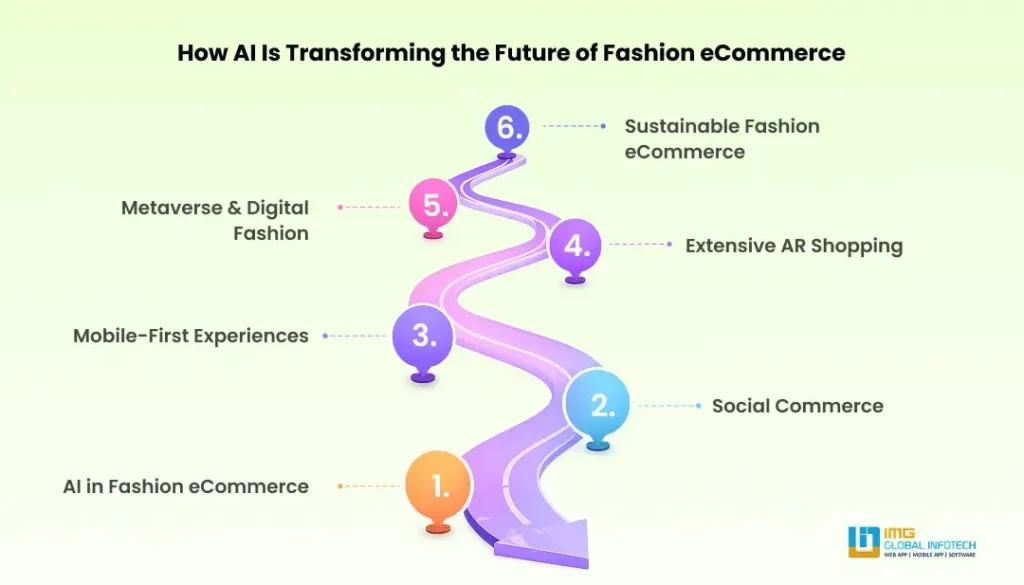
AI in Fashion eCommerce
AI, shopping in particular, seems to come into picture many a time to assist you in finding out clothes and accessories you are going to purchase. AR Technology is one such field in AI that can enhance people’s experience by giving them a real shopping experience.
Interestingly, people’s preference for using AR Technology day-to-day is 32% so it’s convenient for you to have the easiest purchase in fashion ecommerce development trends. The artificial Intelligence and e-Commerce sector assist people in choosing out their most wanted and budget-friendly products.
Social Commerce
This rise of social commerce is largely due to driving the sales of products toward particular consumers.
The truth is that, while following the tastes of young Millennials and Gen Z, fashion trends can inspire Americans from the US consumer base to turn their backs on online shops and follow their inspiration on fashion from Facebook, Instagram, and even TikTok Shop.
According to the latest figures, Facebook is the dominant social commerce provider with 69.4 million US residents shopping on Facebook in 2025.
Mobile-First Experiences
People browse online fashion most often from their mobiles, with over 50% of all online purchases now being completed on a mobile.
With people having such high expectations regarding how fast and intuitive and personalized interfaces should be and how instantly they should work, a mobile-first attitude towards online fashion has never been more important.
It’s worth remembering that Shopify stores are built to be responsive and optimize for mobile; plus, offering services such as Shop Pay can help avoid mobile checkout friction.
Extensive AR Shopping
The statistics: about 60 percent of consumers enjoy using an AR virtual try-on feature to visualize what they’ll look like in an item of clothing in fashion ecommerce development. Those innovative features actually alleviate that hesitation of whether or not to click on “checkout.”
The top fashion-forward brands are using their AR technology on their products on mobile and websites, enabling customers to get a true idea of the product’s feel, fit, and the overall look.
Metaverse & Digital Fashion
Your avatars could shop in a new way. This new concept of real shopping opportunities that avatars could participate in is increasingly focused on metaverse clothing, also known as digital clothing.
In fashion and lifestyle there will always be an underlying emphasis on expression, identity, community, and the need for a new way of connecting in fashion ecommerce website development. Shopify store owners are now able to launch and list entirely new lines of purely digital products.
Sustainable Fashion eCommerce
About 80 % of customers rely on such brands as revealed by the recent survey that deal with sustainability. Moreover, with the rise of social media and the internet, people understand the ideologies and the working culture of the company in a more clear way from fashion ecommerce app development.
The concern for the environment is the leading factor. Retail businesses that are into the sale of eco-friendly products and dealing with their artisans with good wages are to have more sales.
How Is Mobile Commerce Shaping the Future of Fashion Retail?
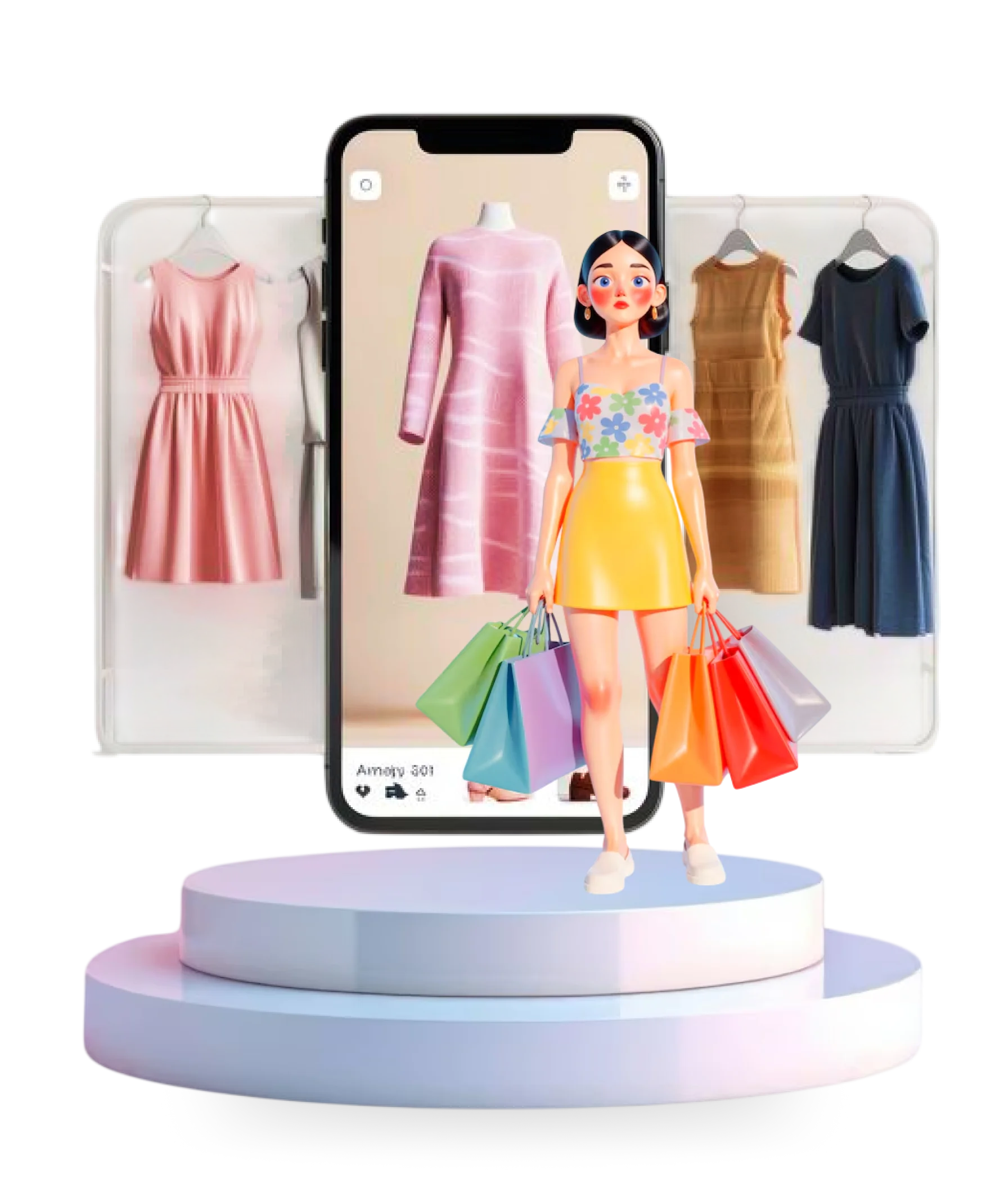
Mobile commerce is transforming the fashion e-commerce industry by making shopping faster, smarter, and more personalized from mobile commerce for ecommerce development. The shoppers can browse the latest collection that is received through AI-driven recommendations to compare products and secure the checkout process from their smartphones.
It also includes diverse features like digital wallets and real-time order tracking that can help brands to enhance engagement, boost conversions, and build long-term loyalty in their businesses.
- Personalized Shopping Experience: AI powered recommendations kind of deliver more relevant fashion goods, which helps customer satisfaction, more engagement, and repeat buys across mobile platforms; it feels smoother.
- Seamless Mobile Payments: Secure digital wallets and a one-click checkout make transactions less annoying, lowering cart drop-offs and boosting the number of completed fashion purchases in fashion ecommerce solutions.
- Real-time Customer Engagement: push notifications, exclusive deals, and quick updates keep shoppers tied to brands and to new collections all at once.
- Enhanced Shopping Convenience: Mobile apps let people shop any time, anywhere, with speedy browsing, order tracking, and a pretty hassle-free purchasing vibe.
Why Are AR and Virtual Try-Ons Becoming Essential?
AR & virtual try-on technology are revamping online fashion shopping to help shoppers visualize the products before any purchasing These features will eliminate uncertainty to enhance buying confidence to minimize product returns in custom fashion ecommerce development.
It can provide an interactive and personalized shopping experience with AI-based solutions that can increase customer engagement that can also lead to higher conversion rates.
- Purchase Assurance: Virtual try-on allows customers to better visualize products prior to purchase, ensuring that they do not have any doubts regarding their decision-making.
- Decreased Product Returns: With better visualization of the products, the chances of mismatches and returns will be greatly reduced.
- Personalization: Augmented Reality technology offers personalized experiences that suit customer tastes and preferences in fashion retail app development.
- Greater Conversion Rate: Enhanced customer experience increases the conversion rate and sales.
How Are Personalization and Smart Recommendations Driving Sales?
Through personalization and AI-driven suggestions, fashion brands can be able to provide relevant products based on the customer’s preferences, past interactions, and purchasing behaviors in online fashion store development.
The AI-based suggestions lead to better product discovery, increased customer satisfaction, and higher chances of repeat business through AI in fashion ecommerce. They also lead to higher average order values and conversion rates.
- AI-Based Product Recommendations: Smart recommendations provide suggestions for related fashion products according to browsing habits and purchasing history.
- Enhanced Customer Engagement: A Customized shopping experience helps increase browsing time and better engagement of customers with fashion brands.
- Increased Average Order Value: Related cross-selling and up-selling recommendations help drive purchases of additional fashion-related products.
- Customer Retention: Customized product recommendations help create loyalty among customers with a consistent, personalized shopping experience.
What are the Best Fashion eCommerce Strategies in 2026?
Once you know about the current trends, then it’s time to go on to the next step. Here are some e-commerce fashion strategies that can upscale the production level in the business:
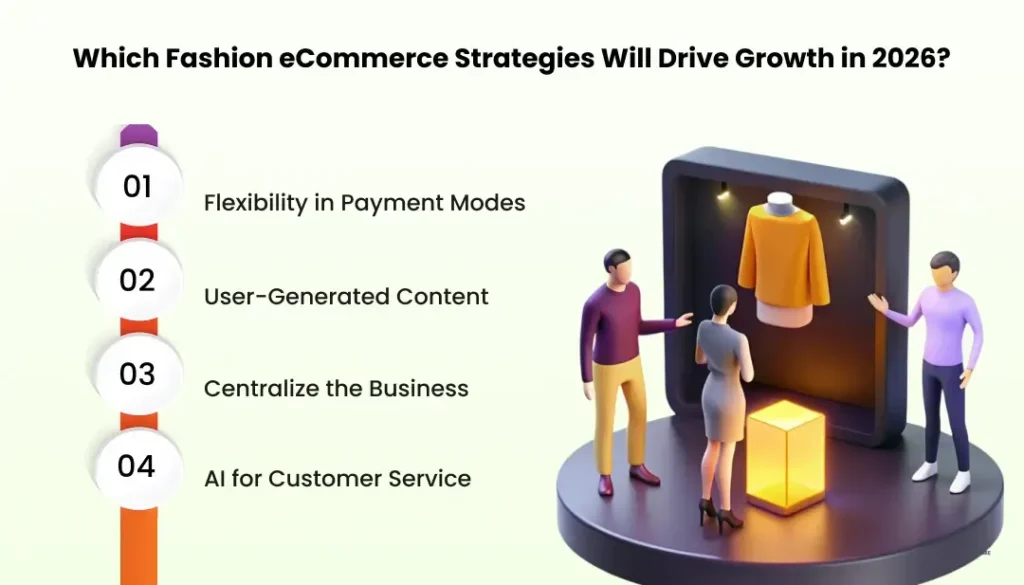
Flexibility in Payment Modes
It is important to integrate the multiple payment options that also include BNPL (Buy Now Pay Later) that can make conversions easier from fashion ecommerce website development services. This can also reduce the chances of card abandonment by providing multiple options of purchase. It also keeps the checkout process simpler, which can allow the sellers to increase conversions in their business.
User-Generated Content
User-generated content can cater to buyers and sellers. It places a kind of special emphasis on the accuracy of products in mobile commerce for fashion brands. Real customers give feedback on the products and share their pictures, which can allow a wider audience base that can believe in the products to move towards conversions.
Centralize the Business
E-commerce integration with automation of software can allow sellers to centralize the business. It can also eliminate the errors and delays due to fast processing of orders by fashion ecommerce website development services. Sellers can bring orders and sales together with inventory for better business management along with data analysis.
AI for Customer Service
The use of AI technology in fashion e-commerce does not stop at Augmented Reality. The sellers can make use of AI technology in customer support in their e-commerce business from headless fashion ecommerce. This will help the customers get instant responses even when the seller is not directly involved in the communication process.
Why Choose IMG Global Infotech for Fashion Ecommerce Development?
Building a successful fashion e-commerce platform really does take the right technology, a bit of real industry know-how, and a customer-first mindset from our custom ecommerce application development company. We blend innovation, scalable development, and some strategic planning to build high-performing e-commerce solutions that match your business aims, not just something generic and done.
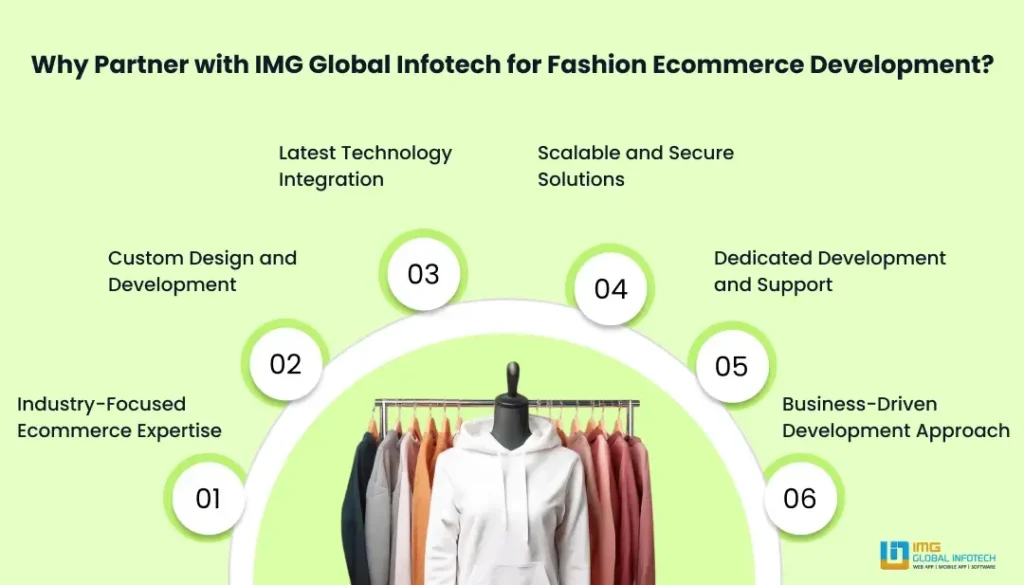
Industry-Focused Ecommerce Expertise
Our crew understands how fashion keeps changing, and we build e-commerce platforms with up-to-date tools, easy navigation, smooth shopping flows, and a scalable architecture so you can keep growing over time.
Custom Design and Development
We make fully tailored fashion e-commerce websites that actually mirror your brand personality. It helps with user engagement too in fashion shopping app development, plus it gives shoppers a distinctive buying experience designed around your specific business objectives.
Latest Technology Integration
Our developers put in place AI-driven recommendations, AR virtual try-ons, secure payment systems, mobile-first layouts, and enhanced analytics. All of that adds up to a future-ready e-commerce experience with strong performance, day after day.
Scalable and Secure Solutions
We craft scalable e-commerce platforms that can handle growing traffic, expanding product catalogs, and secure transactions while keeping high speed, dependable reliability, and solid data protection standards pretty much all the way through.
Dedicated Development and Support
Our team delivers end-to-end development, solid quality testing, a smooth deployment process, and ongoing maintenance, so your fashion e-commerce platform keeps running efficiently after launch without much fuss in fashion ecommerce development trends.
Business-Driven Development Approach
We concentrate on building e-commerce experiences that boost customer engagement, lift conversion rates in the future of fashion ecommerce, simplify store management, and help your business reach sustainable growth through fresh digital experiences and ideas that feel a bit more modern and on purpose.
Conclusion
In 2026, fashion e-commerce is really about speed, flexible setups, and personalization, kind of nonstop. It feels like same-day delivery, automated warehouses, and DTC growth are driving everything right now from the best ecommerce website development services in jaipur. Brands are leaning hard on tech to better “get” customers and also to streamline their fulfillment routines, plus returns, because that part matters just as much.
To not fall behind, brands need to adopt AI, automation, and newer delivery models. Consumer expectations are moving fast, and adapting quickly is what keeps you in the race. Stay agile, keep experimenting with customer experiences, and honestly, keep listening to feedback, even the messy kind. Watch what’s happening in the market, and be prepared to shift when the trends change.