Do you recall those times when you would have to procure anything urgently? Anything from the ingredients for any particular recipe that you decided to cook at that moment to a charger for your phone, or even a medicine to ease your headache?
These days, the answer to all your urgent needs comes through the comfort of your smartphone, straight to your doorstep!
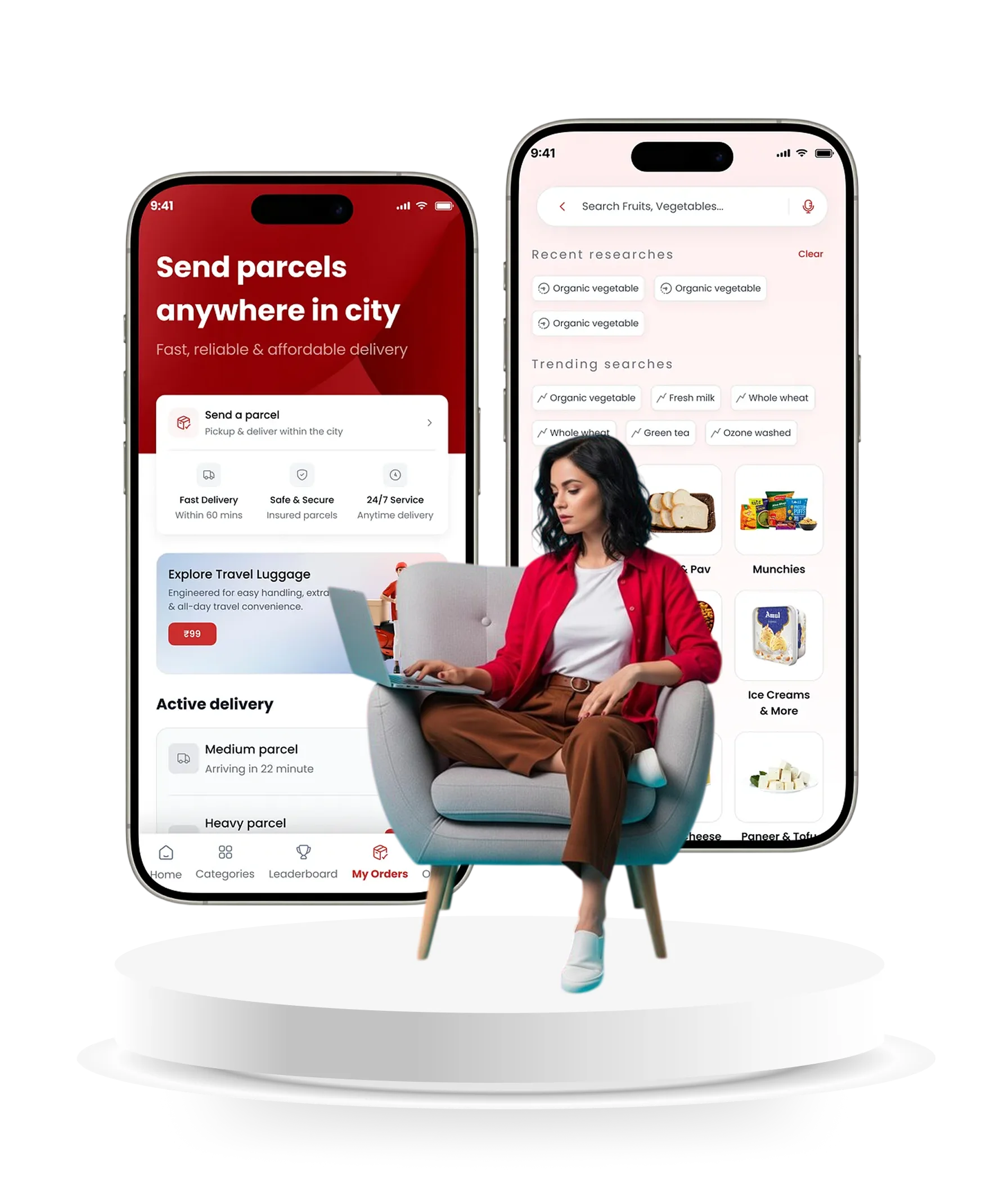
Such increasing popularity led to the emergence of a new business model known as Quick Commerce (or Q-Commerce), which significantly alters the shopping experience. Quick commerce is not only a fast delivery; it’s also a new way of providing services.
If you’ve been thinking about developing an app for quick delivery, it’s time to try. In this article, we will help you to find out how to create an app like that.
What Is Quick Commerce App Development?
Quick commerce app development is a kind of process of building apps, web platforms, admin dashboards, and backend systems that will allow customers to order the products fast and securely. Majorly, it includes groceries and medicines. stationery items. household products, personal care, pet essentials, electronic accessories, beverages, and food items, along with local goods.
There is a different concept of quick commerce, which would deliver items in 10 to 30 minutes, which are dependent on diverse factors like business model, product availability, rider network, and delivery zone.
How Does the Quick Commerce Business Model Work?
Quick commerce apps are built to deliver items in a few minutes using hyperlocal facilities, intelligent logistics, and inventory management systems in quick commerce delivery app development. Quick commerce focuses on speed and efficiency, in contrast to the conventional e-commerce approach where the products are delivered using centralized warehouses and take more time.
Hyperlocal Dark Stores
The quick commerce platforms have small fulfillment centers located close to consumers where frequently purchased items are always available for instant delivery.
Real-Time Inventory Tracking
The inventory tracking system updates the inventory automatically and avoids canceling orders due to incorrect inventory information.
Fast Order Processing
Consumers submit orders using mobile applications while nearby stores process them and pack the orders.
Last-Mile Delivery Network
The delivery partners collect packed orders from nearby stores and use optimized delivery routes to deliver the orders.
Multiple Sources of Income
Profit margins, delivery costs, subscriptions, advertising, commissions, and partnerships with sellers and brands are some of the sources of income.
What Features Does a Successful Quick Commerce App Need?
Here is a list of quick commerce app features for a successful quick commerce app:
Customer App Features
Delivery Partner App Features
Admin Panel Features
How to Build a Quick Commerce App Step by Step?
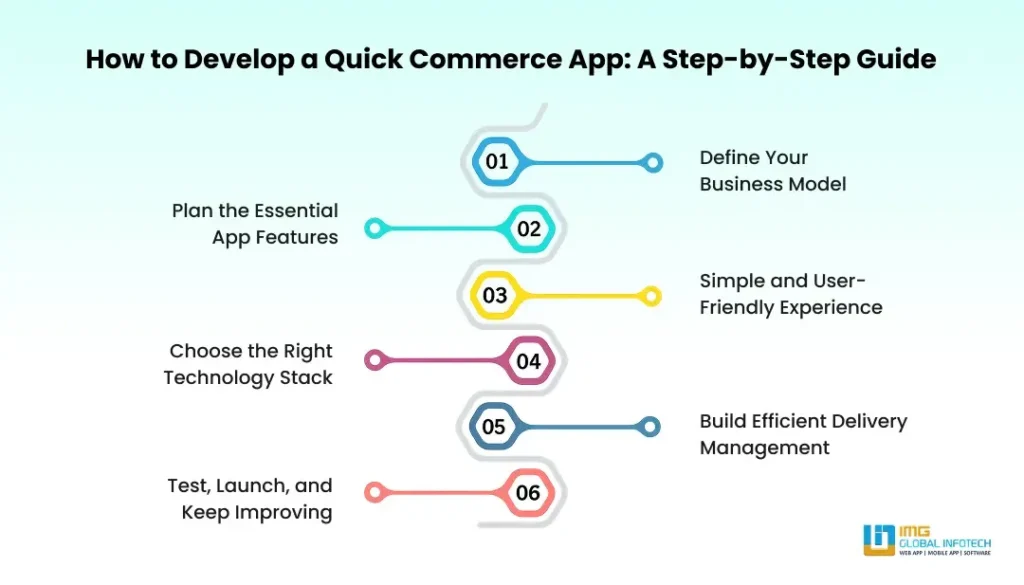
Building a quick commerce app takes more than just good technology in the custom grocery delivery app development in India. You need a well-planned business model, a scalable platform, and an efficient delivery system to give customers a fast, reliable, and hassle-free ordering experience.
From planning the business model to launching and improving the app, every stage should be focused on making shopping faster, easier, and more convenient for customers.
Define Your Business Model
It is essential that you have these things clearly defined before embarking on the development phase. This will make everything else much clearer and easier in the rest of the development process.
Plan the Essential App Features
Features such as user registration, product searching, sorting and filtering capabilities, cart management capabilities, multiple payment options, order tracking capabilities, offers and discounts, among others, must be available on your app in order to enhance the shopping experience for your customers.
Simple and User-Friendly Experience
Ensure that the user interface is clear and simple to navigate when hiring on-demand mobile application developers in India. Ensure that the customers can easily search for products, get information about the products, get recommendations, and place their orders.
Choose the Right Technology Stack
Select technologies that can accommodate increasing numbers of users and live transactions. These include the front-end and back-end frameworks, database, cloud computing services, APIs, payment gateway, mapping services, and analytics tools.
Build Efficient Delivery Management
The delivery system is one of the most crucial components of a fast commerce application. The system should include functionalities like real-time rider tracking, auto-order allocation, delivery route optimization, delivery status monitoring, location tracking, and good store-to-delivery partner communication.
Test, Launch, and Keep Improving
Before deployment, ensure that the app is tested well for its functionality, security, performance, and usability during quick commerce app development. After deployment, keep track of the customers’ feedback, the app’s performance, and the users’ behavior.
How Much Does It Cost to Develop a Quick Commerce App?
The estimated price range for an app development of food delivery services in India would range from $5,000 to $15,000 or more. The final cost would mostly depend upon various aspects and customization during app development.
Key Revenue Streams of Quick Commerce Apps
Here are some multiple revenue streams for quick commerce apps for businesses:
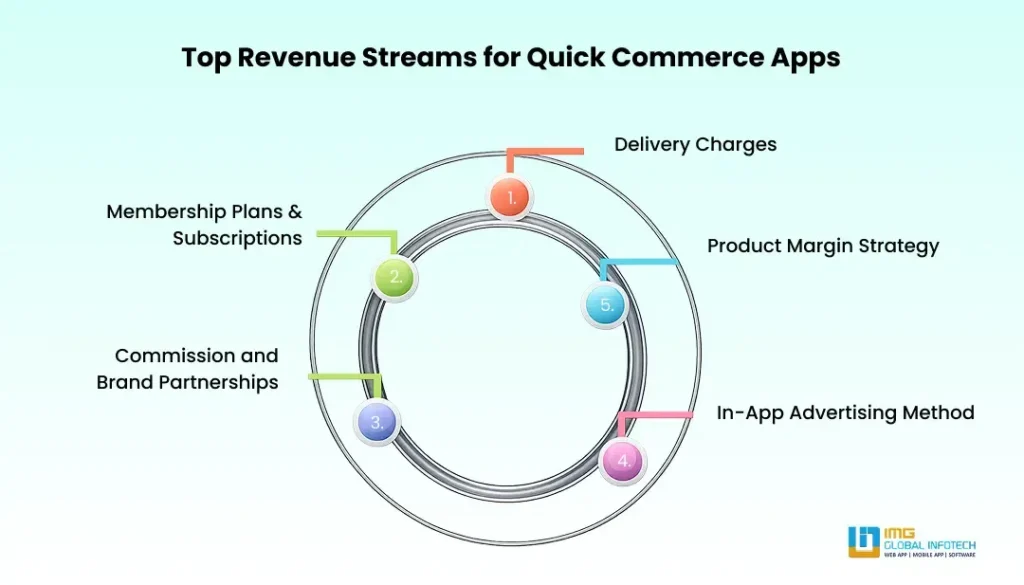
Delivery Charges
Delivery charges are one of the main revenue streams. Customers will be charged based on order size, location, and urgency in the custom on-demand app development in India. A free delivery model will also be presented, which is to increase average cart value.
Membership Plans & Subscriptions
Mostly platforms offer premium subscriptions that will provide free delivery and faster service along with exclusive discounts on quick commerce app development services. This also creates a subscription-based e-commerce revenue model that also ensures recurring income and customer loyalty in the business.
Commission and Brand Partnerships
These FMCG (fast-moving consumer goods) brands pay for better visibility through sponsored listings, homepage banners, and higher rankings in search results by an instant delivery app development company. This is a very good example of a commission marketplace system employed by quick commerce platforms.
In-App Advertising Method
There is a fact that quick commerce apps will also represent digital advertising platforms. Mostly brands pay for sponsored listings, banner ads, and promotional assets inside the app in quick commerce app development. This is kind of a part of the growing retail market through media network trends in e-commerce apps by the businesses.
Product Margin Strategy
A tiny margin on each product is one of the main sources of income for the quick commerce app development company. This is an e-commerce pricing model, where even a small markup makes sense when you are processing millions of orders every day.
Best Technology Stack for Quick Commerce App Development
Final Thoughts
The rapid development of commerce apps has proven to be the most attractive area of modern trade. However, apart from being fast, it is necessary to have a deep understanding of many aspects, such as technology, operation, consumer psychology, and much more, from a leading quick delivery app development company in India. Those businesses which can combine ultra-fast delivery with perfect user experience and good management will win.
It’s the perfect time to make an app for fast commerce. Being one of the earliest to venture into this market will provide you with the chance to become successful even before the market saturates.