Think about A Beautiful Mind for a second—John Nash, brilliant but haunted, fighting battles no one else could see. For years, that’s how mental illness felt: invisible, almost ignored. Fast forward to 2026, and everything’s changed.
Freud once said, “Unexpressed emotions will never die.” He probably couldn’t have imagined a world where AI doesn’t just listen but actually spots trouble before anyone notices in ai in mental health. It doesn’t wait for a breakdown—it steps in early.
Right now, one out of every four people deals with a mental health issue. Still, most of them can’t get to a therapist. AI is breaking down those walls. We’ve got chatbots that actually get it, tools that pick up on warning signs way before things get bad, and neurocognitive tech that sees patterns nobody else can.
This isn’t just a gentle shift. It’s a total shakeup.
By 2026, AI isn’t here to replace empathy—it’s here to boost it, reaching people and places that medicine alone just couldn’t touch.
What Is AI in Mental Health?
When people talk about “AI in mental health,” they’re really just talking about using smart tech—stuff like machine learning, natural language processing, and data crunching—to help diagnose, treat, and manage mental health issues.
These tools pay attention to how people act, what they say, and even the way they show emotions. They can spot early signs of things like depression, anxiety, or PTSD. Think about therapy chatbots, mood-tracking apps, or platforms that figure out who’s most at risk.
AI isn’t just for patients, either. Clinicians use it to get better insights, avoid mistakes, and offer care that actually fits each person’s needs. Plus, AI makes mental health support easier to get. People can reach out for help anytime, from anywhere, and it usually costs less—especially in places where regular care is tough to find.
Key Applications of AI in Mental Health
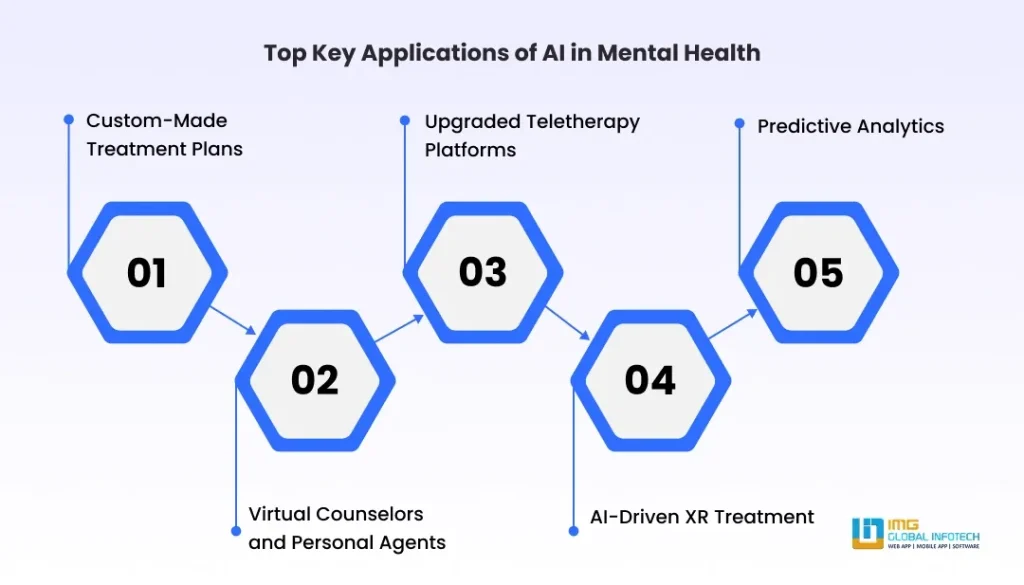
AI technologies can redefine the mental health therapy that can enhance how providers can deliver care that can also improve the patient outcomes the role of ai in personalized mental health apps.
It is also considerable that AI can’t replace clinicians; it can raise them with advanced tools that can optimize the treatment processes to get better results in the business.
Custom-Made Treatment Plans
The mental health therapy has become more conventional to deliver using standardized approaches that cannot always account for particular differences in ai for mental health to examine the proper response in the treatment.
Currently AI is transforming this paradigm that can enable custom-made treatment that can be planned according to the suitable patient’s needs and according to their progress as well.
Virtual Counselors and Personal Agents
AI-driven virtual counselors and mental health chatbots have emerged as effective tools for quicker solutions that can also strengthen low-risk support in artificial intelligence mental health.
These chatbots can also provide conventional therapy with round-the-clock access to emotional support and healing exercises as well as artificial intelligence in psychiatry.
Upgraded Teletherapy Platforms
Teletherapy really opened doors for people who couldn’t easily get mental health care before. And it’s not stopping there.
With AI in the mix, these platforms get even better—think real-time speech and emotion analysis, automatic transcripts, and useful insights therapists can act on right away to Build a meditation app like calm. It’s a smarter, more interactive way for both clients and therapists to connect and make progress.
AI-Driven XR Treatment
AI-driven extended reality therapy is revolutionizing the field of mental health. It combines virtual reality with intelligent AI guidance, making therapy not only more appealing to people but also significantly more effective.
Patients are immersed in an interactive environment, allowing them to confront and work through their psychological problems such as anxiety, PTSD, or phobias in a very safe and well-controlled setting.
Predictive Analytics
AI-driven extended reality therapy is revolutionizing mental health services. Integrating virtual reality with intelligent AI data, it transforms therapy into a desirable and effective experience.
In these simulated environments, patients engage with therapeutic tasks to conquer their challenges such as anxiety, PTSD, or phobias in a secure and monitored setting.
Benefits of AI in Mental Health Care
People can boost production, speed medical diagnosis, reduce the burden of medical staff, and even inspire patients to go to the hospital earlier if they use AI in a responsible way.
The advantages of ai in mental health care encompass all of the above without the need to get rid of human doctors and other health professionals in ai mental health applications.
Deployment of AI in mental health in the ethical way can offer the following benefits:
Reduce Treatment Cost
It is not like traditional counseling, where you need to schedule and travel for appointments only. The AI-based mental health apps can allow users to access their counseling sessions anywhere and anytime in ai for mental health support. Moreover, these apps provide aid at little or no cost as compared to physical sessions.
Simplified Diagnosis
AI technologies can analyze the massive volumes of behavioral, clinical, and biological data that can integrate with machine learning and non-generative techniques in the diagnosis process in ai mental health chatbot.
Such AI systems are capable of recognizing the first symptoms of psychological disorders such as anxiety, schizophrenia, and depression so that they can recommend customized therapy.
Automation in Workflows
AI in mental health takes a lot of paperwork off clinicians’ plates. It can handle document processing, write up session summaries, and get reports ready for compliance checks. That means healthcare professionals get more time for the work that really matters—and every minute with patients counts for more.
Enlarging Access
AI technologies can broaden the access to mental health support to eliminate financial, geographic, and logistical barriers to treatment in Healthcare app development services. The smart referral tools that aid patients in getting licensed clinicians to match with individuals for the right provider are based on care preference, location, and insurance as well.
How AI Is Transforming Mental Health Apps
Here is the process where AI is transforming the mental health apps according to the user’s unique needs and specifications:
Smarter Clinical Decisions
AI tools dig through tons of patient data and hand therapists real, usable insights. They spot patterns and flag early warning signs for mental health issues, so therapists can catch problems sooner and jump in with the right treatment.
Let’s say a patient isn’t getting better with a certain therapy — AI can help spot that quickly, so the therapist can switch gears before things drag on.
Smoother Operations
AI takes a lot of busywork off clinicians’ plates. It handles stuff like paperwork, reports, and booking appointments so therapists can actually spend more time with their patients.
Plus, with smarter data sharing and predictive analytics, AI helps different care teams stay in sync and communicate better — no more endless back-and-forth or lost information.
Better Access
AI-powered mental health apps are always on, day or night. Anyone can reach out for help, even outside regular clinic hours. That’s a big deal for people in rural areas or places with too few mental health professionals.
These chatbots don’t just wait around — they talk with users in real time, offering support and practical help right when it’s needed.
Challenges of Using AI in Mental Health
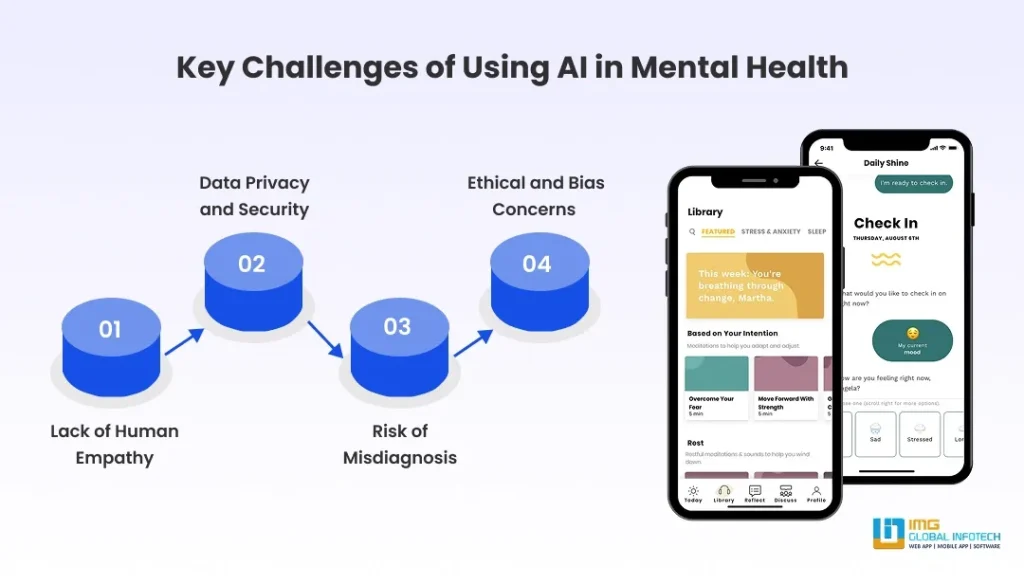
AI is shaking up mental health care, making support easier to get and reaching more people than ever. But let’s not kid ourselves—there are real issues we can’t ignore.
Lack of Human Empathy
AI just doesn’t feel. It can’t truly connect with someone in pain or offer the warmth you get from a real therapist. That makes it tough for AI to handle deep, complicated struggles where empathy matters.
Data Privacy and Security
Mental health info is about as personal as it gets. If AI platforms slip up and have a data breach, private details can spill out to Build mental health chatbot. No wonder people get nervous about opening up—they worry their secrets won’t stay safe.
Risk of Misdiagnosis
AI looks for patterns, but it doesn’t have a clinician’s eye or intuition. Sometimes, it misses the small stuff or gets things wrong, and that can lead to the wrong diagnosis or advice—especially for people who really need help.
Ethical and Bias Concerns
AI learns from the data it gets. If that data leans toward certain groups, the AI can start to favor some people over others when it comes to treating depression and anxiety. Some folks end up with better care than others, and that’s just not fair—especially in mental health.
Future Trends of AI in Mental Health
Despite these issues, AI’s role in mental health keeps getting more promising. Technology is moving forward, and as we build better systems and stronger ethical guidelines, we’re seeing a real push for designs that actually put people first.
Ethical Innovations in Guiding Principle
The ethical innovation can guide the future of AI in mental health. This simply means prioritizing well-being, accountability, and fairness over speed or profit from ai is used in mental health care. When the ethics are embedded in design with implementation, AI can also certainly contribute to mental health care without compromising trust and responsibilities.
Collaboration of AI and Humans
The most effective mental health care models would be collaborative in mental health apps. AI technologies can manage data analysis, scalability, and monitoring, while human intelligence can provide context, empathy, and judgment to Build a Smart Healthcare AI Chatbot. This collaboration can raise strengths on both sides and also eliminate limitations in mental health apps.
Predictive Analytics for Crisis Prevention Management
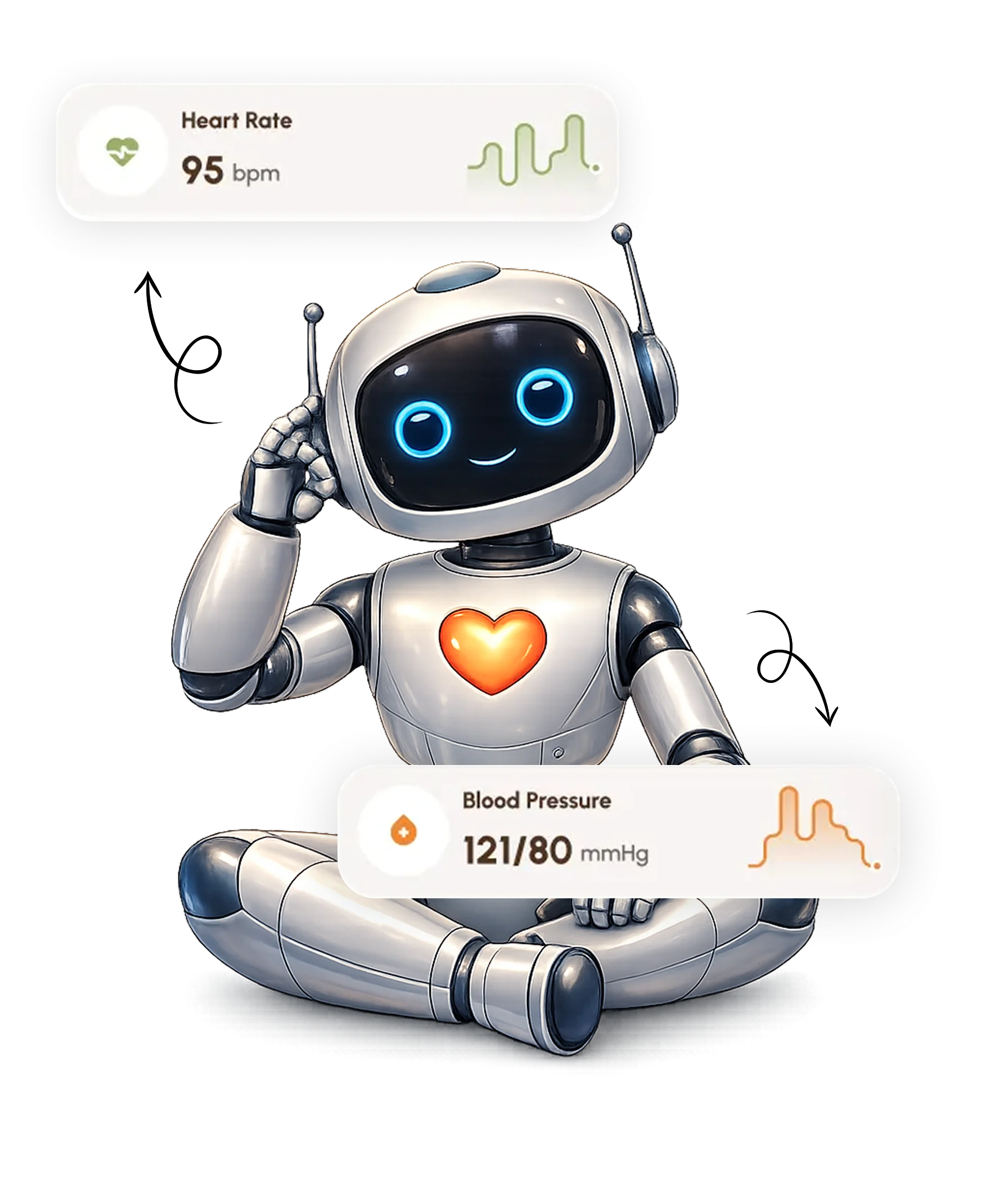
The machine learning models can also predict mental health crises to monitor real-time data from wearable technology with the benefits of ai in mental health treatment. It can also enable proactive intervention and significantly reduce the suicide rates and psychiatric emergencies as well.
AI-Driven Early Detection & Diagnosis
With advanced algorithms, AI can pick up on patterns in how people act, what they say, and even their online habits. It spots early signs of anxiety, depression, and other mental health concerns much sooner than you might expect.
Personalized AI Therapy & Virtual Partners
Now we’ve got AI chatbots and virtual therapists you can talk to any time, day or night. They don’t just spit out canned responses—they actually adjust their advice and conversation style to match what you’re going through and what you need emotionally. It’s a new way to get help that really fits the person, not just the problem.
Why Choose IMG Global Infotech to Build an AI Mental Health App?
If you want to build an AI mental health app, you need a tech partner you can actually trust—someone who knows the tech inside and out but also puts people first. That’s where we come in AI in healthcare. We’re not just about writing code; we’re about delivering real, secure solutions that actually help people and can grow with you.
AI and Healthcare Knowledge
Our developers have spent years working on AI healthcare projects. We use advanced machine learning, natural language processing, and smart data analytics to build mental health platforms that actually work in the future of ai in healthcare. You get accurate assessments, therapy suggestions tailored to each user, and real-time emotional support—no fluff.
Designed with Empathy
At the heart of everything we do is the comfort and the feelings of users. Members of our team develop applications in a way that is not only user-friendly but also truly inviting so that the users will have an experience of a secure and supportive environment, regardless of their age or origin. Simply put, our goal is to make a place where anyone would be willing to share.
Proper Integrations of Safety Regulations
Mental health data is personal, and we treat it that way. We use end-to-end encryption and tight access controls and follow HIPAA to the letter for examining the Cost to build a meditation app like headspace. Your users’ information stays private, protected, and in line with the strictest data security rules out there.
Availability of Custom Solutions
We design our AI mental health apps to grow with you. Need more users? We stay available after launch to ensure everything is working smoothly by providing timely updates and fine-tuning the platform’s performance. This way, your platform will continue to be reliable, full of features, and up to date with new developments.
Closing Statement
AI is changing mental health care quite dramatically. It is simplifying people’s access to support and at the same time becoming more efficient in recognizing symptoms at an early stage and personalizing treatment to a great extent. Virtual therapy, real-time monitoring, better diagnosis, among other things, are some of the advantages AI brings to the table.
However, there are still certain challenges such as data privacy, ensuring the algorithms are free from bias, and identifying the best way to incorporate this new technology by our leading mental health app development company. Nevertheless, as AI continues to evolve, it is becoming a formidable weapon in the effort to enhance mental health care for individuals across the globe.