Developing a mobile application is far more than simply writing the code and uploading it to the app store. It is a well-thought-out process involving steps such as planning, research, design, development, testing, deployment, and further enhancements. Each step in the mobile app development process significantly determines the app’s performance, scalability, and user experience. Yet, lots of companies and startups find it hard to estimate how long each phase will last and the factors affecting the overall timeline.
From the moment when a concept is validated to the time when a fully functional app is launched, the mobile app development from idea to launch must rely on the cooperation of designers, developers, testers, and business analysts. This blog aims to explain the full cycle of mobile app development, including the understanding of each stage, the relations of the time, and the main factors that affect the delivery of the project.
Understanding the Mobile App Development Lifecycle
A mobile app development stages consists of a series of actions that, step by step, turn a raw business idea into a successful digital application. Functionality, user experience, performance, and long-term scalability are aspects to which every stage of this lifecycle contributes.
The app development lifecycle covers concept validation, feature planning, interface designing, application coding, testing, deployment, and even maintenance. Each stage calls for meticulous performance. Exploring these phases will enable companies to figure out how long the project might take, allocate their budgets wisely, limit the risks of development, and produce apps that meet changing customer expectations and market trends.
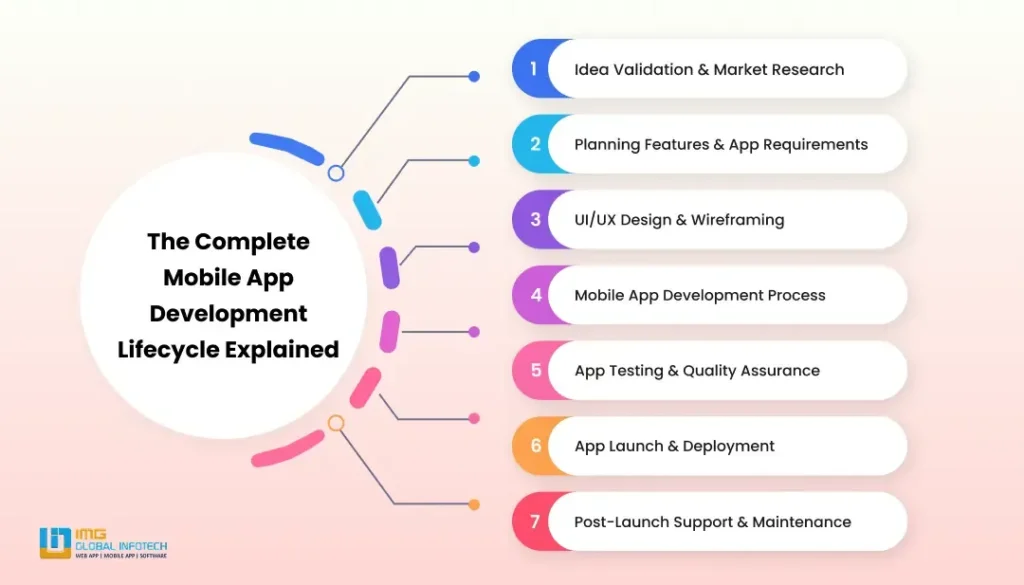
Stage 1: Idea Validation & Market Research
At this phase, the primary requirement is to confirm the notion of an app and to understand the target market.It is very important that businesses figure out whether the app idea is capable of meeting an existing need or a demand of the customer before they decide to develop it. This mobile app development stage includes analyzing competitors, investigating the industry, doing customer surveys, and checking the trends in order to determine the opportunities in the market and the challenges as well. Apart from that, the business owners also work on their target audience, business objectives, revenue generation methods, and the unique selling point during this phase.
Undoubtedly, idea validation is the most effective way to avert the risk of creating an app that might be left in the dust due to the lack of market demand or vague objectives. Mobile app development services providers and strategists meticulously examine the similar apps, issues faced by users, and user expectations to polish the app idea. An extensively researched idea lays a firm groundwork for the entire development process and makes sure that the application has a clear direction, is purposeful, and has strong potential for the business in the long run.
Stage 2: Planning Features & App Requirements
After the concept has been validated, planning the features, functionalities, and technical requirements of the app in detail becomes the next focus. This mobile app development stage is all about deciding what the app provides to its users and how it works. Companies prepare a comprehensive requirements document that features the main functionalities, users’ journey, the application’s blueprint, third-party services, security needs, and deciding on a platform such as Android, iOS, or cross-platform development.
Planning features are crucial as it has a direct bearing on how long the development will take, the money required, and the project’s complexity. Most of the time, teams split the features into MVP capabilities and cutting-edge features to simplify the development and speed up the time it takes to reach the market. Besides this, businesses also select the right technology stack, database design, APIs, and cloud infrastructure. Good planning is what gets rid of misunderstandings during the development phase, makes team communication better, and results in the app that is both fitting to the business goals and satisfying for the users.
Stage 3: UI/UX Design & Wireframing
UI/UX design is the process of making app interfaces look great and be easy to use while at the same time providing a consistent and efficient user experience. Designers start by creating wireframes that show the layout of the app’s screens, how the navigation flows, and the placement of functionalities. These wireframes serve as a guide toward the actual application and also give the stakeholders a look at the user journey before development gets underway.
The app development process after wireframing is that designers produce interactive prototyping, color palettes, fonts, symbols, and motions so as to define the app’s visual style. A well-thought UI/UX design architecture leads to the improvement of the user’s engagement, retention, and satisfaction levels. This is achieved through seamless navigation and instinctive interactions. Besides, this phase involves conducting usability tests to pinpoint areas of the design that require improvements and eliminating points of friction. Besides making the application visually appealing, human-centered UI/UX design contributes immensely to the realization of business objectives through increased user adoption and better overall app performance.
Stage 4: Mobile App Development Process
The mobile application development process involves translation of the design and wireframes into working software. Hire mobile app developers rely on the programming languages, development tools, and frameworks they opt for, to build the app. This working stage is typically segmented into three parts: frontend development, backend development, and API integration. The former is concerned with delivering to users a nicely laid out and interactive app while the latter looks after the databases, servers, authentication systems, and the application logic.
Third-party services like payment systems, push notification, location-based features, and analytical tools are integrated as per the needs of the project. By adopting the agile methodology development work is broken down into small pieces called sprints that help swift progression and continuous feedback. Effective communication and sharing of information among the mobile app development services provider, UI/UX designers, testers, and project managers ensure that this phase results in a practical, secure application that fulfills business requirements.
Stage 5: App Testing & Quality Assurance
Testing and quality assurance represent the pivotal elements in getting the mobile app ready and safe to be used by the public. They make sure the app works well on various devices and under different user conditions, such as types of operating systems. This is where the QA pros do their thing: they try to find any bugs, technical snags, security loopholes, and scenarios where the app may slow down or fail before it hits the market. Functional testing, usability testing, compatibility testing, performance testing, and security testing are some of the methodologies.
Besides stabilizing the custom mobile app development, improving the loading time, responsiveness, etc., quality assurance also enhances the user experience as a whole. Testers check if all features are indeed usable and they also assess whether the app adheres to the norms of the industry and the guide manuals of the platforms. Usually, more than one testing method, i.e. manual and automated, is used to confirm the results. Rigorous testing is instrumental in shunning post-launch problems like app crashes, bad reviews, and compromised security. A well-tested app earns the faith of the users and enables them to have a trouble-free experience irrespective of the device or the environment used.
Stage 6: App Launch & Deployment
Once tested thoroughly and given the go ahead the application moves on to the launch & deployment stage. Here mobile app development companies are busy fine-tuning the app for publishing on stores like Google Play Store and Apple App Store. This process involves optimizing app speed, preparing app description, screenshots, keywords, privacy policy and adhering to the app store guidelines.
Businesses integrate analytical tools and monitoring systems to collect information on user behavior, download rates, user engagement, technical parameters post launch. A successful app launch is often coupled with a marketing campaign, promotion through social media channels, social media influencers and the ASO (App Store Optimization) techniques so as to enhance discoverability and user engagement. Deployment means not only putting up an app for the public but a smooth rolling out and its accessibility to all. An efficient launch campaign not only boosts discoverability of the app but increases initial downloads and makes a positive first impression in the competitive world of app development.
Stage 7: Post-Launch Support & Maintenance
After a successful deployment the mobile app development life cycle doesn’t end. The continuous support and maintenance phase is important for the long-term success of the app. Maintenance services include monitoring the performance of the application, debugging errors, upgrading the functionalities, enhancing security of the app and maintaining the latest operating system and device compatibility. Data about customer behavior and areas for improvement is constantly gathered from analytics and feedback of the users.
Continual updates boost users’ interest in the app, keeping it on par with other products. Maintenance of the application includes activities such as server upkeep, database optimization, security updates, and the planning of new features and enhancements that reflect the changing business needs. Apps which are ignored in terms of maintenance may end up with performance degradation, security vulnerabilities and lower user engagement over time.
With ongoing support, not only does a stable and scalable app remain accessible to users ensuring that the best user experience is always delivered, it also lays a foundation for business growth and getting aligned with the latest technology.
Mobile App Development Timeline Breakdown
The mobile app development timeline can vary greatly depending on the app’s level of complexity, features, UI/UX requirements, and technology stack. Proper planning, communication and execution during every stage of the development lifecycle are the key to success. Starting from idea generation and research to UI/UX design, development, testing, deployment, and ongoing maintenance, each stage significantly contributes to the quality and performance of the final application.
Knowing the approximate time needed for each stage of the development process will help companies in planning a budget, preparing the right number of human resources, and managing the expectations of stakeholders for launching a scalable and high-performing mobile application.
Stage 1: Research & Idea Validation (1–2 Weeks)
This phase is about assessing the market and audience need for an app and determining whether the concept has commercial potential. It involves market research, competitor analysis, target user profiling and feasibility study of the concept. This mobile application development process can involve surveys, questionnaires and definition of objectives. This research will reduce risk for the development, guide strategic decisions and create a solid basis upon which the entire mobile app development cycle can be planned and built for scalability in the future.
Stage 2: Planning & Requirement Analysis (1–3 Weeks)
In this phase, requirements for the app are detailed; features, functions and the development objective and intended users are defined, while development of a blueprint of app structure, functionality, user flow and technical needs is set. Projects plans are then drafted, together with selecting the appropriate technology stack and desired platform compatibility. Good requirements analysis assists with the accurate budgeting, time planning and resource allocation necessary during this phase, reduces confusion throughout development and ensures the final application is suitable for both business and user requirements.
Stage 3: UI/UX Design & Prototyping (2–5 Weeks)
The design phase focuses on creating wireframes, prototypes, mockups and overall user interface designs to maximize user interaction. This phase takes into account design requirements, ease of navigation, responsiveness, usability and visual aesthetic. Creating interactive prototypes helps the client envision the final product before any development takes place. A high-quality user interface and user experience can improve app retention, simplify app functions and optimize user application interaction.
Stage 4: Mobile App Development (2–6 Months)
This is the longest phase, in which the frontend and backend interfaces are coded along with the system, APIs and underlying app logic and functionality. The length of this phase is influenced by the size and complexity of the app, the chosen technology stack and necessary integrations. In order to assure continuous progress and testing, development is typically done in sprints, while appropriate security measures, coding techniques and performance considerations must be included in the planning and implementation stages for optimal scalability.
Stage 5: Testing & Quality Assurance (2–4 Weeks)
In this phase, testing is completed to identify any defects, security vulnerabilities, issues with cross-platform app development, compatibility and performance problems. Different types of tests such as functionality, usability, performance and cross-platform compatibility are performed to ensure the smooth and efficient operation of the app. Adequate testing improves stability and performance and reduces the chance of errors, bad reviews, or malfunction during user operation.
Stage 6: App Launch & Deployment (1–2 Weeks)
The deployment stage comprises everything required to release the app to the Android Play Store or Apple App Store. This includes application optimization, server configurations, store listing creations, compliance with all guidelines and implementation of marketing tools and analytical features before the launch. Efficient deployment increases your app’s discoverability, downloads and early user engagement.
Stage 7: Post-Launch Maintenance & Updates (Ongoing)
After your app is launched, it is crucial that its performance is constantly evaluated and that updates for fixing defects, strengthening security and adding features according to the needs of your users are regularly rolled out. Continuous maintenance ensures app compatibility with newer operating system versions, devices and changing market needs, while helping to boost retention, performance and scalability in the long term. Continuous maintenance is absolutely necessary to ensure your application is always stable and operating efficiently.
Factors That Affect App Development Time
When it comes to estimating the duration of developing a mobile application, there are a range of technical and business factors to consider. Knowing each of these factors can help businesses have a reasonable estimate for the mobile app development timeline might take without suffering setbacks in any of the planning, development, testing, and launch stages of an app.
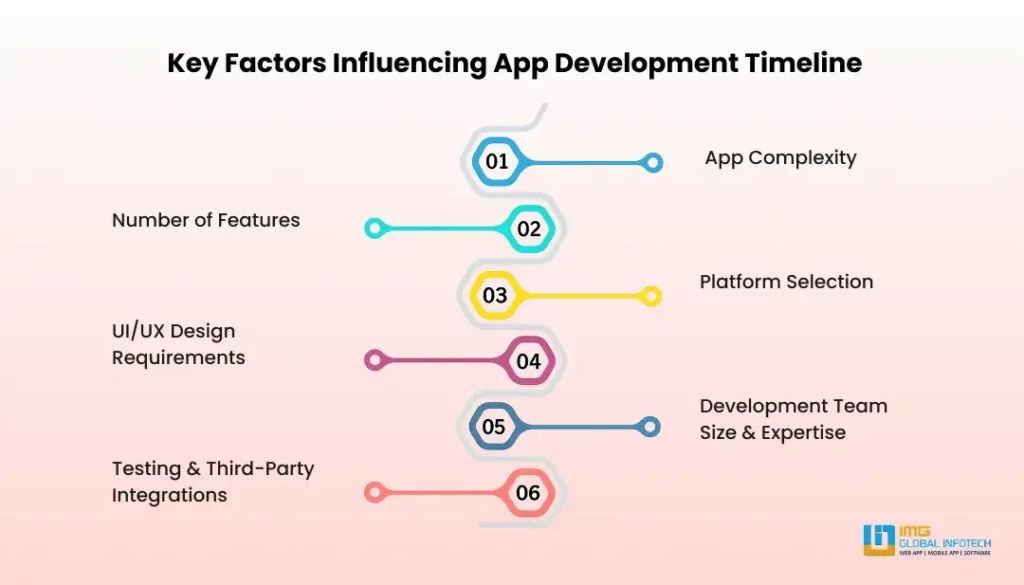
1. App Complexity
The complexity of the app development project will naturally influence the timeline of app development. While simpler apps with just a handful of basic functionalities take less time for development teams to work on, more advanced apps with complex integrations like AI features, real-time tracking features, payment gateways, and specific custom features will certainly take a more concerted effort and more development time.
2. Number of Features
The number of features in an app directly affect the overall time that the development of such a project might take to complete. Basic features and functionalities such as pushing notifications, making payments through a gateway, creating chat rooms, and locating users with GPS can cause development to take a much longer time due to the need for additional coding, API integration, testing, and implementing security measures.
3. Platform Selection
The timeline will also differ if you’re developing the app for either Android or iOS or if you’re trying to do both. This means developing native apps for each of the platforms would generally take longer compared to using cross-platform frameworks. Platform-specific guidelines and device requirements of a given platform or operating system can also cause quite an effect.
4. UI/UX Design Requirements
Custom designed features, high quality interactive animations, fancy transitions and custom branding would inevitably take up much more time to implement from the design team perspective, hence also increasing the overall timeline. Well crafted design and high-quality UI/UX, will involve thorough wire-framing, prototyping, extensive feedback sessions with custom app development companies, along with multiple rounds of redesign and user testing until smooth functionality and user-friendly interface are achieved.
5. Development Team Size & Expertise
Development teams composed of skilled designers, mobile app development agency, testers and project managers can produce projects in a shorter span of time compared to smaller, less experienced teams who require much more time when it comes to solving problems, fixing bugs and project management. The combined skills of the development team can influence productivity, development time and overall project timeline quite significantly.
6. Testing & Third-Party Integrations
Apps that require a huge amount of testing and have quite a lot of third-party integrations will also take longer. Integrating API, payment gateway, cloud hosting, analytics or database needs the best mobile app development company to code for the integration as well as do extensive tests for compatibility and performance, hence increasing the development timeline quite substantially.
How to Speed Up the App Development Process?
If there’s a desire to quicken the mobile app development timeline, there should be enough careful planning and right choices in development approach and managing resources efficiently. If businesses try to manage the workflow more effectively, they will be able to launch apps much sooner without compromising on the quality and performance. Let’s look at some efficient tips that will surely fast-track mobile app development.
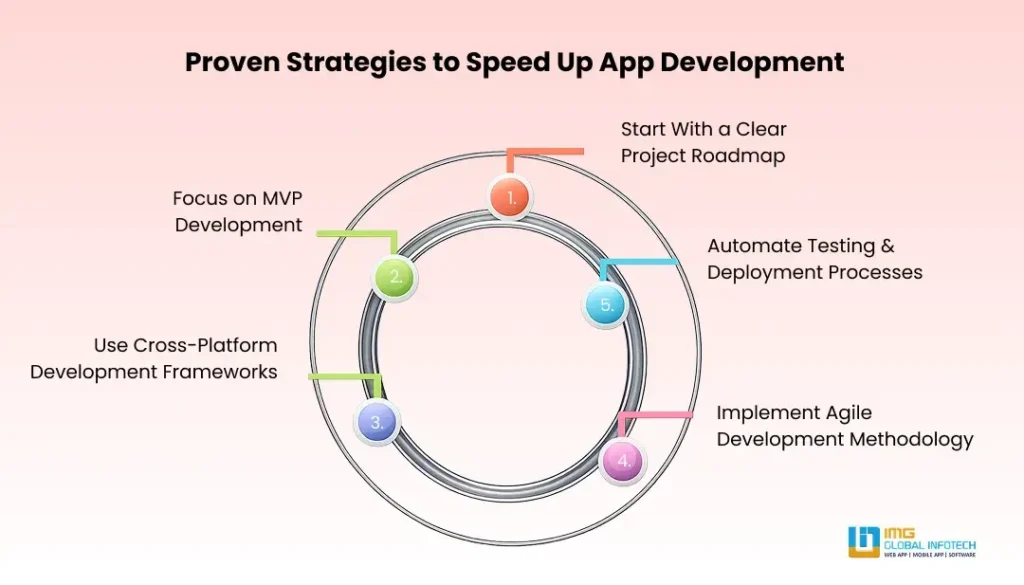
1. Start With a Clear Project Roadmap
It is always wise to begin by having a clearly defined project roadmap that outlines business objectives, priorities for features, required timeline and technical requirements. Good planning of all these components significantly minimizes issues by reducing the likelihood of any kind of misunderstanding or the need for re-work.
2. Focus on MVP Development
A minimum viable product(MVP) application is an efficient approach to develop an app. Instead of developing and releasing a fully fledged, complex application, businesses can release an MVP with essential features only. This is extremely beneficial in minimizing the time of development as well as reducing the initial cost while getting user feedback beforehand which they can use to develop new features for future updates.
3. Use Cross-Platform Development Frameworks
With the help of cross-platform technologies like Flutter and React Native, you don’t need to develop two separate apps for both Android and iOS. You will only require a single codebase which means a drastically reduced time spent coding and on tests, along with saving up time in maintenance of the app development solutions for startups for future use.
4. Implement Agile Development Methodology
With the agile methodology of development, your project will be broken down into much smaller, easily manageable iterations. During each iteration the team will only work on a handful of features at a time with regular feedback from users, enabling continuous improvements to be made as the project progresses.
5. Automate Testing & Deployment Processes
Automated testing tools help quickly discover bugs, performance issues, and compatibility problems without being totally dependent on manual methods. Continuous integration and automated deployment pipelines improve release cycles, enhance development productivity, minimize human errors, and speed up the delivery of stable, performance-optimized mobile apps.
Conclusion
Developing an app from the inception stage through to successful launch involves multiple steps and necessitates strategy, technical proficiency, and ongoing cooperation. Knowing the entire development lifecycle for mobile apps helps organizations make educated decisions, manage finances effectively, and increase their readiness for the market. Each phase, from research to design and development and through testing and deployment to ongoing support, is crucial to building a scalable and user-centric app. IMG Global Infotech is your trusted partner in developing cutting-edge, performance-driven mobile apps for the needs of the modern business landscape. Our highly skilled team streamlines development, creates fluid user experiences, and sustains the long-term digital success of startups and enterprises around the world.