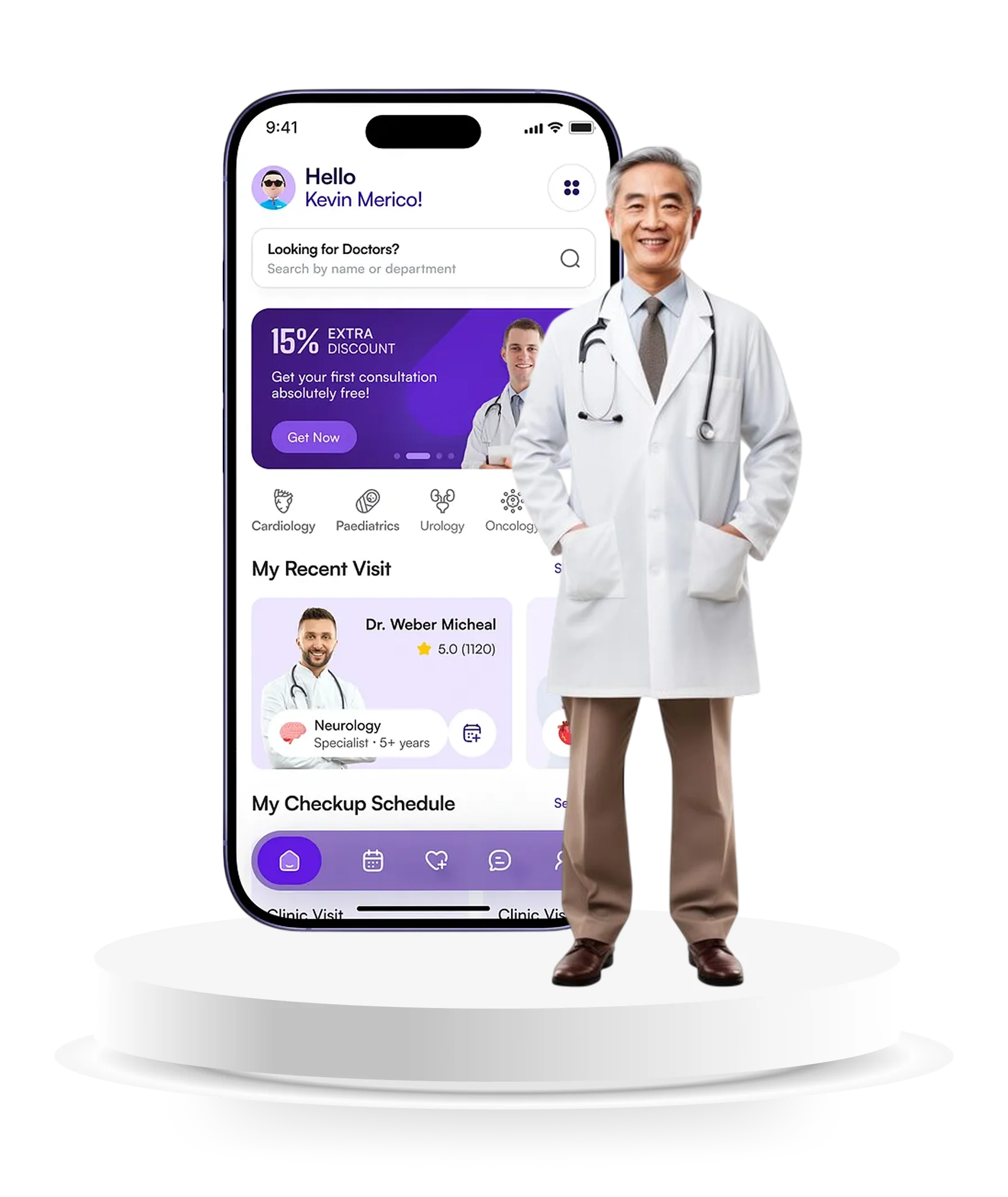
The healthcare industry is rapidly implementing digital technologies and telemedicine is one of the greatest breakthroughs. Hospitals and healthcare centers are increasingly incorporating telemedicine applications for remote consultation, patient engagement, and cost reduction while opening up access to high quality healthcare services to a wider population. Patient requirement for easy and on-demand medical services is the main cause of telemedicine becoming indispensable. Telemedicine applications have evolved from video consultation and writing e-prescriptions to patient monitoring and diagnostics with artificial intelligence.
Nevertheless, developing a telemedicine app development for hospitals that works well is a challenge that involves many aspects such as the selection of suitable technology and thorough knowledge of regulations. In addition, the approach should be patient-oriented.
In this detailed manual, the readers will know about the telemedicine app development procedure, top features, pricing, advantages, and tips for hospitals and clinics.
Market Overview and Telemedicine Expansion
- According to a forecast, the worldwide telemedicine market will surpass USD 380 billion by the year 2030 after a compound annual growth rate of just over 20% during 2024, 2030.
- Currently, more than 75% of hospitals and healthcare providers world-wide release telehealth services of any type.
- The number of virtual healthcare visits has ramped up over 300% relative to pre-pandemic phases.
- More than 60% of patients view telehealth positively for the latest consultations, check-ups, and prescription refills.
- The mHealth (mobile health) industry is poised to go beyond USD 250 billion by the year 2030, mainly due to smartphone penetration and remote patient monitoring.
- Remote patient monitoring (RPM) is among the most rapidly expanding segments of telehealth, with a forecasted growth rate of approximately 18-25% CAGR over the next ten years.
- Telehealth usage in the United States, in particular, remains at a level of 30-40 times higher than it was before 2020.
- There is a surge in the adoption of AI-driven telemedicine platforms as the healthcare AI market is projected to surpass USD 180+ billion by 2030.
- The number of people worldwide using digital health services including telemedicine applications is estimated at more than 1 billion by 2030.
- The major reasons boosting the growth of telemedicine market globally are the increasing need of patients for getting healthcare services through telemedicine, the growing cases of chronic diseases, and the shortfall of physicians.
Benefits of Telemedicine Apps for Hospitals and Clinics
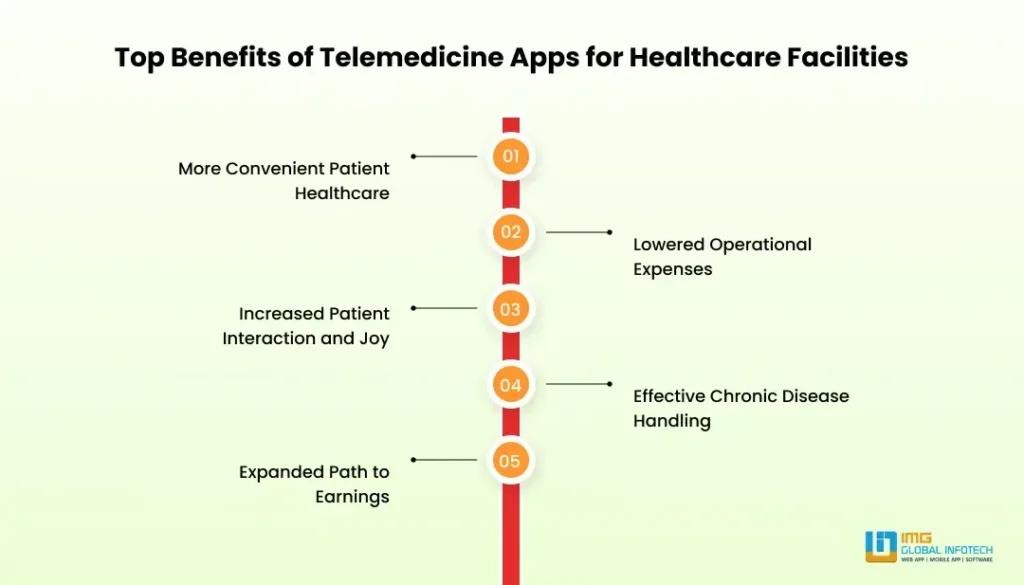
Benefits of telemedicine apps for hospitals include remote consultation, easier patient accessibility, reduced hospital/clinic administrative tasks, enhanced patient care are just a few of the ways telemedicine app development for hospitals. Hospitals and clinics stand to gain in efficiency, patient loyalty, and increased revenues by employing these technologies.
1. More Convenient Patient Healthcare
Telemedicine apps break down distance and time limitations by enabling patients to make health consultations anytime and anywhere through the internet with their phones, tablets, or computers with a camera and microphone. This is greatly helpful for those living in frontier or disadvantaged areas where specialists are hardly available.Hospitals and clinics have the opportunity to widen their service area and still offer timely medical help.
2. Lowered Operational Expenses
Telemedicine app development for clinics to cut down their administrative and infrastructural costs by reducing physical visit requirements and efficiently using resources. Online consultations also help in reducing overhead expenses; hence hospitals and clinics can function more efficiently and make more profit.
3. Increased Patient Interaction and Joy
Hipaa compliant telemedicine app development comes with features that make appointment scheduling, virtual meetings, issuance of digital prescriptions, and follow-up care a breeze. Such amenities enhance a patient’s overall experience leading to more engagement, better treatment adherence, and higher satisfaction with healthcare services.
4. Effective Chronic Disease Handling
Telemedicine apps allow for ongoing observation and regular interaction between patients and healthcare providers which is helpful in the management of chronic diseases like diabetes, high blood pressure, and heart disease in hospitals and clinics without the need of a high number of hospital admissions.
5. Expanded Path to Earnings
Healthcare systems can attend to more patients via telemedicine consultations without the need to physically enlarge their facilities. Telemedicine app development for clinics furthermore offer other income avenues such as subscription models, specialist consultations, remote monitoring services, and premium healthcare offerings.
Key Features of a Telemedicine App
Today’s telemedicine applications demand features that aid healthcare delivery, enhance patient experiences, boost clinical efficiency, and facilitate secure communication between healthcare providers and patients.
1. User Accounts
Patients and healthcare providers will have user accounts to allow for private access to view and manage personal information and/or medical/clinical records.
2. Appointment Scheduling
Patients can book, cancel or reschedule their appointments with a healthcare provider with the ability for the provider to control their appointment booking.
3. Video Consultation
Healthcare providers and patients will be able to communicate using video technology (i.e., VoIP or webcam) through the internet to do everything that traditional in-person visits accomplish, including diagnosing and treating patients.
4. Audio Consultation
If there is no need for a video consultation, healthcare providers will be able to provide voice call services (i.e., telephone) to their patients.
5. In-App Chat & Messaging
Patients will be able to securely send and receive real-time text messages to/from their healthcare provider to receive quick answers to questions about appointments, prescriptions, etc.
6. E-Prescription Management
Digital prescriptions will be created, sent and managed by a healthcare provider electronically within the telemedicine application.
7. Electronic Health Records (EHR)
Each patient’s complete medical history including diagnoses, treatments, and reports will be digitally stored in one electronic location for easy access.
8. Remote Patient Monitoring
The ability to collect and obtain real-time physiological data from individuals, e.g., heart rate, temperature, via mobile devices.
9. Secure Payment Options
Supports multiple options for paying online when receiving telemedicine advice or items that are classified as consultative health care services, and for related costs associated with receiving these services.
10. Alerts and Notifications
Creates alerts for future appointments, medications, appointments to have tests done (e.g. blood tests, laboratory tests), etc.
11. Doctor Information Search and Sort
Allows patients to sort through doctors or healthcare providers based on their area(s) of specialization, time available for consultation, estimated consultation cost, quality of patient care and language spoken.
12. AI-Based Symptom Checker
Allows patients to enter their own symptoms into the application and receive relevant medical information to assist them prior to consulting with a physician regarding these same symptoms.
13. Multilingual Functionality
Enhances the functionality of the application for users and patients, by providing the ability for patients to choose which language they would prefer to function with within the application.
14. Reports/Analysis Dashboard
Allows healthcare providers to generate reports from the patient communication application, with pertinent information regarding: patient communication, monetary value scheduling patients in the system for procedures/scheduling patient visits, and crossing over to the patient’s health record system, for the purpose of tracking the efficiency of that patient moving through the healthcare continuum.
15. Safety and Compliance
Ensures that patient information is kept safe, secure and intact, by using technology providing a means to authenticate each user who enters the system, implementing methodical access controls (to prevent unauthorized access to patient information) and complying with all applicable regulations.
Advanced Features to Separate Your Telemedicine Platform
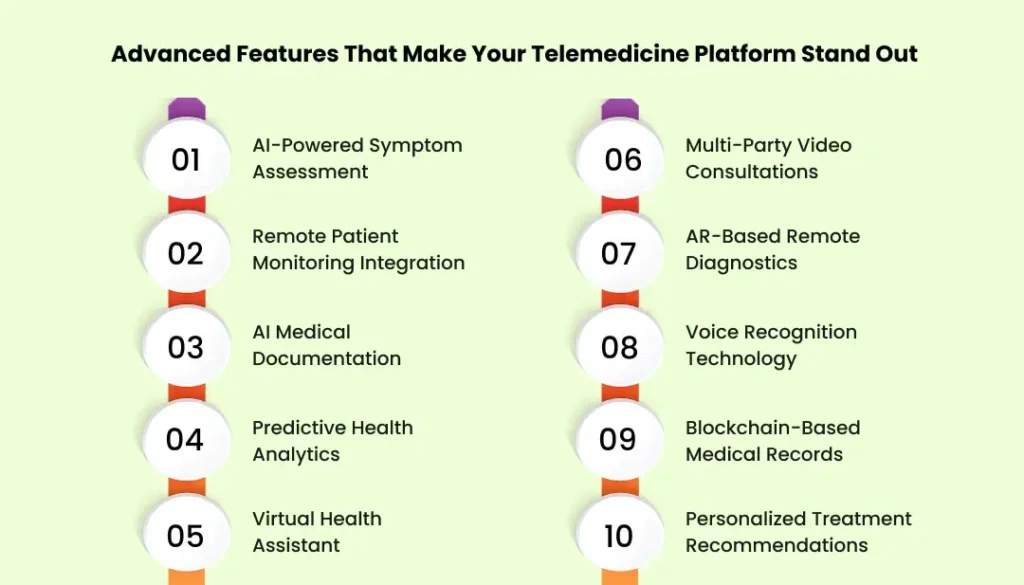
In today’s highly competitive market for digital healthcare, proven improved functionality of telehealth solutions will be a key differentiator and help telemedicine solutions establish and retain a competitive advantage in both the physical and digital healthcare space. Some of the advanced capabilities that will be offered as part of telemedicine solutions include:
1. AI-Powered Symptom Assessment
Utilizing AI technology, the telemedicine solution will be able to determine a patient’s likely condition based upon the symptoms they are experiencing, recommend care options, and complete the clinician’s preliminary assessment of the patient via remote video consultation with the clinician.
2. Remote Patient Monitoring Integration
The integration of remote patient monitoring into the telemedicine solution will serve as the bridge between remote non-invasive monitoring devices and health sensors via a web-based portal to facilitate access to biometric data, report vital signs, and update health status.
3. AI Medical Documentation
The AI component of the telemedicine solution will assist in reducing administrative tasks by recording/transcribing patient consultations and clinical notes which will help to improve patient satisfaction with their telemedicine experience and streamline the referral process for transferred care and forward medical history to new providers.
4. Predictive Health Analytics
The telemedicine solution will provide predictive analytics using the clinical history and assessment of the patient based on his or her medical history to identify potential medical issues, provide clarity with respect to the patient’s anticipated prognosis and enable better decision-making regarding an appropriate treatment plan.
5. Virtual Health Assistant
A Virtual Health Assistant can help patients with scheduling appointments, remind them of medications, monitor their symptoms and answer questions in real time.
6. Multi-Party Video Consultations
A multi-party video consult can be used to bring together everyone working to care for a patient (physicians, specialists, nurses, caregivers and family), allowing them to participate in the consult together.
7. AR-Based Remote Diagnostics
The use of augmented reality allows the physician to use AR technology to show the patient visually what is wrong with them and guide the patient through the process of diagnosing them using augmented reality technology.
8. Voice Recognition Technology
Using voice recognition technology, conversations between the patient and the physician can be converted into a structured electronic medical record (EMR) that is used to document the encounter, increasing the accuracy of documentation, and improving productivity.
9. Blockchain-Based Medical Records
The use of blockchain technology increases the security, transparency and interoperability of healthcare data by providing a secure, tamper-proof digital environment for storing medical records.
10. Personalized Treatment Recommendations
Based on the patient’s medical history, AI-based algorithms can assist the clinician with recommended treatments, medications and preventive health measures that are tailored to the specific patient.
Step-by-Step Telemedicine App Development Process
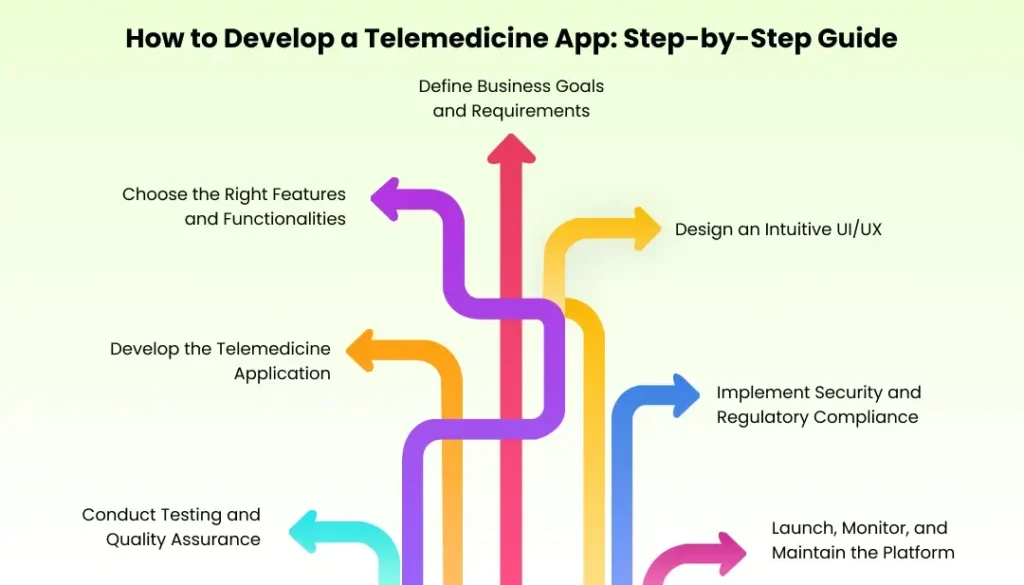
Creating a powerful telemedicine program is a complex task requiring various elements such as planning, healthcare expertise, regulatory compliance, and the right technology stack besides building the app itself. With experience among the telemedicine app development company a hospital or clinic can not only save money, time, and risks but also release a safe, extendable, and richly featured telemedicine solution that fulfills patients’ needs.
Step 1: Define Business Goals and Requirements
The first action is to set guiding principles for the new solution, pick up the typical user of the service, define the healthcare procedures and depth of the telemedicine platform. The custom telemedicine app development company which develops the healthcare app will also look at market research, analysis of competitors, and discussions with stakeholders that lead to a clear direction for the telemedicine solution that changes the scope of organizational goals and patient needs.
Step 2: Choose the Right Features and Functionalities
The next phase is to choose among the basic as well as the enhanced features like video calling, appointment management system, electronic prescriptions, remote patient monitoring and payment integration. For maximum effectiveness, remote patient monitoring app development team members usually rank functionalities in line with business goals, customer expectations, budget limitations and requirements for scalability over time.
Step 3: Design an Intuitive UI/UX
Making the application easy to operate is primary for both the patient and the doctor. Creating wireframes, mock-ups and mapping user experiences that make navigation easy, help those with disabilities and attract people is the role of designers. User-friendly design leads to natural communications while simultaneously lowering the complexity of the use by various age groups.
Step 4: Develop the Telemedicine Application
With the help of the latest tools, talented developers construct the frontend, backend, APIs, and cloud infrastructure. Besides, they take care of installing communication means, health databases, payment gateways, and protective layers. Through strong structure, the telemedicine solution will be able to respond to increasing customer usage without any drop in performance.
Step 5: Implement Security and Regulatory Compliance
Healthcare-related software must follow standards like HIPAA, GDPR, besides other healthcare regional norms. The coding team puts in place encryption, reliable authentication, user access control, and data security measures. Development that is done keeping compliance in focus not only protects critical patients’ information but also leads to drastic reduction in the risks of litigation and operations.
Step 6: Conduct Testing and Quality Assurance
Extensive testing is used to detect and fix any bugs, weaknesses, or slowdowns. The team involved in healthcare app development checks the app’s effectiveness, compliance with usage, and device adapting capabilities. In-depth quality assurance is a must to have a trustworthy, safe, and uninterrupted user experience even before the launch.
Step 7: Launch, Monitor, and Maintain the Platform
Once the platform is released the process of monitoring and maintaining it continuously plays a significant role in the achievement of the platform. Hire telemedicine app developers deliver updates, security patches, new features, and technical service. Along with the regular evaluation of platform performance and analysis of user feedback enables platform optimization, which also guarantees that it stays competitive and supports changing healthcare requirements.
How Much Does Telemedicine App Development Cost?
The telemedicine app development cost usually falls somewhere between $5,000 and over $15,000 depending on the degree of difficulty, features, technology stack, compliance requirements, and location of the development team. A very simple telemedicine app may cost from $5000 to $8000, but the more sophisticated ones with AI, remote monitoring, and EHR integration functionalities may be priced at $15,000 or more.
1. App Complexity and Feature Set
How many features and how advanced they are implies a great impact on costsBasic apps with appointment booking and video consultations need to be made with less investment. On the other hand, functionalities such as AI symptom checkers, remote patient monitoring, e-prescriptions, analytics dashboards, and wearable integrations that are quite advanced require development time to be increased, technical complexity to be heightened, and, overall, telemedicine app development cost.
2. Platform Selection (iOS, Android, or Cross-Platform)
Developing two native applications separately for iOS and Android will obviously mean more expenses than cross-platform. So, businesses are faced with the dilemma of deciding if they will go on a single platform first, or if they can support devices of different platforms simultaneously. Which platform to choose has an impact on how much time is spent in development, maintenance requirements, testing scope, and operational costs for the long-term.
3. UI/UX Design Requirements
Telemedicine software that is well designed not only brings psychometric benefits for the users but also makes work easier for both the patients and the doctors. Features for customization, interactive dashboards, implementation of accessibility, personalized workflows, and other such aspects require the input of design and development specialists. Enhanced experiences most of the time mean more expenses on the project and longer timelines.
4. Healthcare Compliance and Security
It is imperative for telemedicine platforms to be aligned with healthcare regulations like HIPAA, GDPR, and other regional data protection laws. Besides encryption that is secure from end to end, authentication that is secure, access controls, audit logs, and compliance measures also require attention. These security as well as regulatory constraints do lead to significant cost to build a telemedicine app, but they are crucial for the protection of the patients’ data.
5. Third-Party Integrations and Maintenance
Healthcare organizations that want to resort to telemedicine must deeply consider some crucial factors such as the regulations on telemedicine, the impact of telemedicine on the patient-doctor relationship, etc. To mention a few, telemedicine platforms need to be equipped with features such as video consultation, appointment scheduling, e-prescriptions, remote patient monitoring, healthcare compliance and security, etc.
Why Choose IMG Global Infotech for Telemedicine App Development?
Collaboration with IMG Global Infotech will allow you to develop secure, scalable, and feature-rich telemedicine applications that focus on the core business goals of hospitals, clinics, and healthcare startups. With its healthcare software development expertise, the company is committed to delivering custom-made video consulting, appointment booking, e-prescription, remote patient monitoring, and healthcare compliance products. Our telemedicine app development services abide by the industry best standards to ensure user-friendly and secured telemedicine applications. IMG Global Infotech is well versed in telemedicine app development from the early stages of strategy and design to the final phase of deployment and ongoing support. Through this, it helps healthcare providers accelerate their digital transformation journey and deliver unparalleled patient care.
Conclusion
To sum up, telemedicine software solutions bring the transformation in the way hospitals and clinics deliver the care to their patients as these systems support the service accessibility, efficiency, and patient-centeredness. Also, telemedicine platforms can be integrated in many ways to enhance user experience by including virtual consultation services, remote patient monitoring, and AI-powered healthcare services.
They also greatly contribute to hospital operational efficiency, staff productivity, and patient outcomes. But, a perfect telehealth solution requires strategic planning, compliance with healthcare laws, top notch security, and an appropriate set of features. Healthcare services can benefit greatly from a partnership with a telemedicine software development company with proven experience in the field, such as IMG Global Infotech.
Such a partnership can enable healthcare organizations to create telemedicine applications that are not only scalable and secure but also flexible enough to align with patients’ changing needs. Besides meeting patient expectations, these partnerships also offer healthcare organizations the opportunity to grow in the long term and lead the way in digital innovation in the healthcare sector.