Truth hits hard sometimes. Ever attempt to reserve a pickup and find yourself stuck in endless steps? That moment when it feels like too much effort just to move stuff. Happens more than anyone admits.
Everything around you arrives by truck. Furniture, food, packages from online stores—all of it rides on wheels in the Truck Booking App Development. Oddly enough, arranging that ride often seems frozen in time. Most folks still book freight like it is the last century. Here is where change begins.
What fits better is a tool that cuts through the mess of shipping logistics, clean on the surface, and smart where it counts. Imagine crafting a tiny world where truckers and cargo senders actually understand each other. Not bad, huh?
So grab your coffee, get comfortable, and let’s break down—step by step—exactly how you build a truck booking app that people will actually love using.
What is a Truck Booking App?
A truck booking app is a kind of platform where the different stakeholders for a logistics transaction can register and connect with businesses in the Truck booking app development process. This process can help to fulfill their needs for everyone. Whether it is a shipper, receiver, driver, or career.
On the other hand, this app lets you make all your decisions on the digital platform, like sharing information about the pickup or delivery address, logistics, timing, or costs.
Market Overview of the Logistics & Trucking Industry
As per the report of Market Research Future analysis, the market overview of the logistics & trucking industry was estimated at $16.96 billion in 2025, and it is projected to reach $25.11 billion by 2035, with a CAGR of 4.0% during the forecast period from 2026 to 2035.
Key Market Trends & Highlights
- The logistics and trucking industry is currently experiencing a transformative phase driven by digital enhancements and transforming consumer demands in the business.
- The sustainability initiatives are gaining traction, influencing logistics strategies in both North America and Asia-Pacific.
- The technological enhancements and rising consumer expectations are the main key factors that are particularly impacting the warehousing segment as well.
- Digital conversion is basically reshaping the operational efforts across the logistics and trucking market, especially in North America.
- The e-commerce market growth ceases to propel demand for air logistics services, which remain the largest segment in the shipping market as well.
Types of Truck Booking Apps
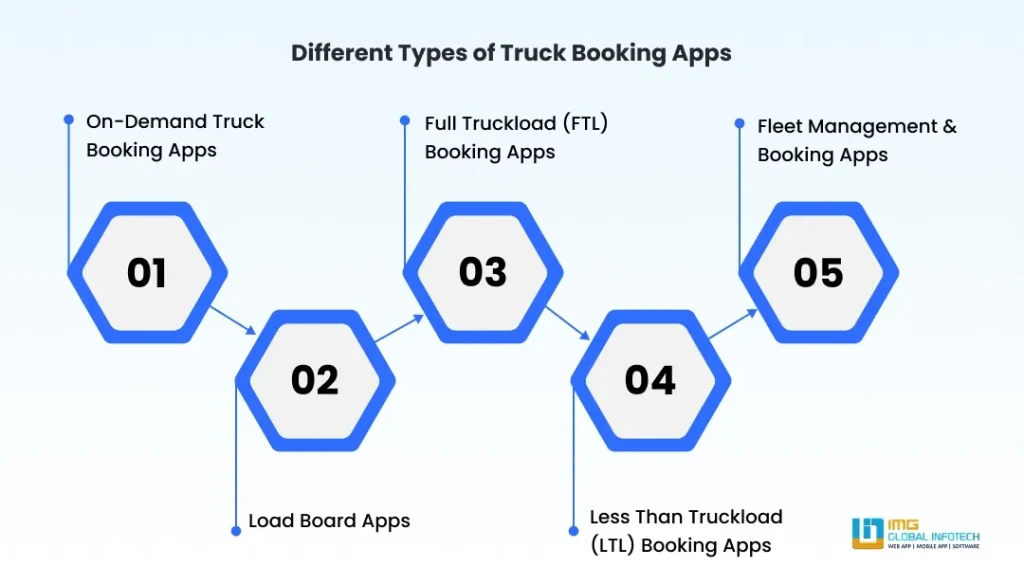
Truck booking applications have transformed the logistics business through their ability to make freight delivery easier while improving operational efficiency and delivering better information to customers.
The platforms enable shippers and carriers to connect while they complete their booking requests through an online booking system that handles their entire process.
On-Demand Truck Booking Apps
The applications enable users to book trucks at any time to meet their urgent transportation requirements.
The system provides current asset status information together with rapid vehicle deployment capabilities and real-time cargo delivery tracking in the Truck rental app development, which enables efficient transport between nearby and distant locations.
Load Board Apps
Load board apps serve as online marketplaces where shippers display their available freight items and carriers compete by submitting bids for those loads.
The applications assist truck drivers in achieving optimal operational performance because they provide tools that match drivers with appropriate cargo assignments while decreasing their need to drive empty trucks back home.
Full Truckload (FTL) Booking Apps
FTL apps serve shippers who require complete truck capacity to transport their goods. The platforms enable users to book transportation services through their platform, which displays complete price details while showing direct delivery routes that use exclusive truck space.
Less Than Truckload (LTL) Booking Apps
LTL applications enable various shipping companies to share truck capacity, which results in cost savings through their shared use of resources in the Freight booking app development.
The solution provides businesses with an economical method to transport their products because it enables them to use partial truck capacity for smaller shipments, which results in decreased shipping costs and improved operational efficiency.
Fleet Management & Booking Apps
The applications function as tools that assist companies that operate extensive truck fleets through their truck monitoring capabilities in On-demand truck booking app.
The system provides businesses with a comprehensive solution that enables them to track vehicles and manage drivers and plan their routes and book their services, which helps them cut their operational expenses.
Key Features of a Truck Booking App
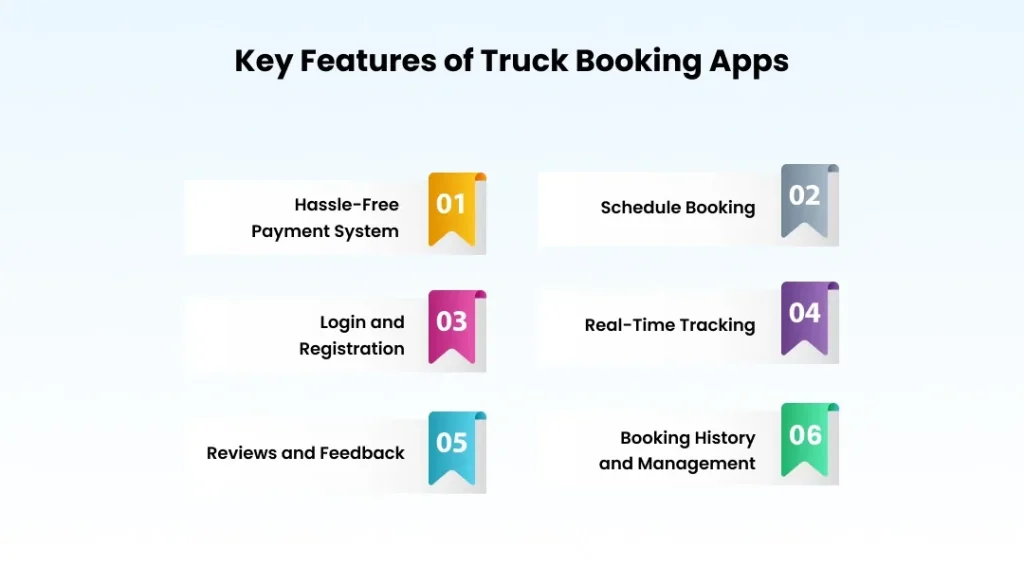
As we all know, features are a necessary component to make an application more interesting for users. This is the only way to integrate the essential functionality when it comes to developing a truck booking app in the Truck transport app development. Here is a list of some core features that are important to build an exclusive truck booking app for your business as well.
Hassle-Free Payment System
It is undoubted that people are more aware about hard-earned money, so basically it is required to integrate a hassle-free payment method into the app’s ecosystem in the Load booking app development. If the application is equipped with this feature, then the users can feel safe while making any kind of transactions in the business as well.
Schedule Booking
It is an important feature for a truck booking app to Build logistics mobile app. A sorted interface makes it easier for diverse parties to make, request, and accept the described booking. It is important to add this feature while building a truck booking app for the business as well.
Login and Registration
This process involves building a truck booking app; you have to include a login or registration feature for authorized membership of respective stakeholders in Transportation app development. It mainly includes shippers, drivers, and carriers who must register with accurate information so the party can contract according to them.
Real-Time Tracking
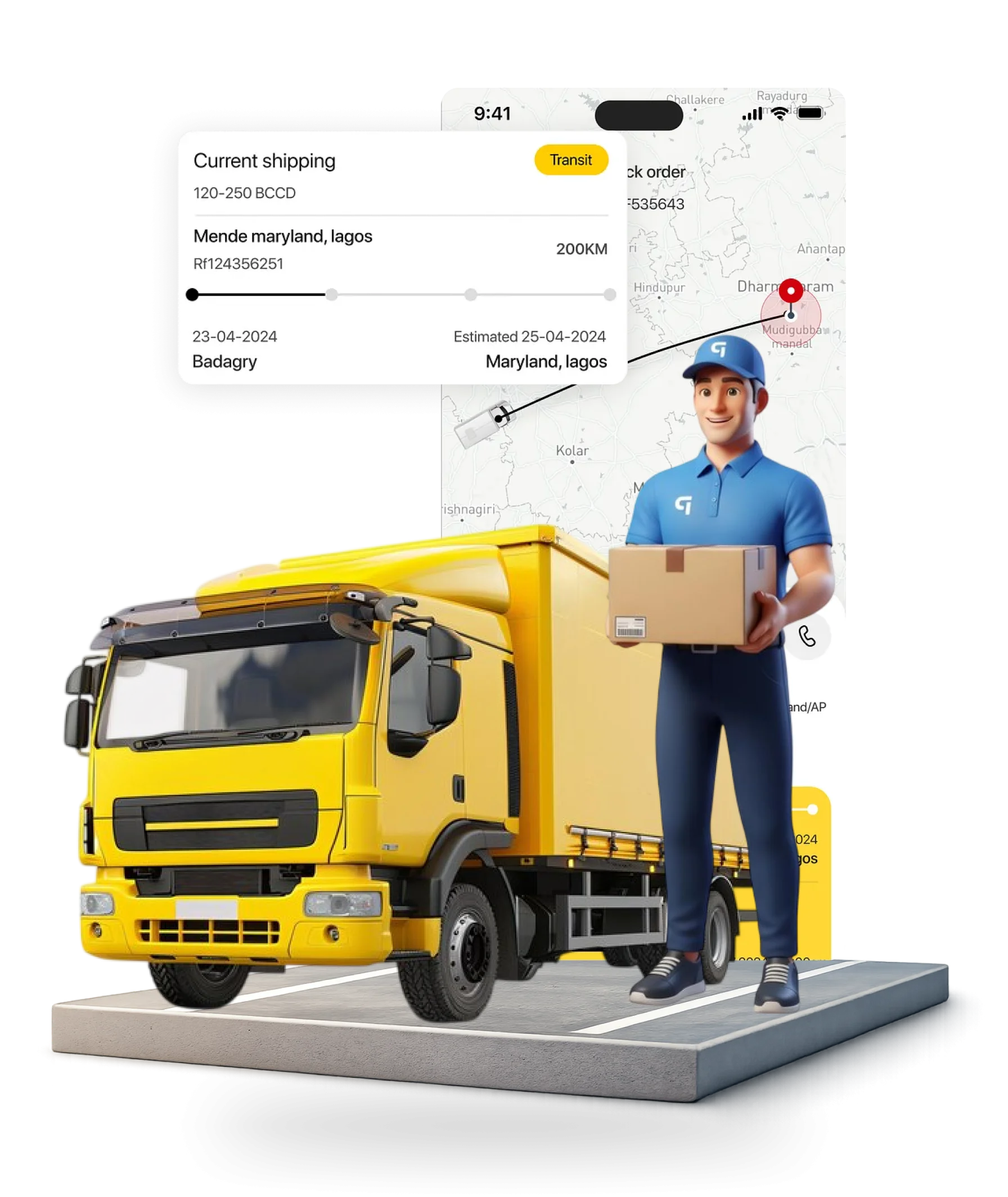
A trucking app should have a tracking feature. It can help the stakeholders to know more about the dependence of the variable’s position in the transaction to examine the Truck booking app development cost. But if you want to add this feature to an app, you’ll need to hire developers who are dedicated to making your app stand out and making sure it’s easy to use.
Reviews and Feedback
This is the most important thing that a truck booking app needs. This feature will help a lot with figuring out how good the services you offer are in the industry in the Truck aggregator app development. It means that everyone involved in the deal can leave reviews about the partners they worked with.
Booking History and Management
A booking history section makes sense inside your app. Users get quick access to every trip and payment made through the system. Yet putting it together isn’t simple; it takes solid coding experience and clear planning in the Uber for Trucks app development. Professionals handle these builds smoothly, crafting reliable truck booking tools without delays. Their grasp of backend logic keeps data organized and visible on demand.
Step-by-Step Truck Booking App Development Process
The development process begins after you have identified the necessary features for your truck booking application. The process requires multiple steps, so users must complete the entire procedure to achieve success. The application development process requires users to complete all steps, which are detailed in the following list.
Decide on a Business Model
The first step is to decide on a business model to build an app. A business model exists as the fundamental element that requires you to create an application to Build a truck booking app like BlackBuck. The application should target specific user groups, which include carriers, drivers, and shippers.
Undertake Thorough Research
The next step demands that you research the industry requirements, the demand for specific applications, and the existing competitors along with their market strengths.
UI/UX Design
The development of a truck booking application demands professionals to create its UI and UX design. The application must present a professional appearance because first impressions hold the greatest importance.
Hire an App Development Team
The development of a truck booking application requires the assistance of highly skilled professionals. The development team must possess experience necessary to handle advanced technical challenges.
Ideal Validation
You need to consult your team about your upcoming app development work. The development team possesses expertise in building applications that meet market demand while satisfying client requirements.
Quality Analysis
The application contains multiple problems, which require you to test the application multiple times until all bugs have been resolved in the Truck booking app development services. You can simplify this process by hiring professional QA testers who can quickly identify problems and resolve them before deadlines.
App Launch
The application should be launched on the appropriate platform, such as the App Store, Google Play Store, or both, once you are happy with its quality.
Required Technology Stack to Develop a Truck Booking App
Here is a tech stack table that can help to build a truck booking app for your business.
Cost to Build a Truck Booking App
The average cost to build a truck booking app would be $5,000 to $15,000 or beyond. The major cost depends on diverse factors, app complexity level, and further custom changes in the development process of a truck booking app.
Challenges & Solutions in Truck Booking App Development
A single tap to book a truck? Behind that lies layers of unseen rules. From the moment a driver accepts a load, timing must align across many moving parts. One delay here pulls threads through the entire network.
Live tracking updates only because silent signals pass constantly between machines. Smooth clicks come from chaos carefully held together.
When building tools for trucks and deliveries, tricky parts pop up often, yet each one becomes clearer after time. Problems that once slowed progress now meet tested fixes before they grow
Real-Time Tracking in GPS System
The reliable tracking system is the backbone of any truck booking app and one of the toughest things. This system applies as the app automatically sends GPS updates from drivers to appear quickly on a shipper’s dashboard as well.
Solution: To maintain this process, we can integrate data batching, offline caching, and cluster algorithms for nearby vehicles without overloading the map. It can include native modules that can manage the background tracking seamlessly.
Compliance and Security Management
Truck booking apps always face unpredictable conditions. It mainly includes unstable networks and cross-border operations. and diverse data protection rules that majorly depend on that particular region.
Solution: Our procedure covers this problem by implementing HTTPS encryption, token-based authentication, role-based access, and effective data storage with proper alignment with GDPR and other regulations as well.
Complex Consolidations in Data Coherence
Out in the open, a single shift in direction sends ripples through the whole network. Messages flood in, locations jump, new stops, money movements, one after another without pause. Built strong, maybe, yet fragile when crowds arrive uninvited. Each signal, every update, piles on like weight no one counted. Start small if needed, or ignore growth, and cracks appear fast. What works quietly fails loudly.
Solution: Starting fresh means building room to grow. When traffic rises, systems stay quick thanks to split components that scale on demand. Data flows without hiccups, handled by lightweight services talking through live channels.
Infrastructure Adaptability and Efficiency
A single shift in direction means new data floods in, drivers moving, clocks ticking, and coordinates refreshing by the second. When a payment comes through, it joins the rush without warning. Systems blink under loads like these, stressed by endless pings from maps and phones. Each update pushes further, stacking up where roads meet networks.
Solution: Starting out, we build things meant to grow. Because systems split into parts, they handle more work without slowing down. When demand rises, cloud resources adjust on their own. Data moves fast through smart pipelines. Performance stays smooth even when traffic surges.
Why Choose IMG Global Infotech for Truck Booking App Development
We create a truck booking app that meets your needs by using a unique approach that blends creative ideas with careful planning and execution. Our team works together to make sure the app is successful and does what you want it to do.
Our team at IMG Global Infotech provides reliable solutions to logistics clients using our innovative features, developed with cutting-edge technology.
Expert Development Team
Our team of developers has a lot of experience and knowledge in creating logistics application solutions. We follow the latest industry standards when developing applications, which helps us achieve the best technological results in the logistics sector.
Custom-Tailored Solutions
We create custom apps for booking trucks that fit your business perfectly. Our apps include features like tracking where your trucks are in real time, managing loads, and finding the smartest routes. This helps your business run smoothly and efficiently.
On-Time Project Delivery
Our team is working hard to complete the truck booking application on time, without compromising on its quality. By doing so, we can help your business get ahead of the competition. The faster we finish the project, the sooner you can start using the application to your advantage.
24/7 Support & Maintenance
We’re here to help you all day, every day, with any technical issues you might have. The truck booking app we built for you is designed to run smoothly and give your users a seamless experience, no matter what they’re doing with it.
Final Thoughts
Starting from scratch, building a truck booking app means shippers show how they work while carriers reveal their routines; developers, meanwhile, spot where current tools fall short. What comes out useful or just noise depends entirely on how the build unfolds and who handles each piece along the way.
Most folks put off dealing with real challenges until things get so tight there is no choice but to act. Spotting what hurts most opens doors to strengths others can’t match.
Suddenly, building new tools stops mattering when fixing hidden glitches becomes the real work. Only teams grounding their design rules in how tasks actually flow pull ahead over time, unlike those chasing whatever looks fresh today.
Read Also: Porter-Like Logistics App Development Cost in 2026