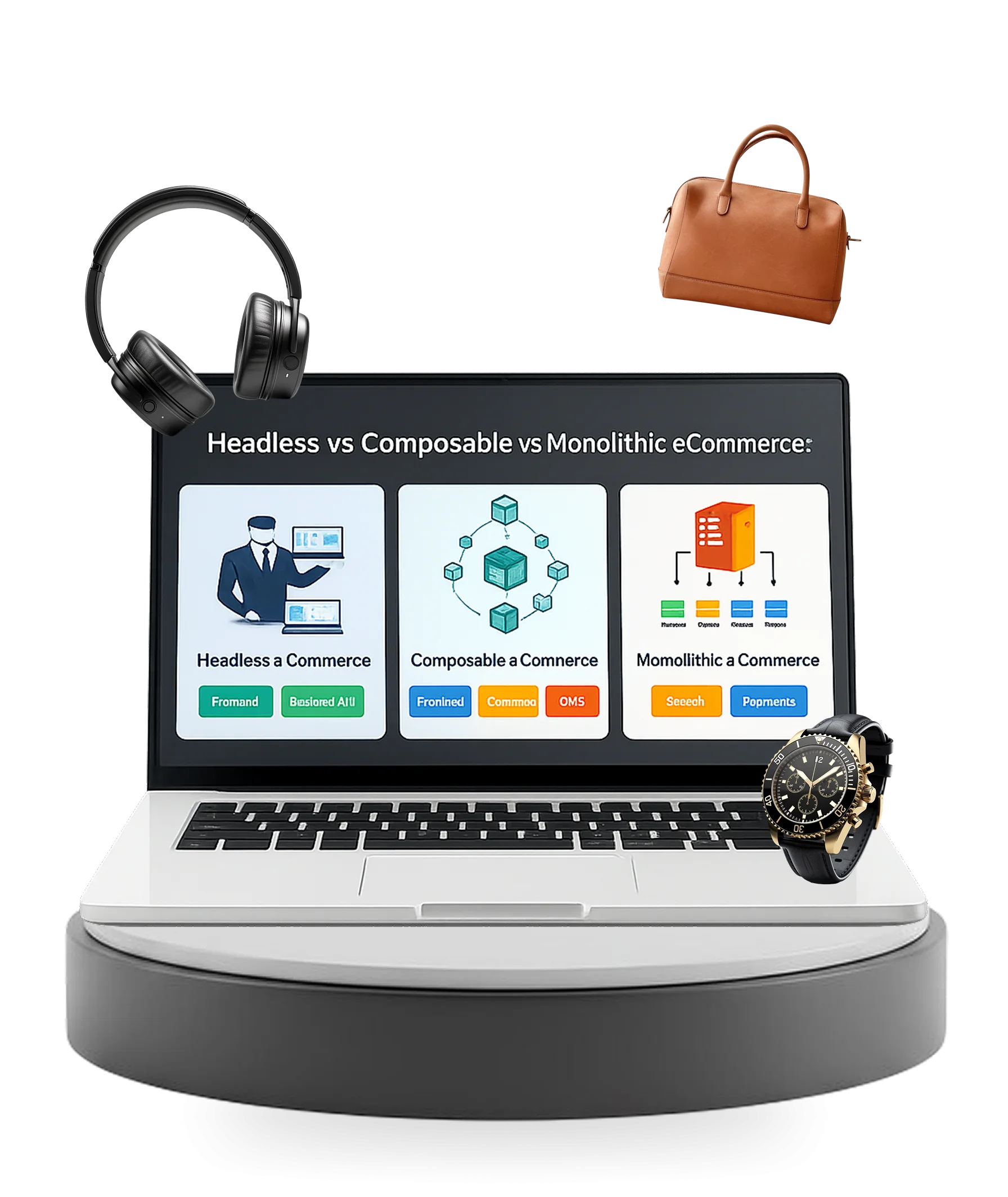
Remember that classic scene in The Matrix where Morpheus holds out the red and blue pills for Neo? In e-commerce, you don’t just get two—you’re staring at three pills, and picking the wrong one doesn’t just mean you’re stuck in a virtual world in Headless vs Composable Vs Monolithic commerce. It means you’re trapped in a sluggish, rigid platform that quietly drains your revenue.
Jeff Bezos nailed it: “What’s dangerous is not to evolve.” Still, you see so many businesses clutching old, monolithic systems like they’re the only thing keeping them afloat, terrified of what changing might actually mean for their operations.
It’s a weird kind of choice. Monolithic platforms feel safe but make you slow and stuck. Go “headless” and you get freedom, but the complexity ramps up.
Composable feels like you’re getting the best of everything, but your budget can end up stretched thin before you realize what’s happening.
Time to build what’s next.
What Is Monolithic (Traditional) eCommerce?
Monolithic architecture can be compared with an all-embracing department store where all the elements of a website, for example, product display, carts, checkout, and customer accounts, are created and handled in one huge, interconnected codebase.
Following this method, it is easy to keep things simple and consistent since each element is set up with the others in mind, and deployment is just a single operation.
Unfortunately, increased scaling, easier updating, and the change of flexibility are some aspects that suffer from this type of solution.
What Is Headless Commerce?
Headless architecture in web development is an innovative method of disassociating the front-end user experience (“head”) from back-end functionality in headless ecommerce for even more flexibility and customization in Ecommerce development companies. Here, the front-end (comprising websites, mobile applications, and other user interfaces) connects to the back-end via APIs, allowing independent development and scaling of each component.
What Is Composable Commerce?
In web development, composable architecture is like headless architecture but taken even further in the modularization aspect in composable e-commerce. This offers brands a way of creating digital experiences similar to playing with LEGO bricks, where components are completely interchangeable.
Each module, such as product management, payment processing, or customer service, is a closed system, and developers can work on them independently in composable commerce vs headless ecommerce. They can also be deployed and scaled without depending on each other and the integration is made simple through APIs.
Headless vs Composable vs Monolithic eCommerce: Key Differences
Now that the core distinctions between monolithic, headless, and composable commerce are clear, enterprise CTOs in 2026 face several important factors when planning operations. Security remains a top concern across all models to Hire ecommerce app developers for business. It seems difficult to overlook how exposure risks shift with each architecture choice. Performance and scalability affect how quickly systems respond under load.
Flexibility and Customization
Agility and Scalability
Architecture
Time to Market
Cost Comparison: Headless vs Composable vs Monolithic eCommerce
Choosing the correct eCommerce architecture goes beyond a technical decision; it is also a financial one to examine the eCommerce app development cost. Knowing the price variations among Monolithic, Headless, and Composable commerce enables companies to invest smartly, considering their scale, objectives, and growth strategy in the long run.
Which eCommerce Architecture Is Right for Your Business?
The selection of eCommerce architecture creates vital effects on your business expansion and financial resources and client satisfaction in modern ecommerce architecture. The correct platform provides essential benefits to your business, whether you operate as a startup or an international enterprise.
Best for Small Businesses
The essential functions of Shopify make it an excellent choice for both emerging companies and small-to-medium-sized businesses. The product provides built-in functions that users can activate with simple installation procedures at an affordable price, which benefits organizations that lack technical expertise and financial resources.
Low Budget, Fast Launch
Monolithic commerce enables businesses to launch their operations within weeks because it requires only basic development work to Start an ecommerce business. The solution provides businesses with their most economical choice, which allows them to achieve rapid results while avoiding the need for extensive customization.
Limited Customization
Monolithic platforms permit businesses to use themes and plugins for basic customization purposes, but they prevent users from creating extensive personalized solutions in ecommerce platform architecture. The platform eventually limits businesses that need customized solutions because it has built-in system restrictions.
Scalability Challenges
Monolithic architecture creates operational bottlenecks, which restrict your business development in ecommerce architecture. The organization needs to upgrade every component of their system, which will create risks of expensive platform changes and production interruptions that will occur later on.
Future Trends in eCommerce Architecture
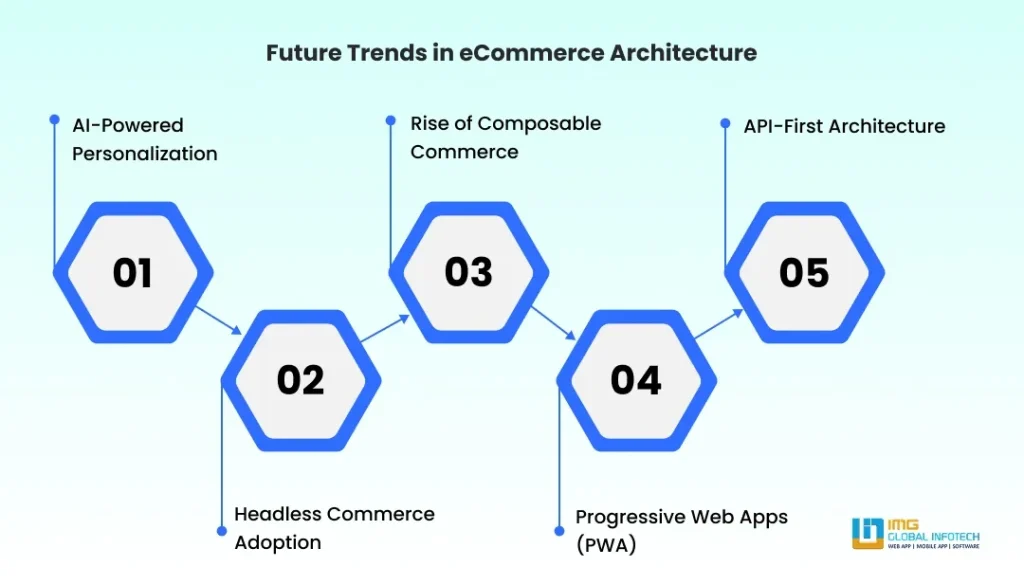
The eCommerce landscape is undergoing rapid transformation because businesses now use new technologies to create and operate their online stores in traditional e-commerce.
To remain competitive, brands must discover architectural trends that enable them to create remarkable customer experiences.
AI-Powered Personalization
Artificial intelligence is transforming eCommerce by enabling hyper-personalized shopping experiences in e business and traditional business. AI-driven architecture enables businesses to adjust every customer interaction in real-time through product recommendations and dynamic pricing, which results in incremental sales growth and sustainable customer retention.
Headless Commerce Adoption
More businesses are shifting towards headless architecture to gain greater flexibility and control over their frontend experiences. The current trend allows brands to provide their customers with fast and personalized experiences that remain uniform across all web and mobile platforms and new digital channels.
Rise of Composable Commerce
Composable commerce is gaining momentum as enterprises seek modular, best-of-breed solutions. Through microservices, business organizations can speed up innovation while retaining their independence from vendors and maintaining operational stability during market demand changes.
Progressive Web Apps (PWA)
Modern eCommerce systems now use PWAs as their essential architectural element. The solution delivers fast load times and offline capabilities together with app-like performance through web and mobile platforms without requiring users to install separate applications.
API-First Architecture
API-first design is becoming the foundation of scalable eCommerce systems. The system enables businesses to integrate their platforms with third-party applications and new technologies through a unified interface, which simplifies service addition to their digital platform.
Closing Remarks
Switching to headless and composable commerce isn’t just another industry buzzword—it’s a big deal for online retailers. These modern approaches open up new ways for companies to stay flexible and scale fast with our leading Ecommerce app development company. You get to mix and match the tech you need so you can adapt quickly, no matter how the digital world changes.
Let’s be honest, shoppers expect more every year. They want personalization, smooth buying experiences, and sites that never slow down. If you’re running an e-commerce business and you want to keep up, going headless and composable isn’t optional—it’s smart strategy. The companies who jump in now have a much better shot at lasting growth and staying ahead of competitors.