Remember the iconic dialogue from Guru, “Yeh duniya ek bazaar hai” (this world is a marketplace). Well, in the present competitive business scenario, that bazaar is now functioning at a very high speed.
As Ratan Tata put it wistfully, “I don’t think I have to always make the right decisions. I make decisions and then turn them into the right ones. “And that is exactly the problem that every new business owner has to deal with nowadays.
Old commerce laid the foundation of the kingdom—brick by brick, trust by trust. But Quick Commerce? It’s the Bajirao of the retail world: unstoppable, fierce, and shockingly fast.
We are stuck between very short attention spans and endless desires of customers. The market is not just changing; it is completely transforming in the blink of an eye in ecommerce vs quick commerce.
Hence, a debate between a seasoned entrepreneur and a dreamer who is only thinking of starting a business will definitely be non-academic but one dealing with the existence of the person.
Get ready because the commerce revolution moves on without stopping or those who delay are left behind in quick commerce vs ecommerce.
What Is eCommerce?
E-commerce is also known as electronic commerce, which mainly refers to buying and selling goods online in Ecommerce app development. Basically, it is the base of modern marketing that enables customers to shop anytime and anywhere in just a few clicks.
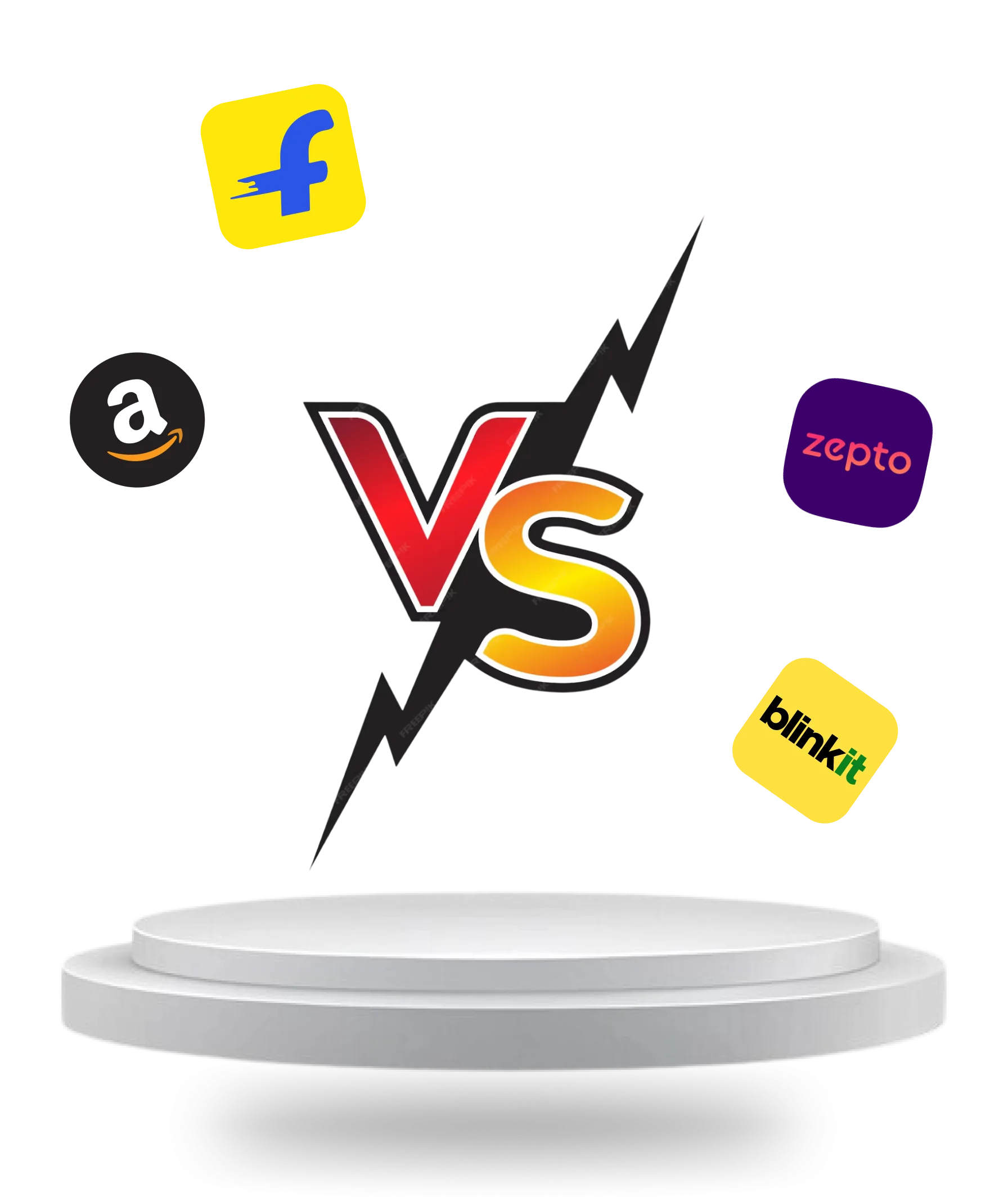
The massive worldwide marketplaces like Amazon and Flipkart to specific online stores in e-commerce have completely redefined how businesses can reach their peak and how customers will shop for goods as well.
E-commerce is not a new concept; in fact, it has been in existence since the 1990s. What is more, during several developmental phases, it has turned into an industry worth multiple trillions globally, powered by technology, digital payments, logistics networks, and surging consumer demand.
What Is Quick Commerce?
Quick Commerce, or Q-Commerce, is the future evolution of e-commerce, carefully planned to satisfy the increasing needs of today’s buyers for speed and ease in Quick commerce app development.
Traditional e-commerce usually takes at least a day for order delivery, sometimes even longer, whereas Q-Commerce is offering delivery at lightning speed—most of the time within 10-30 minutes after the order is placed.
One of the reasons behind the development of Q-Commerce is changing consumer mentality. Instead of just buying online, now people want their purchases instantly delivered. Be it groceries, drugs, or household items, Q-Commerce is a way to guarantee that customers get the items fastest of all possible ways.
Quick Commerce vs eCommerce: Key Differences
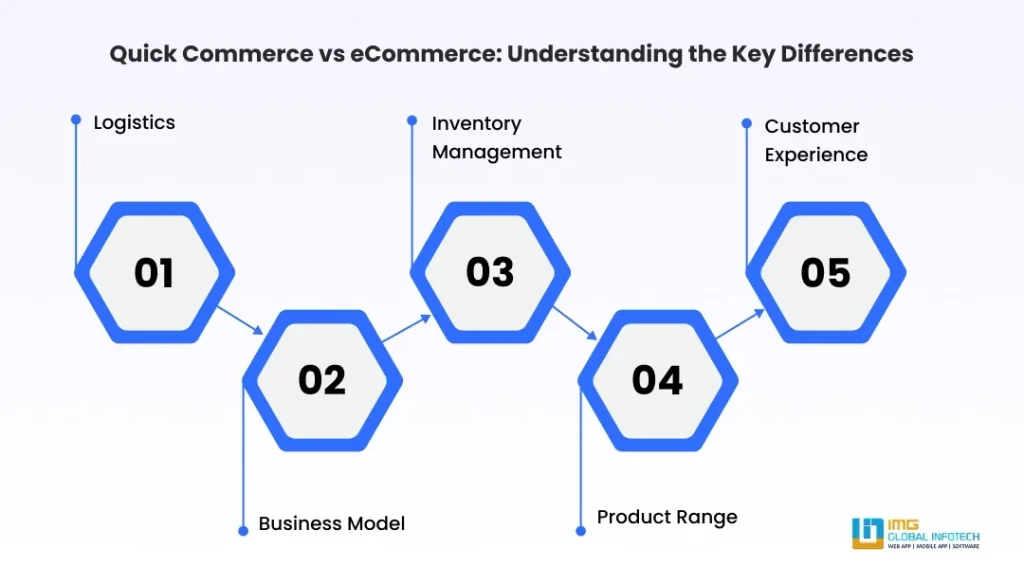
Quick commerce and e-commerce are both ways to shop online, but they have different aspects and objectives in the difference between quick commerce and ecommerce.
The major difference is speed. E-commerce mainly focuses on a wide selection of products with a regulatory standard delivery time of usually under a few days.
Quick commerce is a quicker and faster model that can deliver a smaller number of items in minutes as well.
- Logistics: eCommerce uses massive central warehouses to deliver products. Quick commerce uses dark stores so that customers will get faster delivery of items as well.
- Business Model: eCommerce is planned for buying goods for bigger orders. Quick commerce is designed to fulfill the quick needs of the customers as well.
- Inventory Management: eCommerce handles huge inventories, usually from a central warehouse, and doesn’t need to restock that often. Quick commerce is totally different—it needs constant, real-time updates just to keep shelves stocked.
- Product Range: Big eCommerce sites like Amazon carry just about everything, millions of products in every category you can think of. Quick commerce sticks to the basics—groceries, snacks, household staples, stuff people need every day.
- Customer Experience: With eCommerce, you can browse for hours, check detailed descriptions, read reviews, and pick from different shipping choices. Quick commerce keeps things more direct—speed and convenience matter way more than browsing.
Table Comparison: E-commerce vs Quick Commerce
Which One Should You Choose for Your Business?
People must choose between e-commerce and quick commerce (q-commerce) because their business model needs to match their operational goals and customer requirements and available resources.
The two business models offer significant potential, but your selection should depend on your product offerings and customer base and your business expansion strategies.
Establish Your Business Objectives
E-commerce supports your goal of building a worldwide business that sells multiple products for an extended period in quick commerce vs traditional ecommerce.
Q-commerce provides you with a competitive advantage when your business needs to deliver essential items, which include groceries and medicines and food.
Define Your Market Segment
E-commerce attracts customers who want to shop at any time from any place while getting access to a wide range of low-priced items in ecommerce vs quick commerce business.
Quick commerce serves contemporary consumers who seek rapid service to meet their immediate needs, especially in urban environments where people live at a fast pace.
Assess Your Product Category
Different product types match different business models. E-commerce serves customers who buy electronics and fashion items and furniture and niche products because they do not need quick delivery.
Quick commerce operates successfully when customers need to buy common products and fresh goods and emergency items in quick commerce or ecommerce for startups.
Examine Your Delivery System
E-commerce uses centralized warehouse systems that enable bulk shipping operations and extended delivery time periods to achieve cost-effective delivery methods for high-volume operations in the quick commerce vs ecommerce revenue model.
Quick commerce needs micro-fulfillment centers and last-mile delivery systems and real-time inventory tracking systems because these components require extensive funding but provide exceptional operational speed.
Can We Combine Both Models?
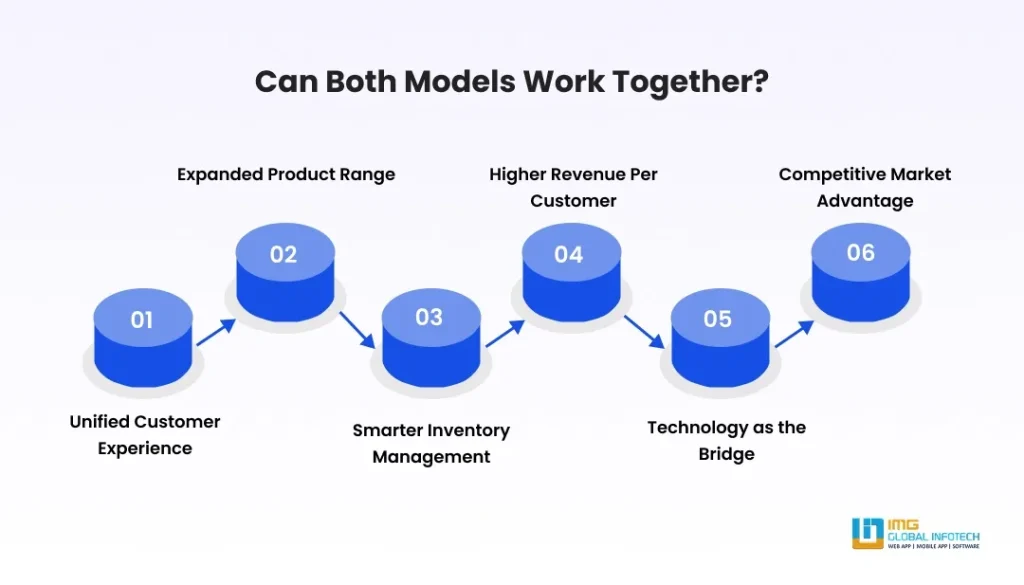
The combination of e-commerce and Quick Commerce has developed into a strategic business development that now exists in the present in hyperlocal delivery vs ecommerce. Companies that implement both business models will achieve superior customer acquisition and increased operational productivity and enhanced financial performance.
Unified Customer Experience
Brands can provide customers with delivery options through the integration of the two operational systems to Build instant delivery app like instamart. The company offers two delivery methods that match different customer shopping patterns because they enable customers to shop without needing to wait for deliveries or access specific products.
Expanded Product Range
E-commerce manages products that require special handling and delivery beyond regular distribution schedules, while Quick Commerce provides access to essential items customers buy on impulse in instant delivery vs standard delivery.
The two services combine to form an all-encompassing product collection that meets every shopping requirement that customers have through one brand.
Smarter Inventory Management
The combined system allows businesses to optimize their inventory distribution through different storage facilities, which include dark stores and central warehouses.
Fast-moving products stay closer to customers for rapid delivery, while slower or premium items are stored centrally, reducing holding costs and improving overall supply chain efficiency significantly.
Higher Revenue Per Customer
Customers who depend on a single platform to make both urgent and scheduled purchases will create higher lifetime value for that platform to examine the Cost to build a delivery app like blinkit. The integrated e-commerce ecosystem enables users who order groceries to browse and buy electronics and apparel products without exiting the system.
Technology as the Bridge
The combination of two operational models becomes possible through advanced technological systems, which include AI-powered demand forecasting and real-time inventory tracking and integrated order management systems.
The shared technological framework of our system produces operational efficiency by removing duplicate work while maintaining consistent customer service through all order delivery times from ten minutes to ten days.
Competitive Market Advantage
Companies that effectively combine both operational systems establish market leadership over their competitors, which include dedicated online retailers and independent rapid delivery services.
The business establishes itself as a unique market player through its ability to deliver products quickly while maintaining a broad product selection, which helps it attract new customers and develop customer loyalty in the face of increasing competition from other retailers.
Closing Statement
Digital commerce is changing fast. E-Commerce gave us the base for online shopping—millions of products, flexibility, and worldwide reach. But Q-Commerce is shaking things up in Instant delivery app development company. People want things now, and Q-Commerce delivers speed and convenience that traditional models struggle to match.
If you run a business, the real question isn’t “E-Commerce or Q-Commerce?” It’s more, “Where are my customers, what do they want, and how can I give them the best experience?” Some brands do great sticking with classic E-Commerce.
Others jump on Q-Commerce and see their sales take off. And honestly, a lot of companies mix both to get the best of each world. The key is knowing your audience and making sure you’re meeting their expectations, whether that means wide selection, lightning-fast delivery, or something in between.