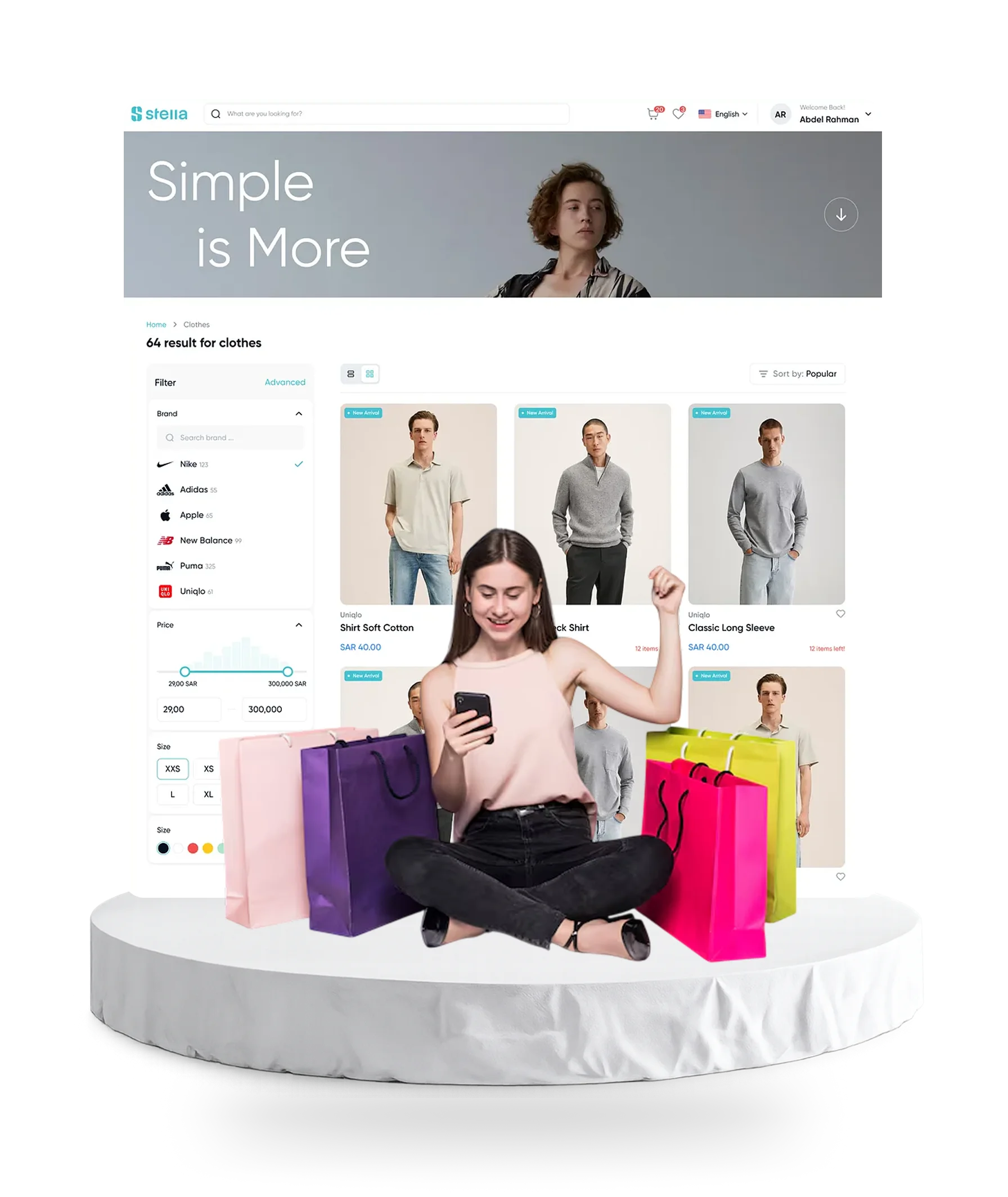
Picking an ecommerce platform is really important; it affects almost everything you do, from the everyday stuff like operations and order fulfillment to the bigger picture long-term direction. A good ecommerce platform is like a stepping stone, helping you move forward when you need to scale.
If you’re trying to start an ecommerce business, or you already have one and you want it to grow more, this is a good moment to act. Before you jump into the “how” part, you should first understand what an ecommerce platform actually is.
So, what is it exactly, and what should you watch for when choosing? Ecommerce platforms basically become the foundation of your online store.
This guide is here to help you how to choose the right ecommerce platform, one that fits your exact needs and gives your business that extra edge you’ll want for long-term success.
Why is Selecting the Right Ecommerce Platform Critical This Year?
A few years ago, selecting an ecommerce platform was mainly about the easy usage of a decent product catalog for the best ecommerce platform in 2026. But in the current time, the stakes are very high, and consumers’ expectations are constantly evolving and have shifted more dramatically. Now the shoppers expect personalized experiences like seamless discovery and instant checkout processes.
By integrating AI tools, it becomes a core differentiator. AI tools can integrate in different sections like content generation, inventory forecasting, marketing automation, and custom segmentation that can provide a real competitive edge.
What Are the Different Types of Ecommerce Platforms Available?
Here is a list of different ecommerce platforms for businesses:
SaaS Platforms
SaaS is the most common type, very easy to use by businesses of all sizes and by entrepreneurs and those not very techy, as these platforms are hosted on cloud platforms without their having to install anything through the best ecommerce platform for small business. The vendor manages the hardware and upkeep, leaving you to worry about the operations of your business.
Open-Source Platforms
Open-source platforms give you an extra degree of tinkering and real control over your online store, especially in conversational commerce. It’s usually self-hosted, meaning you have to put the application up on your own server and then make sure it runs right, not just install and forget. This takes a bit of know-how, sure, but in return you get way more leverage and freedom overall.
Headless Commerce Platforms
A newer option with a more adaptable way of building a web store. Rather than the coupled-up nature of traditional platforms (the front-end, the web store, and the back-end, the commerce engine), headless commerce platforms do not couple these two components.
You could use a headless commerce platform for the back-end functionalities, with a different front-end tool, to construct a custom storefront in ecommerce website platforms.
Enterprise Ecommerce Platforms
Top-tier choices for larger organizations in online store platforms. Usually they come with a license you have to grab either every year or in one fixed-price payment, and in general they stand out by a ton of capabilities, a range of adaptable settings, and the capacity to run massive workloads without a hitch.
Which Key Features Must a Modern Ecommerce Platform Include?
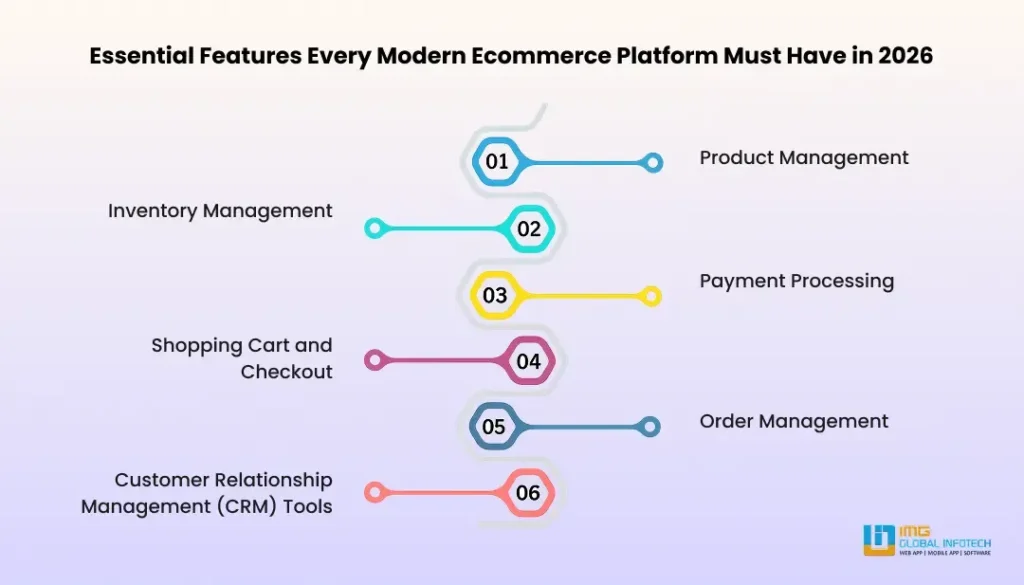
Key features are important elements to build a scalable and progressive ecommerce platform that can cater to diverse business needs. Here is a list of core features that can enhance scalability in your ecommerce platform.
- Product Management: With this functionality, you’re able to add, edit, and sort of shuffle your product listings for ecommerce solutions. You can also upload high-quality images, drop in product info, set the price, and group everything into categories so the searches feel lighter.
- Inventory Management: Your ecommerce platform can track product stock levels in real time, and yeah, you can also arrange automated alerts to notify you when the inventory dips beneath a certain threshold, kind of quickly.
- Payment Processing: Taking payments really matters for pretty much any online business. For most e-commerce setups, they wire in with a bunch of payment gateways, so the buyer can complete checkout with a credit card, debit card, or some other everyday kind of method.
- Shopping Cart and Checkout: This is the part where customers wrap things up and finalize the purchase in ecommerce development platforms. The platform usually includes a smooth checkout journey.
- Order Management: Once an order comes in, the platform helps you manage fulfillment a bit, like day to day. You can track the order status, print the shipping labels, and link the shipping carriers pretty easily, sometimes with nearly zero friction, meaning minimal fuss.
- Customer Relationship Management (CRM) Tools: Some platforms come with an integrated CRM, so you can manage customer data, follow along with buying history, and basically launch more targeted marketing campaigns, without too much hassle.
What Are the Best Ecommerce Platforms in 2026? (Side-by-Side Comparison)
Though there are various best eCommerce platforms, some dominate more than others due to their features between Shopify vs WooCommerce vs Magento comparison. Below are some of the best eCommerce platforms:
- Shopify
Shopify is the best suited for small and mid-sized businesses. If you want to boost your online presence, then Shopify will provide you an all-in-one solution with minimal technical setup in ecommerce software comparison. Shopify is widely recommended for setting up an ecommerce store that can also support multichannel selling in the business.
Also Read – 10 Best Shopify Alternatives For Ecommerce Development
Key Strengths:
- It includes an app store, integrated payments, and reliable out-of-the-box security and uptime.
- It can provides features for tax handling, basic email marketing, and shipping labels
- Shopify is a hosted SaaS ecommerce platform with pre-built themes.
- WooCommerce
WooCommerce is the best platform for online store that are already integrated with WordPress or just control the entire network of WordPress websites and stores while maintaining the low costs. WooCommerce is widely used to integrate e-commerce functionalities in familiar WordPress interfaces.
Key Strengths
- WooCommerce is free to install and highly flexible for websites and online stores.
- It can integrate with popular payment systems that can support many hosting providers with granular control over performance.
- It can also offer themes and extensions for bookings, memberships, and subscriptions in an ecommerce scenario.
- Magento (Adobe Commerce)
Magento (Adobe Commerce) is ideal for larger, enterprise-level businesses that require significant customization, support for multi-site and multi-language functionality, and sophisticated B2B operations. The brand with its own development resources and the need to carefully design the entire buying journey seems to flock to this platform.
Key Strengths
- This open-source platform can be deployed ready for PaaS and provides 100% access to the code, data, and all integrations.
- The multi-storefront, multi-currency, and multi-inventory business models are very well supported.
- An enormous number of built-in modules and a very rich set of extensions support complex catalog, pricing, and promotion logic.
- Custom Ecommerce
Custom ecommerce development would be suitable for those businesses requiring custom features, personalized user experiences, effortless third-party system integration, and full command of all aspects of your online store’s functionality in ecommerce business platforms. Businesses aiming for growth and scale are generally more likely to have custom ecommerce websites.
Key Strengths
- Tailored architecture to fit your distinctive business processes, customer paths, and functional needs.
- Smooth integration with existing ERP, CRM, payment gateways, carriers, and other third-party business systems.
- Easily scalable infrastructure for large product inventories, high traffic, and growing business scope.
What Mistakes Should You Avoid When Choosing an Ecommerce Platform?
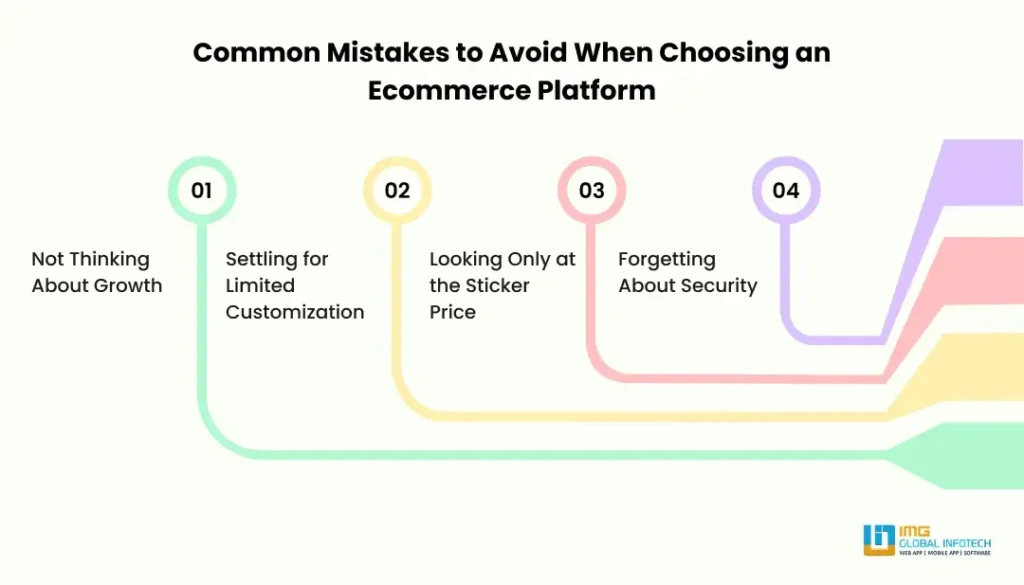
Picking the right ecommerce platform isn’t just some box you tick and move on—it’s kind of like the backbone of how your business grows, how quick it runs, and how content your customers are the best stays during ecommerce platforms for startups to compare the best ecommerce platforms 2026. It sort of decides the pace, the sturdiness, and even those little moments that make people come back again and again.
Not Thinking About Growth
A lot of people pick a platform because it fits their needs right now and don’t think about the next chapter. The problem? If your platform can’t keep up when you get busier—more traffic, more products, more sales—you’ll hit a wall in composable commerce. Then you either struggle with constant issues or shell out extra cash for upgrades and migrations.
Settling for Limited Customization
Choosing a platform that doesn’t let you shape things your way can box you in pretty quickly, and it’s kind of frustrating in the best ecommerce platforms for enterprises. You really need the freedom to adjust the design, toss in special features, and plug in other tools as you scale up omnichannel commerce. Otherwise you’re stuck with whatever is there already, or you end up paying extra later just to push past those limits.
Looking Only at the Sticker Price
It’s tempting to grab whatever looks cheapest at first glance, but the real price is kinda lurking in that fine print. Stuff like upkeep costs, extra plugins, transaction charges, and upgrades can stack up fast in mobile-first online shopping. Honestly, it’s better to squint at the whole scene—what you’re paying now and what you’ll end up paying later—so you don’t get stuck hemorrhaging money just to stay functional.
Forgetting About Security
If your platform doesn’t take security seriously or the support team disappears the moment things go wrong, you’re in trouble with online ecommerce apps. You’ll need solid protection of data, safe payments, ongoing upgrades, and actual people who answer when you need help. Without that stuff, you end up hanging out in the open and scrambling fast if anything goes sideways.
How Do You Choose the Best Ecommerce Platform for Your Business?
Choosing the best ecommerce platform for your business takes a lot of different factors into consideration. Important things to keep in mind:
Know Your Business
So, what exactly are you selling—like actual, physical goods, or digital bits, or more like services? Also, what’s your usual average order value, roughly, in numbers? Are you mostly B2C or more B2B or maybe both? And if you think pricing will get complicated, like tiered wholesale stuff or separate wholesale accounts.
Assess Your Tech Skills
If you (or your employees) are not tech savvy, you’re probably safer using a SaaS eCommerce platform that utilizes a visual builder and offers built-in security measures in shopping app development solutions in this full ecommerce platform comparison guide. For non-techie-friendly sites with templates and guides for setup, many people recommend Shopify and Woo Commerce.
Plan for Growth
It’s not really enough to just see where your store will sit at launch; you also need to think about 2-5 years down the road. If you plan on pushing into fresh regions, new currencies, or offering through several channels, you’ll want a platform that can deal with multi-currency, multi-store, and/or omnichannel shopping without getting all tangled up later.
Consider Your Budget
The total cost will involve subscription fees or licenses, payment gateway fees, apps, themes, web hosting (for self-hosted options), and development/agency fees. While subscription-based SaaS eCommerce solutions such as Shopify, WooCommerce, or Magento typically come with monthly costs in addition to transaction fees, this often provides more predictable expenditure.
Analyze Payment and Shipping Alternatives
You can hire ecommerce developers to integrate the payment preferences of your target customers and confirm that your platform can handle these methods either directly through integrations or via payment services. For example, Stripe is integrated into leading e-commerce platforms to allow payment by credit cards, digital wallets, and local payment methods.
Closing Statements
The online commerce platform you pick in 2026 is basically one of the most important tech calls your business is going to make. It’ll touch your day-to-day workflow, your shopper experience, your marketing strengths, and how far you can scale later on.
So make sure to test platforms with the free trials available and carefully list out your present and future needs while at the same time consider honestly your technical skill set and budget constraints with our leading ecommerce store development company.
Although for most businesses, especially the small to medium range, the Shopify platform covers most things and perhaps is the most well-rounded one, for an ecommerce application development company in India, the answer really depends on who you are, where you’re going, and the way you want to get there, so choose wisely.