What if a few invisible lines of code could decide whether a doctor reacts in seconds or minutes? That quiet moment—before an alert flashes, before a machine speaks—is where medical device software truly lives in software development for medical devices. It doesn’t announce itself, yet it holds extraordinary power, shaping decisions that can change lives.
There’s a famous thought by Hippocrates: “Healing is a matter of time, but it is sometimes also a matter of opportunity.” In today’s world, that opportunity is increasingly digital. Medical device software development exists at the crossroads of clinical intelligence, regulatory rigor, and technological foresight, where precision is not optional—it’s fundamental.
This discipline goes far beyond coding in the medical device software development life cycle. It demands validation, traceability, interoperability, and risk mitigation—complex ideas spaced carefully within a framework of trust. If movies like Contagion taught us anything, it’s that timing and accuracy matter.
In this guide, we explore how software transforms medical devices into reliable partners in modern healthcare.
What is Medical Device Software?
Medical device software is a kind of independent software entity to streamline the medical functions without establishing any physical hardware by medical device software development companies. This software development is a turning point for the healthcare industry that can significantly influence the diagnostics along with treatment processes and patient monitoring in healthcare operations.
It is used in a wide range of medical technologies, including pacemakers, insulin pumps, surgical robots, and diagnostic imaging systems. Software for medical devices improves healthcare quality and safety by providing real-time feedback to medical professionals, automating critical processes to reduce errors, providing tailored treatments, and making healthcare more accessible and cost-effective.
Market Overview & Growth of Medical Device Software
As per the report of grand view research, the global smart medical devices market size was estimated at $90,545.5 million in 2025 and is projected to reach $185,559.9 million by 2030, with a CAGR of 12.8% from 2026 to 2030 as well.
Key Market Trends & Insights
-
In terms of region, North America was the largest revenue-generating market in 2025.
-
Country-wise, Sweden is expected to register the highest CAGR from 2025 to 2030.
-
In terms of segment, therapeutic devices accounted for a revenue of USD 86,571.3 million in 2025.
-
Therapeutic Devices is the most lucrative grade segment, registering the fastest growth during the forecast period.
Types of Medical Device Software
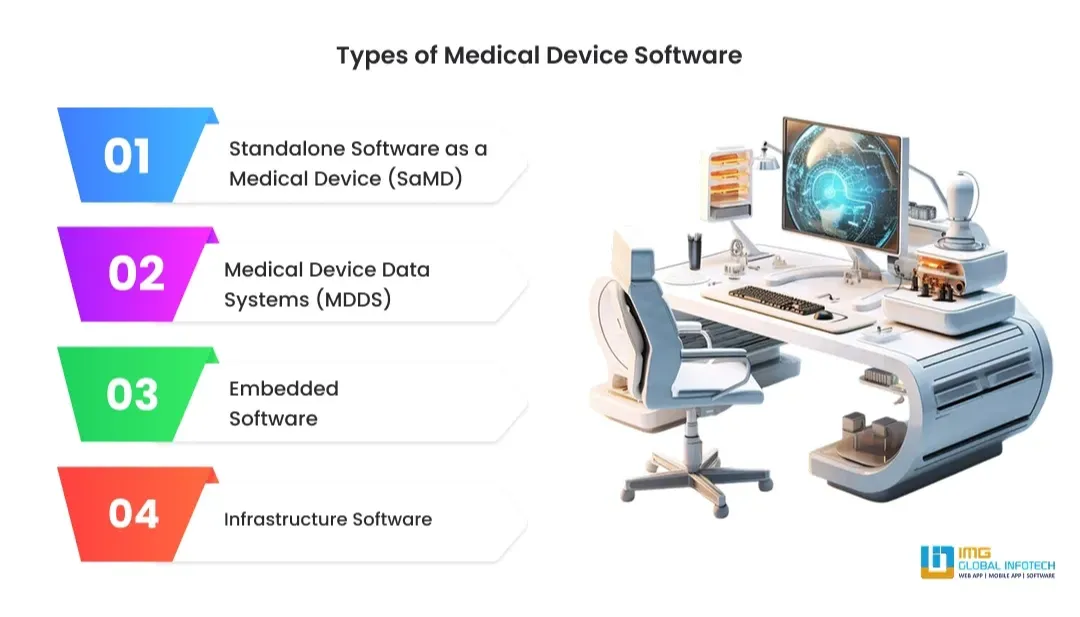
The range of software for medical devices is incredibly broad and diverse, largely because of the various needs and applications that exist within the healthcare environment in the medical device software development process. Classifying these types of software is a helpful step in gaining a deeper understanding of their functionalities, regulatory demands, and development aspects. In general, we can divide software for medical devices into the following major categories:
Standalone Software as a Medical Device (SaMD)
This category can encompass software that functions independently as a medical device, as discussed in brief in previous sections. SaMD can also be deployed as mobile apps, web apps, desktop software, or cloud-based platforms as well.
Medical Device Data Systems (MDDS)
MDDS software is especially designed to transfer, store, convert formats, and showcase medical device data in software developers for medical devices. It is also used to make connections with other medical devices that can facilitate the data aggregation and analysis as well.
Embedded Software
The embedded software is integral with traditional medical devices. It can also reside within hardware systems such as infusion pumps, ventilators, imaging equipment, and pacemakers as well. This type of medical device software can directly control and manage the device's functionality, which can ensure precise operations with data acquisition with real-time responses.
Infrastructure Software
Such software and medical systems are a part of the healthcare IT infrastructure in a comprehensive manner in Doctor on-demand app development. This may entail software that manages medical records (Electronic Health Records, EHRs, Picture Archiving and Communication Systems (PACS) for DICOM medical imaging software, Laboratory Information Management Systems (LIMS), and hospital information systems (HIS).
In contrast to SaMD, which directly interacts with patients, infrastructure software without a doubt plays a significant role in healthcare operations, data management, and interoperability.
What are the Essential Features of Medical Device Software?
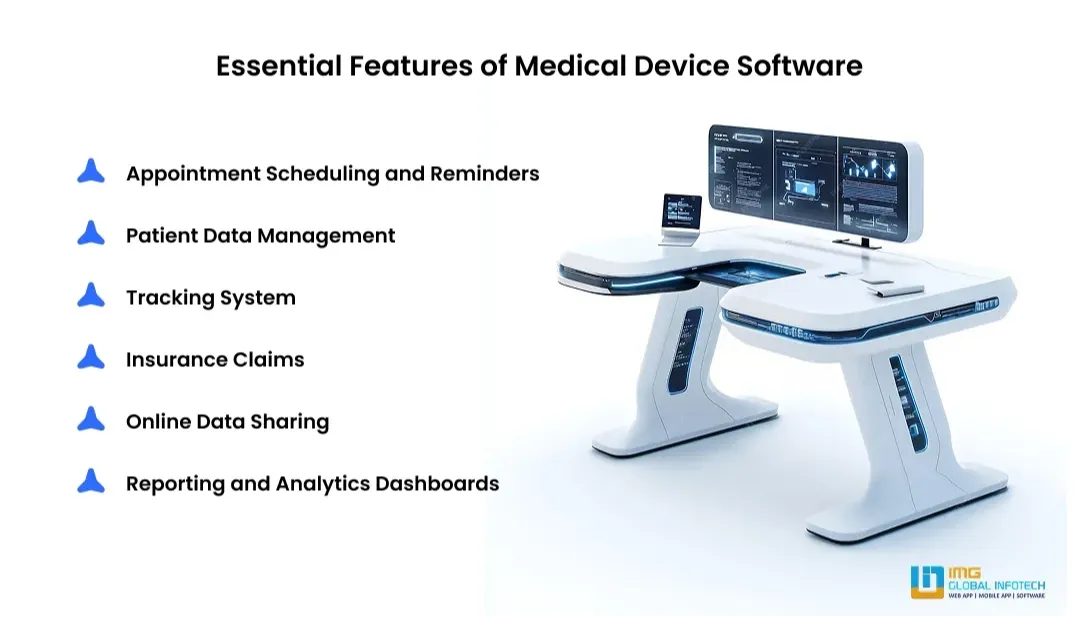
The upcoming corporate medical software solutions will become the first major advancement in digital medical records systems. The complete integration of EMR EHR and CRM systems creates a transformational impact on healthcare operations. So, let’s explore the must-have features every medical software management system should include.
Appointment Scheduling and Reminders
This feature makes it easy for patients to book their first appointment while they need to change or cancel their existing appointments. The system sends automatic reminders to decrease patient no-show rates. The system provides staff members with an easier way to handle their calendar responsibilities.
Patient Data Management
Patient data management keeps all medical records in one secure, easy-to-access place. Doctors can instantly access patient medical history along with their testing results and treatment plans.
Tracking System
The built-in tracking system maintains complete oversight of all laboratory samples and all equipment that gets used. The system guarantees that all items will be delivered to their designated recipients at the scheduled time from top companies in medical device software development. The system enables efficient management of inventory and patient observation and operational process tracking.
Insurance Claims
The feature streamlines the entire claims submission process from Healthcare app development companies in india. The system handles billing procedures by detecting coding mistakes and delivering insurance claims to healthcare payers. The system eliminates all requirements for physical documents because it delivers instant results.
Online Data Sharing
Online data sharing allows providers to transfer patient details between themselves while maintaining security. The system enables hospitals and labs and specialists to share information with each other for continuous updates.
Reporting and Analytics Dashboards
The dashboards transform unprocessed data into practical information for users to utilize. The system enables users to monitor achievements while they detect patterns and make better choices in ai medical device software development. The system presents all data in a format that users can modify according to their needs.
Step-by-Step Medical Device Software Development Process
The process to develop custom medical software for medical devices includes significant levels to ensure adherence to regulations, superior functionality, and accuracy. Below is the detailed process to develop custom medical software as well:
Regulatory Requirements
Starting this journey to develop software for medical devices to deep dive into the puzzle of regulatory standards that integrate with the FDA, HIPAA, and diverse local authorities. These rules are mandatory and can ensure the safety of the software in the medical device development software. The ability to navigate these regulations is critical to getting your software approved for the market and ensuring patient safety.
Understanding User Needs & Market Requirements
For reliable medical device software development, strict research is a necessary element. It can enable a profound comprehension for the healthcare sector along with identifying current trends and spotting the users' necessities to examine the Cost to build a medical appointment app like doctolib. The interaction with healthcare professionals, stakeholders, and patients can make for precise user demands and dispositions in healthcare operations as well.
Selecting a Skilled Medical Software Development Firm
Choosing a popular medical device software development company with higher expertise in software for medical devices is important for the further development process from software developers for medical devices. They must demonstrate a consistent capability that can meet regulatory standards.
A scalable firm that can specialize in healthcare software development services, like IMG Global Infotech, plays a vital role not only in the development process but also in offering you expertise with guidance, which is invaluable in ensuring regulatory expertise as well.
Research & Planning Process
The project planning process begins when you work with your chosen company to develop medical software. This stage involves defining project boundaries, which include establishing project milestones and developing a project execution framework.
Development and Integration
Medical software development for medical devices begins after teams complete their initial project groundwork activities in the custom medical device software development. The process develops medical software through which healthcare systems receive integrated medical software products that meet quality requirements and precision standards and comply with regulatory requirements.
The development of medical device applications depends on software development, which establishes seamless data transfer capabilities between different systems because it demonstrates how critical medical device software development functions.
Deployment and Oversight
The integration process for medical device software begins when the software reaches its final version, which healthcare facilities use to operate their medical devices from the ai medical device software developer. The software assessment process requires multiple testing phases, which need continuous monitoring to determine system performance.
The medical software development process needs constant monitoring because it helps identify software issues that should be fixed to maintain optimal performance of medical devices.
Cost of Medical Device Software Development
The cost to build medical device software would be $5,000 to $15,000 or beyond. The major cost mainly depends on complexity, different factors, and the level of the modifications as well.
Future Trends in Medical Device Software
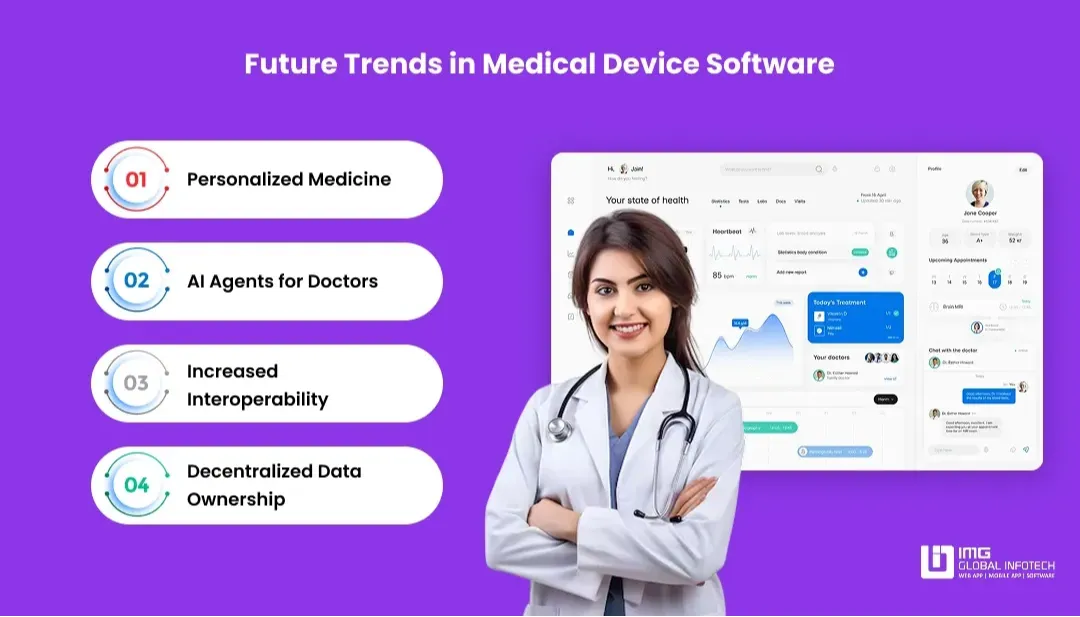
Healthcare technology is progressing at a rapid pace. The future of medical practice will become more intelligent through the use of artificial intelligence assistants and customized treatment methods.
Medical applications will continue their development process to enhance decision-making capabilities and enable quicker treatment delivery and achievement of better health results.
Personalized Medicine
Medical software development services are moving toward personalized care in Telemedicine app development. Future systems will use genetic information along with lifestyle data and health history to generate personalized treatment recommendations for every individual.
AI Agents for Doctors
AI agents will provide doctors with real-time diagnostic and treatment support. These advanced tools provide immediate assistance by scanning records to identify problems and recommending subsequent actions.
Increased Interoperability
Future systems will achieve improved inter-system communication abilities. Better interoperability enables hospitals, laboratories, and clinics to exchange data more efficiently. The system will eliminate all data storage barriers, which lead to unnecessary duplication of medical examinations.
Decentralized Data Ownership
Patients will gain increased authority to manage their personal health information. The decentralized system enables patients to select their record-sharing permissions, which they can control at any time.
Why Partner with IMG Global Infotech for Healthcare Software Development?
Creating trustworthy healthcare software requires technical expertise, knowledge of regulations, and a patient-centric approach. Collaborating with the right team of developers ensures the development of secure, scalable, and future-proof healthcare software.
Technical Expertise in Healthcare Software Development
Our team of experts has extensive knowledge in healthcare software development, providing HIPAA-compliant, secure, and scalable software solutions for hospitals, clinics, startups, and health-tech companies with precision and industry best practices.
Compliance-Driven Approach to Software Development
We adhere to strict healthcare regulations, data privacy laws, and security measures, ensuring that every software solution is compliance-driven and safeguards confidential patient information across platforms and integrations.
Custom-Built & Scalable Software Solutions
Each healthcare business has its own set of distinct processes to examine the Healthcare app development cost. We develop custom software solutions that scale seamlessly, allowing for future enhancements, increased user base, and integration with new healthcare technologies.
Innovation & Advanced Technology Stack
From AI-powered analytics to cloud-based healthcare solutions, our developers leverage advanced frameworks and technologies to develop intelligent and high-performance software solutions that enhance care delivery and operational efficiency.
Transparent Communication & Agile Development Process
We ensure seamless communication, agile development, and regular progress updates, allowing for rapid development, flexibility in changes, and complete visibility throughout the healthcare software development process.
Long-Term Support & Maintenance Services
After development, we offer long-term support, updates, optimization, and security monitoring services to ensure that healthcare software remains stable, compliant, and in sync with the latest healthcare industry requirements.
Final Thoughts
Developing medical device software is a complex and challenging task but it also has numerous benefits. Manufacturers can use regulatory guidance, expert knowledge, and ready-to-use software to make sure their product meets all the legal compliance standards.
However, it is a good idea to work with an experienced team that knows the regulations and the related technologies well, just like IMG Global Infotech as a leading Healthcare app development company. Our specialists have real experience in the field of medical device software development; hence, they can anticipate the potential issues during the development process and provide the most fitting solutions for any situation.