Not long ago, healthcare apps felt like a sci-fi subplot—something you’d expect to see in Iron Man’s lab or hear casually mentioned in Her, where technology quietly understands human needs. Fast forward to 2026, and that fiction has dissolved into everyday reality. From booking virtual consultations to AI-driven diagnostics, healthcare apps are no longer optional; they’re indispensable.
As Hippocrates once hinted, “Healing is a matter of time, but sometimes also a matter of opportunity.” In today’s digital ecosystem, that opportunity often begins with an app—and a well-planned budget. Understanding healthcare app development cost in 2026 isn’t just about numbers; it’s about navigating regulatory labyrinths, architectural complexity, data sovereignty, and patient-centric innovation.
Behind every seamless user interface lies an intricate orchestration of technologies, compliance protocols, and strategic foresight in the healthcare app development cost. This breakdown will help you decode where your investment truly goes—and why cutting corners here can cost far more later.
What are the main features of a healthcare app in 2026?
Healthcare apps in 2026 are not only digital tools, but they are also intelligent health companions to examine the cost to develop a healthcare app by the Healthcare app developers. They are designed with AI, data security, and personalization as the foundation, and they are reshaping patient care and healthcare efficiency.
The following are the key components of a healthcare app in 2026:
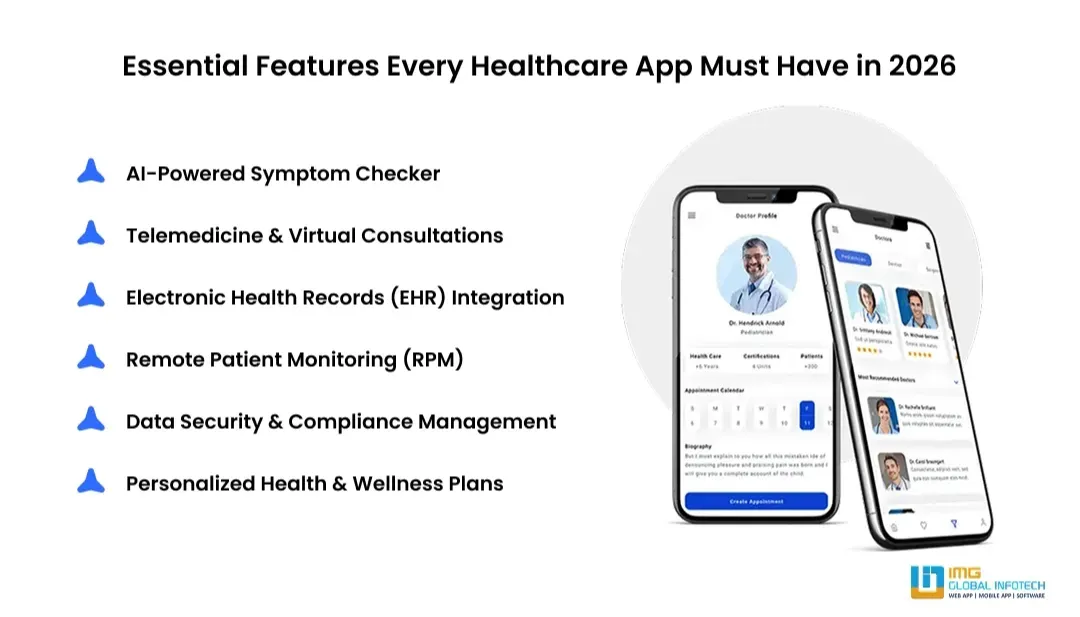
AI-Powered Symptom Checker
Using advanced AI, user symptoms, health history, and real-time information, the app delivers reliable preliminary diagnoses, risk notifications, and recommendations before seeking advice from healthcare professionals.
Telemedicine & Virtual Consultations
Smooth video, audio, and messaging communication services allow patients to access qualified doctors at any time, minimizing the need for hospital visits and facilitating quicker diagnosis and ongoing treatment.
Electronic Health Records (EHR) Integration
A comprehensive digital health record system enables authorized users to securely access prescriptions, test results, and health history information, enhancing data interoperability between patients, healthcare professionals, and healthcare organizations.
Remote Patient Monitoring (RPM)
Integration with wearable devices and IoT technology enables the monitoring of vital signs such as heart rate, glucose, and oxygen levels to examine the healthcare app development cost in usa, promoting proactive care and real-time health information.
Data Security & Compliance Management
Using advanced encryption, blockchain security, and HIPAA, GDPR, and country-specific healthcare regulations compliance, the app ensures the confidentiality and safe transfer of patient health information.
Personalized Health & Wellness Plans
Using AI-powered insights, the app provides users with personalized fitness, diet, medication, and mental wellness plans based on user behavior, health objectives, and predictive analytics.
How to estimate healthcare app development cost?
The average cost to build a healthcare app would be $5,000 to $15,000 or beyond. The major cost depends on diverse factors, app complexity, and the level of customization as well.
Factors affecting the cost to develop healthcare app
The cost to build healthcare app development depends on a combination of product decisions. The healthcare apps with goals can end up with very different budgets based on handled features, platforms, and long-term support. The following are the most common factors that influence the cost of a healthcare app in real-world projects.
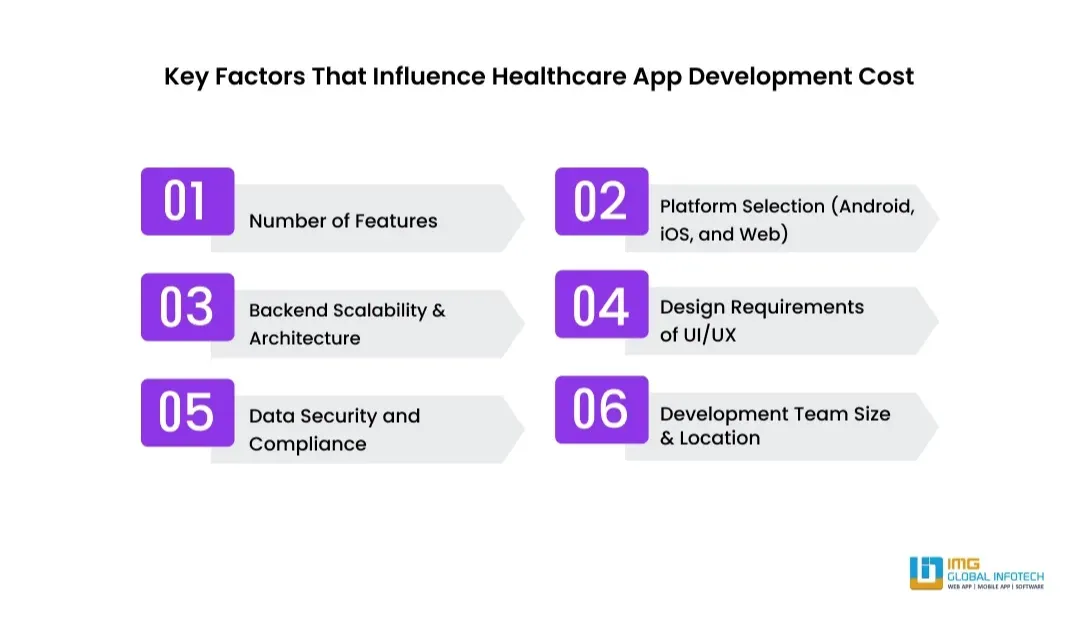
Number of Features
The first major thing is the features and their number that can define the cost to develop a healthcare app in Ai in healthcare. An app with core functionality like appointments, patient profiles, and access to medical records to scope and build healthcare apps faster.
Platform Selection (Android, iOS, and Web)
The next factor that influences the cost of developing a medical app is platform selection. Building for a single platform is always less expensive than building for several at once. Each platform generates its own development, testing, and support workload.
Backend Scalability & Architecture
The backend decisions have a direct impact on the cost of healthcare app development. A minimal backend can support the early functionality with predictable load. Architectures designed for scale typically require more upfront effort, but they reduce rework and costs as the product grows.
Design Requirements of UI/UX
Design influences the health app development cost much more than most teams anticipate. An intuitive and predictable interface determines users' interactions to find the cost of developing a healthcare mobile app with the product, their speed in task completion, and the level of support the app will need after launch.
Data Security and Compliance
Healthcare security and compliance have to be strictly followed without options. And naturally, these two aspects directly affect the price of creating a custom healthcare app. Any application that deals with medical or personal health data is subject to very strict regulations in terms of storage, access, and data transfer.
Development Team Size & Location
Composition of the team and location will still significantly influence the cost of creating a custom healthcare app in 2026. Healthcare products hardly ever get by with one developer in the Healthcare app development cost in middle east. Most projects need a cross-functional team comprising backend and mobile engineers, QA, design, and product management, plus the possibility of DevOps or security specialists assisting the team as and when the need arises.
How does healthcare app type affect the development cost?
Healthcare app development cost mostly varies significantly depending on the type of application. Every category needs different levels of technology, infrastructure, and compliance. In simple terms, the critical use and higher complexity can affect the cost of development as well.
Here is how different healthcare apps can impact the overall development cost:
Telemedicine Applications
These applications feature real-time video consultations with the virtual doctor or specialist, as well as appointment scheduling, e-prescriptions, and secure messaging options, all requiring significant implementation costs related to video infrastructure (i.e., the costs associated with providing adequate bandwidth for video conferencing) and securing video data using encryption. Furthermore, much of the cost of telemedicine applications will stem from the developer's compliance with health care industry regulations.
Cost Impact: High
Fitness and Wellness Applications
As opposed to telemedicine applications, those designed to promote activity, nutrition, and general lifestyle management through the use of these types of [Fitness & Wellness] applications are much less complex in the Telehealth App Development than those used to deliver medical care; therefore, the total cost to implement these types of applications in comparison to telemedicine applications will vary from low to medium.
Cost Impact: Low to Medium
Remote Patient Monitoring (RPM) Applications
Remote patient monitoring applications utilize Internet of Things (IoT) devices to collect and monitor real-time patient vitals (e.g., heart rate), and they have very high costs related to integrating hardware, continuous streaming of patient data, and providing rapid alerts to patients and clinicians.
Cost Impact: High
Medical Record Management Applications
Medical record management applications include electronic health record (EHR) and electronic medical record (EMR) applications and are extremely costly to implement because of the increasing need for strong data security, the growing need for medical record interoperability, and increasing reliance on long-term storage solutions.
Cost Impact: Medium to High
Mental Health Applications
Mental health applications provide several services, from online therapy sessions to mood tracking to using Artificial Intelligence (AI) chatbots and content moderation; therefore, they are also highly customized and require highly specialized personnel for developing custom applications using Artificial Intelligence (AI) technology.
Cost Impact: Medium
Hospital Management Systems (HMS)
Unlike the previously discussed applications, hospital management systems, or enterprise-level applications that integrate multiple hospital functions such as billing, inventory, staff management, etc., are highly customized and will almost always cost several times more than telemedicine applications.
Cost Impact: Very High
Hidden Costs to Consider in Healthcare App Development
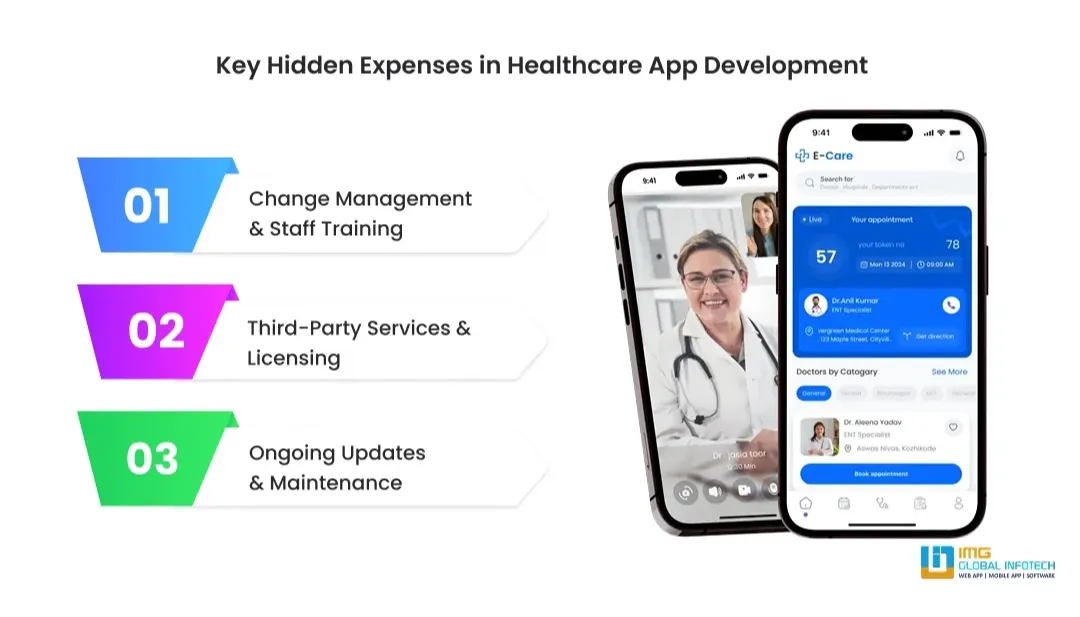
Change Management & Staff Training
The successful healthcare app development requires comprehensive staff along with training and change management processes. The training cost range from $5,000 to $15,000 depends on app complexity and user base size as well.
Third-Party Services & Licensing
Healthcare apps require specialized third-party services for payment processing, compliance monitoring, and cloud hosting in the Doctor on-demand app development company. These ongoing costs typically range from $500 to $5,000 monthly. It mainly depends on user volume and feature requirements as well.
Ongoing Updates & Maintenance
New technologies for healthcare change quickly and create new compliance and security guidelines nearly every year to find the custom healthcare app development cost 2026. This results in annual expenses generally between 15% and 20% of the initial investment for software development.
Periodic security patches, compliance audits, and adding new features will ensure your application keeps pace with rapid changes to both the security of your application and the competitiveness of that application in the healthcare industry.
How to Reduce Healthcare App Development Costs
You can keep your healthcare app development costs down yet still meet quality standards and regulatory requirements to Build a Smart Healthcare AI Chatbot. To create larger healthcare solutions within budget, businesses need to have effective strategies, practices, and technology selections.
To help achieve lower overall costs for developing a healthcare app, here are some great tips:
Start with a Minimum Viable Product (MVP)
By creating an MVP that only includes essential features (like core consultation & health tracking), you'll have less initial investment, validate demand for your application, and reduce rework in later phases of the development process.
Use Cross-Platform Development (CPD)
Using a cross-platform development framework such as Flutter or React Native means that you will only need one codebase to create both iOS & Android apps to examine the Cost to hire healthcare app developers. This will save significant amounts of time in development, resources used during development, and, ultimately, long-term maintenance costs.
Use Cloud Infrastructure and Third-Party APIs
Cloud-based infrastructure, along with using pre-built third-party APIs to handle payments, video calling, or EHR (Electronic Health Records) integration, reduces the amount of custom development needed, improves scalability, and reduces both infrastructure and operating costs.
Partner with Experienced Healthcare Developers
By partnering with experienced healthcare developers, you can reduce your compliance risks and reduce significant costs by reducing mistakes associated with the development of your application as well as develop applications faster by leveraging pre-established workflows, optimized architecture, and regulatory-compliant development practices.
Why Hire IMG Global Infotech for Healthcare App Development?
The correct development partner selection serves as a fundamental requirement for creating healthcare applications that need to maintain security and scalability while following all necessary compliance standards to examine the Telemedicine app development cost. Our team develops trustworthy digital health solutions that combine healthcare knowledge with contemporary technology.
Deep Healthcare Domain Expertise
Our developers possess direct experience in creating telemedicine systems along with fitness applications and hospital management software. We create solutions that meet actual operational needs because we comprehend patient journeys and clinical workflows and healthcare ecosystems.
Compliance-First & Secure Development Approach
Our experts follow strict healthcare regulations such as HIPAA and GDPR and regional standards. The system uses strong encryption and secure application programming interfaces and privacy-based architectural designs to protect confidential patient information.
End-to-End Development Support
Our team handles every stage of the project, beginning from idea validation through UI/UX design and development and testing and deployment and post-launch support, to ensure efficient project execution and quicker market release.
Advanced Technology Implementation
Our development team creates intelligent healthcare applications through the combination of AI-powered diagnostic systems and IoT-based remote monitoring to examine the Doctor on-demand app development cost and wearable device integration and predictive analytics.
Scalable & Future-Ready Architecture
Our company develops cloud-based modular systems whose performance increases automatically according to user growth, while future system enhancements and performance improvements become simple and cost-efficient.
Transparent Pricing & Dedicated Teams
Our company provides engagement models that offer flexible options and define costs through our dedicated developer team, who work with clients to ensure transparent project delivery without any concealed expenses.
Conclusion
Creating a healthcare web application is not a walk in the park. A myriad of features, security aspects, and design and technology choices all need to be taken into account. IMG Global Infotech grants you consultation and development assistance so that you, as a business, can understand these issues and find your way through them as a leading Healthcare app development company. By studying your particular requirements, budget, and plans for growth, they set out the way for the production of first-rate, safe, and user-friendly healthcare applications.
Regardless of whether you've just had an idea or already run a healthcare practice, receiving guidance from the pros allows you to get the most out of your investment, prevent expenses that have no purpose, and facilitate yourself in providing a platform that both patients and staff will appreciate.