With the rapid advancement of technology, businesses are looking for ways to create applications that not only meet their market's needs quickly but also are inexpensive and provide the best opportunity to reach the widest customer base. For this reason, hybrid app development is a viable and practical solution. Instead of creating multiple separate applications for different operating systems, an organization can develop one application that will work on all major operating systems.
Hybrid application development is being increasingly utilized by both small and large organizations as they work to reduce costs, speed time-to-market, and provide a consistent user experience. Our complete guide will provide a comprehensive understanding of hybrid application development, including the fundamental principles of hybrid application development, the advantages and disadvantages of hybrid application development, a listing of hybrid application development frameworks, expected expenses, and future trends in hybrid application development.
What is a Hybrid App?
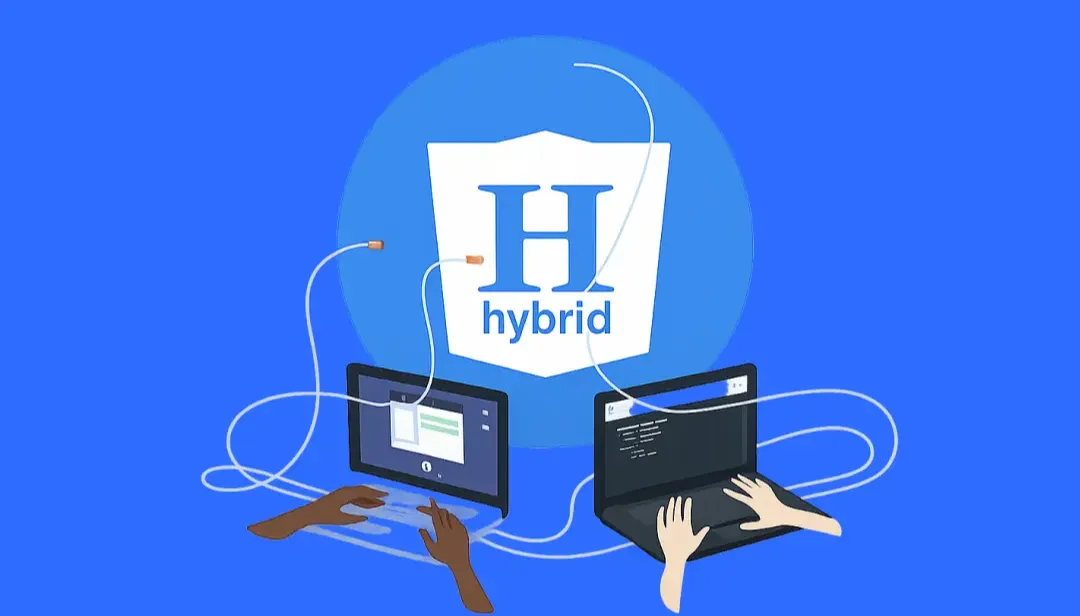
To understand what is hybrid app development, it helps to first understand what a hybrid app actually is. Using common web-based technologies like HTML, CSS, and JavaScript inside a native container to provide cross-platform capability, a hybrid app incorporates elements of both a native mobile app and a web app. Because native mobile apps are often created independently for each operating system, developers may generate their application code once and have it published on both the iOS and Android platforms. This saves time and effort and enables faster updates.
To make sure they get the most out of the hybrid app development process in terms of performance, scalability, and security while utilising all the advantages provided by hybrid technologies, businesses usually hire a competent hybrid Mobile app development company.
Benefits of Hybrid App Development for Businesses
Choosing the benefits of hybrid app development can be a game-changer for businesses aiming to scale quickly. Here are some major advantages given below.
Cost-Effective Development
One major advantage of hybrid app development is lower development cost. Businesses can develop a single app to function on multiple platforms, thus saving considerable money rather than creating separate native applications for each of the various devices, iOS and Android, for example, on which their customers will run their apps. This unified approach also simplifies integration with enterprise systems such as mobile device management solutions, helping IT teams control and secure applications more efficiently.
Faster Time-to-Market
Hybrid app development services also allow businesses to create an app much quicker than if they were to create it entirely from scratch because they have access to shared code and reusable assets. Therefore, hybrid app development services are ideal for businesses and startups looking to enter the marketplace quickly.
Cross-Platform Compatibility
These hybrid applications work effectively across many different operating systems, making cross-platform hybrid application development a very attractive business option for entrepreneurs and small businesses seeking to reach a larger audience.
Easy Maintenance and Updates
By rolling out updates across multiple platforms simultaneously, businesses will enjoy less time spent maintaining their applications, and everyone using their application will have access to identical functionality.
Access to Native Features
Modern frameworks allow seamless access to device features like GPS, camera, and push notifications, even in hybrid Android app development services and iOS-based solutions.
Popular Hybrid App Development Frameworks
Choosing the right tools is critical for successful projects. Today, several hybrid app development frameworks dominate the market. Here are some of them given below.
Flutter
Flutter allows fast development of hybrid applications through a single application code base, rich UI widgets, and best-in-class, virtually native performance, hot reloading, and an active, vibrant community support, along with easy deployment to both the Android and iOS platforms. A Flutter app development company ensures high-performing and scalable products.
React Native
React Native enables hybrid mobile applications to scale through reusable components, JavaScript architecture, near-native performance, rapid development cycles, large developer community, and straightforward integration with existing native code.
Ionic
Ionic is a leading hybrid application framework that supports web-based development and provides a wealth of reusable UI components, a complete ecosystem of plugins, rapid prototyping capability, cross-platform compatibility, and seamless integration with Angular, React, and Vue.
Xamarin
Xamarin provides a hybrid application development framework using C# and .NET technology that allows developers to access the complete API of both Android and iOS operating systems, provide the same level of performance as native applications, and share code between applications built with the Xamarin framework and other Microsoft tools, as well as integrate seamlessly with Microsoft products.
Cordova
Cordova enables hybrid mobile application development by wrapping Web applications in native containers and giving developers access to device features; creating a target audience with cross-platform deployment; allowing for extensibility through plug-ins, and providing cost-effective solutions for building lightweight mobile applications.
Key Features of a High-Quality Hybrid App
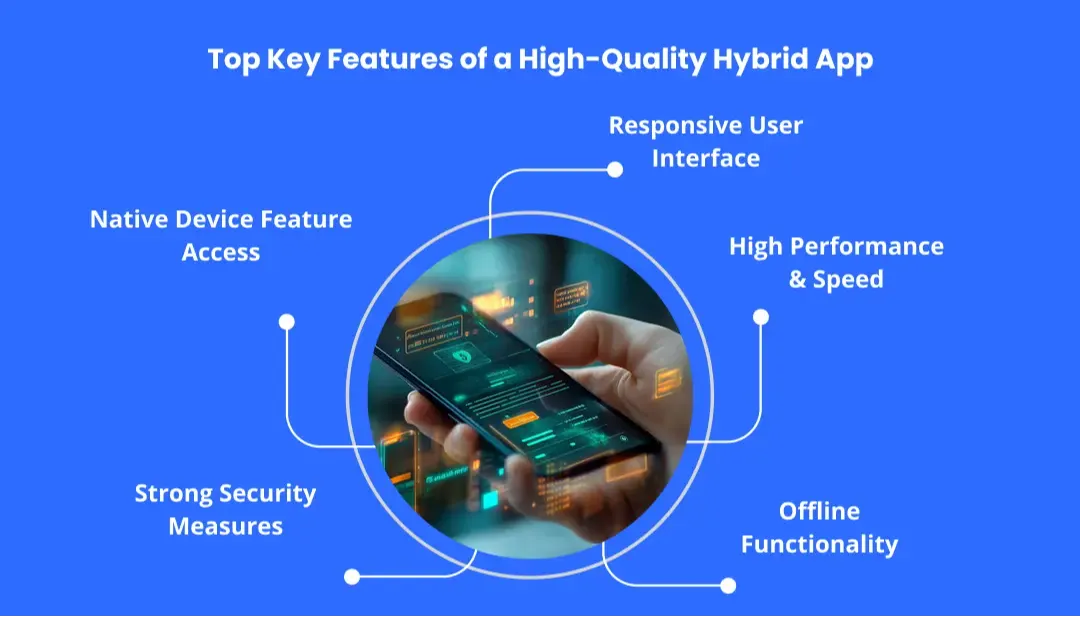
Hire mobile app developers who know all the core features of an app. Here are some of the key features of a high-quality hybrid app, given below.
Responsive User Interface
A leading hybrid mobile app solution must provide an interface that adapts to multiple devices and maintains the same look and feel, no matter what screen size or operating system a user is on. This ensures that all users have an identical experience without losing usability or performance due to their device choice.
High Performance & Speed
Hybrid app development is typically executed using optimized code structure and frameworks that provide minimum lag times and quick load times, providing a very similar experience to a native mobile application.
Offline Functionality
When developing reliable hybrid mobile applications, programmers typically develop them with offline access in mind, allowing users to access content, save data locally, and perform functions with limited to no internet connection.
Strong Security Measures
The creation of a good quality hybrid application requires integrating advanced security methods such as data encryption, secure user authentication, API security measures as well as compliance standards in order to secure user data and build trust for Android and iOS users.
Native Device Feature Access
The latest hybrid app development frameworks allow developers to easily integrate native device features such as camera, GPS, push notifications, and sensors into one cross-platform application, providing native-like capabilities.
Step-by-Step Process for Hybrid App Development
Understanding how to develop hybrid mobile app solutions involves a structured approach. Here are the steps given below.
Requirement Analysis
To create a well-defined and organized development roadmap for a hybrid app, the first step is identifying your business's desired goals, the target audience, and platform requirements, as well as the app's core features, and conducting a technical feasibility study.
UI/UX Design
For Hybrid Mobile App Development, it is critical to design a simple and functional interfaces that work well on multiple devices to provide users with an excellent experience. For this reason, it is important to focus on the way that users interact with the Apps by emphasizing usability, visual design, and ease of navigation.
Framework Selection
Selecting the appropriate toolsets for building your hybrid mobile application will be based on a number of factors, including performance, app complexity, and how long you plan to run your business using the application.
Development
Hybrid mobile apps use a single codebase to create applications that operate on both Android and iOS devices. They utilize API's and utilize native features to provide an optimal user experience to both Android and iOS app development users.
Testing
Thoroughly testing your hybrid mobile application for functionality, performance, security, and Device compatibility is required to produce a Hybrid App development solution that is reliable and stable.
Deployment & Maintenance
In addition to deploying your hybrid mobile app to various app stores, keeping track of the App's performance, resolving any issues, releasing new updates, and keeping the App supported through regular Maintenance will be imperative for the long term scalability and customer satisfaction of your hybrid mobile application.
Many businesses prefer to hire hybrid app developers with proven experience to ensure the smooth execution of these steps.
Hybrid Mobile App Development Cost Breakdown
One of the most common questions businesses ask is about the hybrid app development cost. The overall cost depends on multiple factors, such as:
-
App complexity and features
-
UI/UX design requirements
-
Selected framework and tools
-
Backend infrastructure
-
Location of the development team
Let us now break down the Mobile app development cost by the level of the app.
Basic Hybrid App
A basic hybrid app costs range from $5,000 to $8,000, depending on the project requirement. It is a suitable choice for startups and small businesses.
Mid-Level Hybrid App
A mid-level app costs range from $10,000 to $15,000, depending on the project requirements. It is an ideal choice for businesses looking for expansion.
Advanced-Level Hybrid App
An advanced-level app costs range from $15,000+, depending on the project requirements. It is an ideal choice for large enterprises who operates with full automation.
On average, hybrid app development services India are more cost-effective compared to Western markets, making hybrid app development India a preferred destination for global clients.
Future Trends in Hybrid App Development
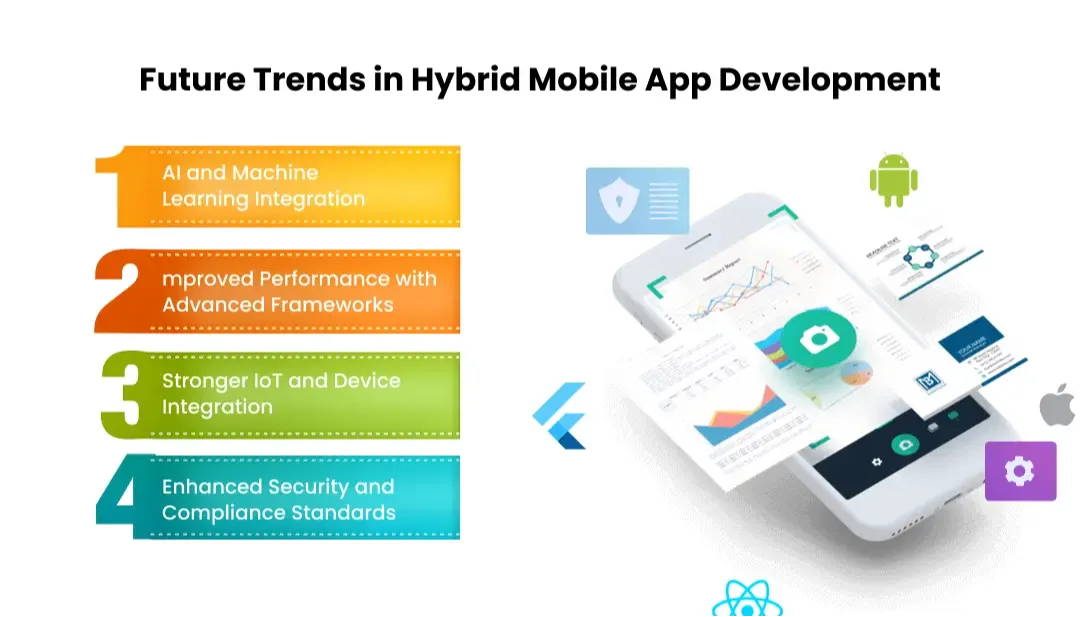
The future of hybrid application building looks promising. Here are some of the future trends to see.
AI and Machine Learning Integration
Future hybrid application design will focus on AI and ML to provide customers with the ability to access a personalized experience and analytics that look to the future, along with Smart automation technologies such as bots for customer support and accessing real-time information about these different applications using their data.
Improved Performance with Advanced Frameworks
Future Hybrid App Development Platforms will include improved speed of rendering, reduced latency, improved memory management capabilities, and near-native performance so that hybrid applications may compete with native applications on an almost equal footing.
Stronger IoT and Device Integration
The scope of hybrid mobile application development will continue to grow with deeper integration of IOT (Internet of Things), allowing developers a unique opportunity for data sharing in real-time with connected devices/IoT devices and providing enhanced functionality for multiple industries.
Enhanced Security and Compliance Standards
Future hybrid application development trends will see improvements in security, delivering advanced security mechanisms, including biometric authentication, data encryption, secure API protocols, and establishing procedures to comply with national and international regulations regarding the protection of personal information, thereby strengthening the end user's confidence in using Hybrid Application Technology.
As businesses compare Native vs hybrid apps, hybrid solutions continue to gain popularity due to flexibility and cost efficiency.
Why Choose IMG Global Infotech for Hybrid App Development?
Partnering with the right development team is essential. IMG Global Infotech stands out as a trusted hybrid app development company in India. The services offered by IMG Global Infotech include both development of Android Apps and development of iOS Apps, and Cross platform app development services, delivering a complete service for the entire process of mobile app development. In addition to this, the ability to quickly Hire Mobile App Developers makes scaling mobile application projects seamless and effective for companies.
What you will get at the IMG Global Infotech:-
-
Experienced and dedicated hybrid app developers
-
Custom hybrid app development solutions
-
Scalable and secure app architecture
-
User-centric UI/UX design approach
-
Cost-effective development models
-
Timely project delivery with transparency
-
Latest hybrid app development frameworks
-
End-to-end development and support
-
Flexible hiring and engagement models
-
Strong post-launch maintenance services
CONCLUSION
The hybrid approach to application development offers the best balance of performance, cost, and flexibility. By using this method, developers can create applications faster and reach a wider audience while maintaining a consistent user experience across multiple platforms. You can ensure that you have the right framework, know the entire cost of ownership, and partner with a dependable hybrid development partner, all of which will help to maximize the value of your investment in hybrid apps, whether you are an emerging business or an established corporation. The hybrid app development approach is an investment in long-term sustainable digital growth for your business.